

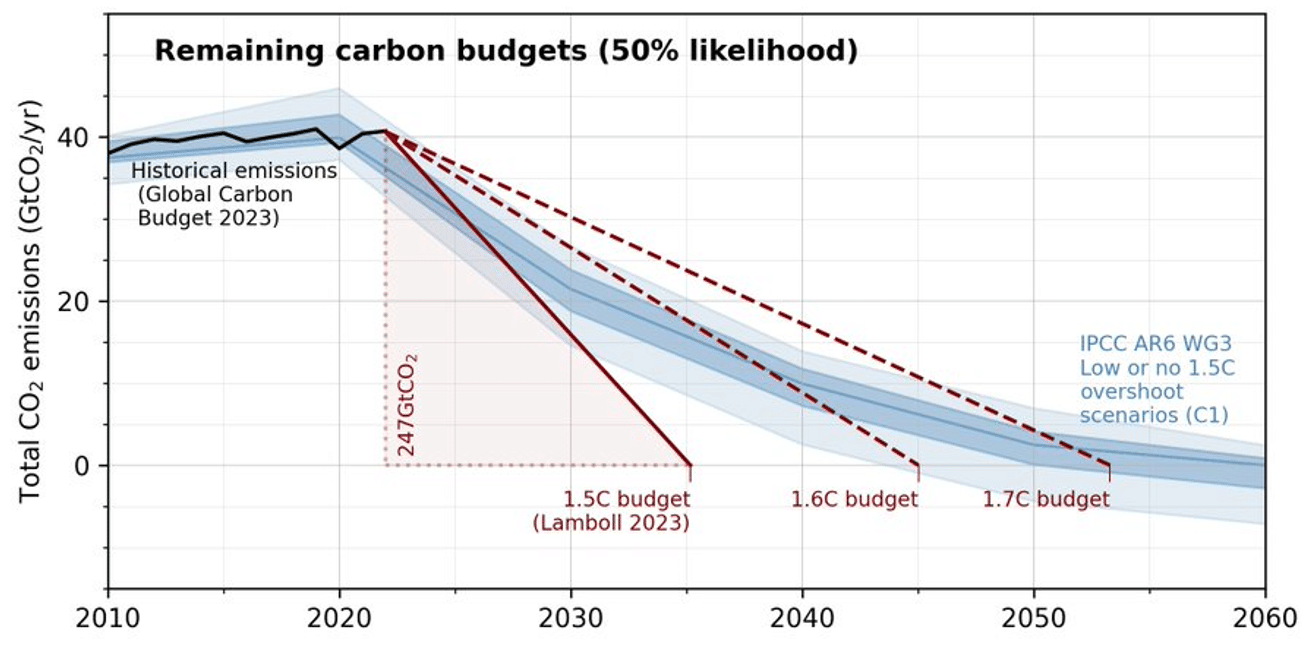
According to an analysis by Global Witness, over 50 oil and gas companies signing the decarbonization pact at the COP28 climate summit are projected to emit over 150 billion metric tons of climate pollution by 2050. That represents about 62% of the remaining carbon dioxide budget to stay below the 1.5°C temperature rise limit.
The data used in the analysis covers only crude oil and gas. It didn’t include figures for NGL and condensate, which makes the production estimates conservative.
The analysts based their carbon budget calculations using the equivalent of 250 billion tonnes CO2 equivalent to retain a 50% chance of limiting warming to 1.5C, which is according to the latest peer-reviewed research.
The dataset includes all assets that are presently in production, under development (approved but haven’t commenced yet), discovery, and undiscovered. The data covers operating production from 2023 to 2050.
Unraveling the Hidden Impact of Oil & Gas Climate Pledge
The Oil and Gas Decarbonization Charter was introduced at COP28 by Saudi Arabia and conference president Sultan Ahmed Al Jaber. Al Jaber emphasized its significance, claiming that companies representing over 40% of global oil production committed to achieving net zero. The pact also commits to end methane emission and halt routine flaring by 2030.
Saudi Arabia’s Aramco and the UAE’s ADNOC, alongside 29 more national oil companies, inked the non-binding charter. PetroChina, ExxonMobil, TotalEnergies, Petrobras, and Shell have signed the agreement, though their agreement is only voluntary.
Direct GHG emissions of largest oil companies in 2022
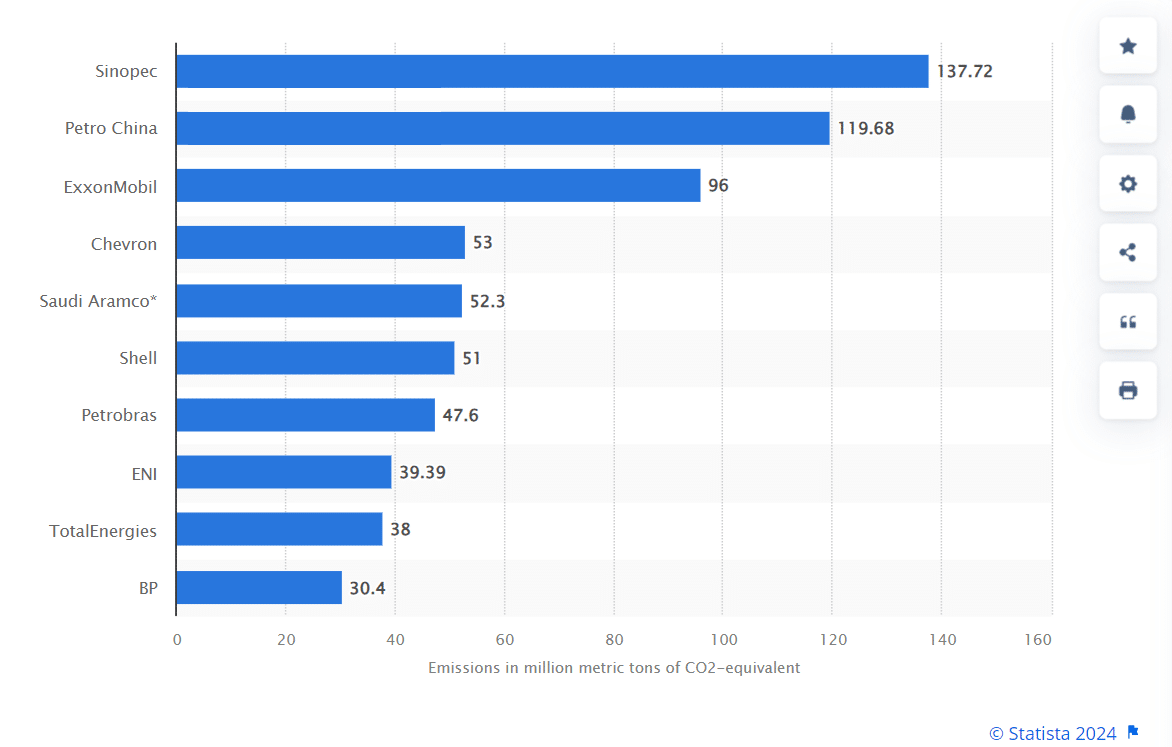
The pact signifies a promising climate commitment from the oil majors. However, a significant loophole exists, as highlighted by Global Witness.
The charter exclusively addresses emissions directly released by those companies. They leave out the considerable impact of their products’ use, known as Scope 3 emissions. This pollution source comprises up to 90% of the oil and gas’ total carbon emissions.
Global Witness used data from Rystad Energy to look at the production plans of the pact’s signatories, including major state and private companies.
The analysts found out that the companies would produce 265 billion barrels of oil and 26.7 billion cubic meters of gas by 2050. This would result in 156 billion metric tons of CO2 equivalent emissions, or approximately 62% of the remaining carbon budget.
Among the companies that signed the pact, those with the largest carbon footprints through 2050 include ADNOC and Saudi Aramco. Together, they have a combined production of 136.4 billion barrels of oil and 5.5 billion cubic meters of gas between them.
Their projected production would emit more than a quarter of the remaining carbon budget – 64.7 billion tonnes of CO2.
ExxonMobil, Equinor, TotalEnergies, Eni, and Shell also have plans to emit as much as the European Union does in 15 years – 38.6 billion tonnes of CO2.
The Climate Challenges Beyond COP28 Promises
The findings further stir climate activists’ greenwashing claims against oil and gas companies. They have expressed concerns about fossil fuel companies prioritizing profit extraction over environmental preservation, reinforcing the perception of greenwashing.
In another analysis, the COP28 draft dropped mention of fossil fuel phase out. It instead advances the ramping up of renewable energy and efficiency measures. Campaigners stated that governments must do something urgent and concrete to phase out fossil fuels.
Concerns were raised about the portion of the industry’s emissions reduction commitments compared to the environmental impact of their products. A climate campaigner, Cara Jenkinson, Cities Manager at Ashden, remarked that:
“The only way to slash emissions from usage of oil and gas is to cut demand – governments across the world must speed up their electrification plans, with poorer nations being supported to bypass fossil fuel vehicles and ramp up clean renewable energy production.”
Responding to the concern, a spokesperson from Shell said that:
“While Shell’s targets are more comprehensive and ambitious than the Charter requirements, for example with carbon intensity targets that also cover the use of our energy products, we want to share our experience and learn as others in the industry move further along their journeys too.”
In the shadow of climate commitments at COP28, the analysis by Global Witness reveals a stark reality – oil and gas companies are to burn through 62% of the remaining carbon budget. The results raise critical questions about the industry’s true environmental costs.