


A new joint venture has launched to help countries enhance carbon mitigation efforts under Article 6 of the Paris Agreement. This partnership includes various technology and sustainability firms, including Aleria, Tawasal, and Xange.com. They aim to build digital systems and tools for a carbon mitigation pipeline worth over US$100 billion.
The funding focuses on forest and nature-based internationally transferred mitigation outcomes (ITMOs). Article 6 outlines rules for global cooperation on climate action through carbon markets.
The collaboration will help governments track emissions cuts. It will also verify climate actions and share mitigation results clearly. It will also develop digital infrastructure to promote high-integrity carbon credits and environmental assets across regions like Africa, South America, the Middle East, and Asia.
What the Joint Venture Will Do
The joint venture includes three partners with distinct expertise:
- Aleria: A specialist in artificial intelligence (AI) and data.
- Tawasal: A UAE-based super app platform.
- Xange.com: An environmental intelligence software provider.
They will work together to build digital systems for carbon accounting and ITMO transfers. This will help governments and project developers. Their tools include monitoring, reporting, and verification (dMRV) systems to capture verified mitigation data. They will also introduce a global infrastructure solution called GEMIS for policy-aligned project management.
A central registry and settlement platform will enable countries to track and transfer mitigation outcomes. This system will help governments manage carbon mitigation results from international trade. It follows the rules of Article 6 and will have a financial custodian bank in Chicago to host and oversee the settlement system.
The joint venture will connect its systems to millions of users through Tawasal’s platform. This includes payment systems from partners like Gnosis and Noxxo. They support transactions across different regions.
Eric Leandri, CEO of Aleria and Tawasal remarked during the Davos announcement:
“Article 6 requires governments to operate credible registries, data systems, and settlement processes under national authority. This joint venture focuses on delivering the technical infrastructure needed to support compliant accounting, monitoring, and transfer of mitigation outcomes. By combining Aleria’s sovereign data capabilities, Tawasal’s digital platform, and Xange.com’s market infrastructure, we are enabling countries to implement Article 6 mechanisms in line with Paris Agreement requirements.”
Why Article 6 Needs Strong Digital Infrastructure
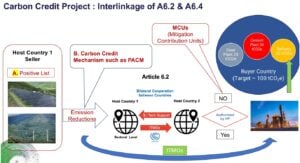
Article 6 of the Paris Agreement provides a framework for countries to work together on emissions reductions. It has three main parts:
- Article 6.2: Rules for accounting and trading of ITMOs.
- Article 6.4: A new mechanism for high-quality carbon credits and emissions reductions.
- Article 6.8: Non-market methods for climate action without trading emissions units.
Article 6 allows countries and companies to collaborate by transferring emissions reductions across borders. These transfers count toward climate targets known as Nationally Determined Contributions (NDCs). A strong digital tracking system is essential to prevent errors like double-counting.
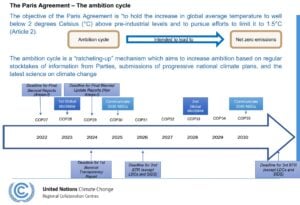
International carbon market cooperation under Article 6 is growing. For instance, Singapore signed an agreement with Papua New Guinea in 2023. This deal enables the two countries to generate and trade carbon credits toward their climate targets.
African nations, like Rwanda, are also preparing to engage with Article 6 mechanisms and carbon markets. They are developing national frameworks and enhancing institutional capacity.
Countries like Indonesia and Norway are participating in Article 6 cooperation as well. At COP30, they talked about carbon trading deals. These could involve up to 90 million tonnes of CO₂ reductions. So far, 12.5 million tonnes are already committed.
These developments highlight the need for strong registry systems and verification infrastructure for effective international climate cooperation.
- SEE MORE: Billions at Stake: UN Panel’s Article 6.4 Recommendation Could Transform Global Carbon Trading
Digital MRV and Registries: The Market’s Missing Link
Successful carbon markets depend on accurate data and transparent tracking. The joint venture’s digital tools will help countries meet Article 6 requirements for emissions accounting. Key components include:
- dMRV tools: Capture verified emissions data and spot environmental risks.
- ITMO registry: A platform for recording, authorizing, and transferring mitigation outcomes.
- Settlement systems: Secure systems for transferring and ensuring transparency.
These tools are crucial because accurate tracking of mitigation outcomes is a requirement under Article 6. Countries must show that carbon credits or ITMOs represent real reductions. Without reliable systems, countries can’t trust transfers to meet climate goals.
This project helps build the Article 6 registry infrastructure by the United Nations Framework Convention on Climate Change (UNFCCC). In 2026, the UN started building systems to track mitigation outcomes. This includes international registries that help national systems work together to enhance transparency and confidence in carbon markets.
Global Momentum Behind Article 6 Cooperation
The JV has identified a pipeline of over US$100 billion in forest and nature-based outcomes aligned with the Paris Agreement. This figure reflects the projected value of various mitigation activities eligible for Article 6 cooperation.
Article 6 cooperation could unlock both private and public funding for climate mitigation. For example, Singapore started a public tender for at least 0.5 million metric tons of high-quality, nature-based carbon credits under Article 6. This is part of Singapore’s plan to reduce emissions to about 60 million metric tons of CO₂ equivalent by 2030. It estimates needing around 2.51 million metric tons of ITMOs annually from 2021 to 2030 to meet its targets.

Countries are also establishing bilateral and multilateral cooperation on Article 6. For instance, Zambia signed a cooperation agreement with Switzerland at COP30 in 2025 to set up frameworks for trading carbon credits. This deal aims to support climate mitigation projects and financing in Zambia.
Market analysts note that over 120 countries are willing to use Article 6 instruments for their NDCs. These countries recognize that cooperation can lower costs by allowing more effective climate action. Capacity-building programs under the UN Environment Programme aim to help developing countries engage in international carbon markets.
Integrity, Regulation, Risks, and Market Outlook
While interest in Article 6 markets is strong, challenges remain. Some project developers have raised concerns about retroactive changes to market rules. Standards bodies, like the Gold Standard, suggest new alignment requirements for Paris compliance. Developers warn that applying these rules retroactively could create uncertainty for existing projects. Stable rules are crucial for long-term investment in mitigation.
Another challenge is ensuring the integrity of mitigation outcomes. Countries and buyers need assurance that carbon credits or ITMOs reflect real emissions reductions. Article 6 systems aim to minimize risks like overestimation, but more work is needed as markets evolve.
Despite these challenges, the market outlook for Article 6 cooperation is substantial. Projections from the University of Maryland and IETA estimate over $100 billion in annual trading by 2030. This matches wider industry forecasts. The CAREC Program sees Article 6 boosting the carbon market to $250 billion.
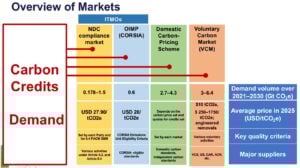
Also, Oxford Energy Studies expects annual demand to exceed 700 MtCO₂e. This demand is driven by NDC gaps and the growth of bilateral ITMO.
What This JV Signals for Future Carbon Markets
The new joint venture aims to support a US$100 billion carbon mitigation pipeline under Article 6 of the Paris Agreement. It will help countries create digital systems for tracking, reporting, and transferring ITMOs.
Creating registries, using digital monitoring, and ensuring secure settlement systems are key to building trust in carbon markets. Governments and markets are already building capacity. An increase in bilateral agreements and registry infrastructure indicates stronger adoption ahead.
The joint venture’s pipeline estimate signals significant investment potential in forestry and nature-based mitigation. While challenges exist, the emerging Article 6 ecosystem aims to unlock funding that helps countries meet climate goals with integrity and transparency.