

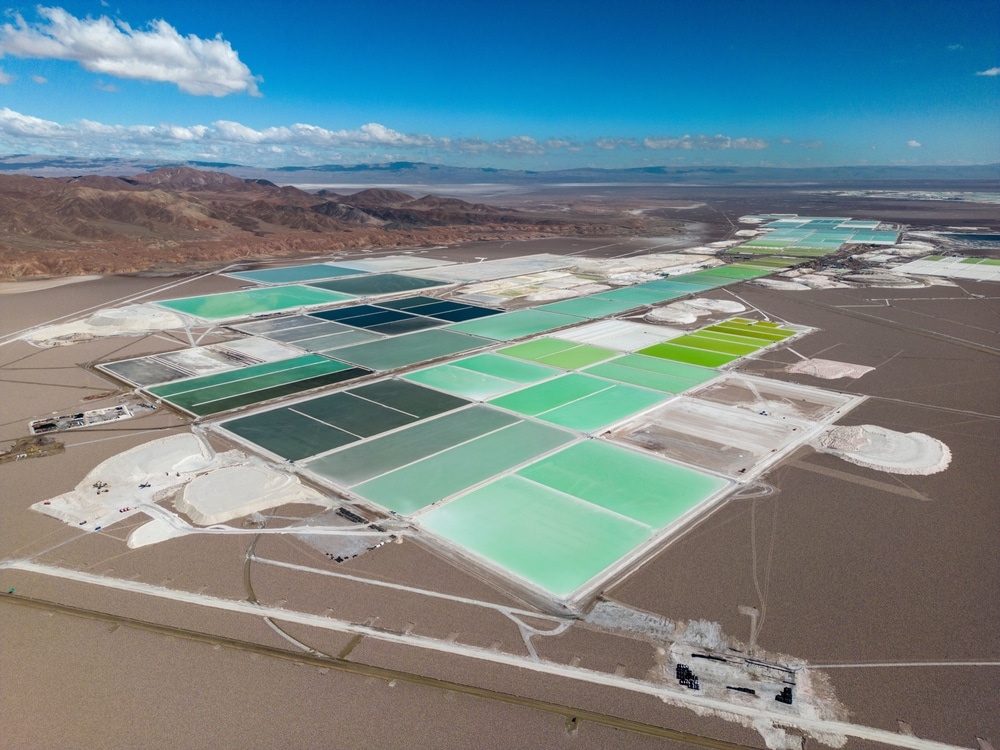
Chile is the world’s second largest lithium producer accounting for nearly one quarter of global lithium production. As per the latest reports, the country is leveraging a multi-faced approach to maximize its lithium production capacity and ensure sustainable growth catering to the dynamic market demands.
Chile’s business plan has been confirmed by Finance Minister Mario Marcel who said,
“Chile will use three different business models to expand its lithium production that it estimates could increase by 70pc by 2030 and 100pc over the next decade”
Moving on, let’s explore and understand the newly launched business model.
Unravelling Chile’s 3-Way Business Model to Ramp Up Lithium Production
According to US Geological Survey data, Chile’s estimated lithium output was 234,000 T of lithium carbonate equivalent (LCE) in the last year. The government plans to ramp up lithium supply to 70% by 2030 with 100% projected growth.
Here’s a breakdown of the 3-way business model:
1. Public-Private Alliances in Strategic Salt Lakes
Chile will establish public-private alliances in two salt lakes deemed strategic: Atacama in the Antofagasta region and Maricunga in the Atacama region. In these alliances, the state will hold a majority share.
2. Promotion of Public-Private Alliances in Other Salt Lakes
Five additional salt lakes, including Alto Andino and Pedernales, will also see public-private alliances. The state will seek the “best agreement” with private partners, either as a majority or minority participant.
3. Private Sector Leadership in 26 Salt Lakes
In 26 other salt lakes, the private sector will take the lead in development. While associations with state companies are possible, they won’t be mandatory.
Consequently, private investors will express interest in these salt lakes through Requests for Information (RFI) in April 2024 and the results will be announced in July.
The selected application will acquire special lithium operating contracts (CEOL). Notably, around 38 salt lakes will be designated as protected areas, adhering to Chile’s commitments under the Convention of Biological Diversity.
Nicolas Grau economy minister, Chile has further commented,
“During this government, we will sign a group of CEOLs in which the private sector will lead production in which the state will not be a major partner,”
Picture: The Lithium Triangle comprising Chile, Argentina, and Bolivia
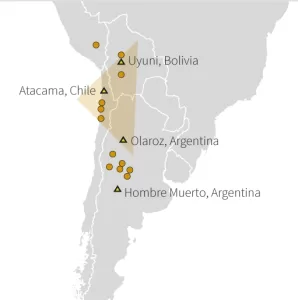
source: US Geological Survey
Chile acknowledges the significance of empowering local businesses and communities to engage in the lithium value chain actively. Small and medium-sized enterprises (SMEs) are encouraged to participate in exploration, extraction, and value-added processes, promoting economic diversification and regional growth.
Moreover, programs focused on skills enhancement, technology transfer, and entrepreneurship empower local stakeholders to seize opportunities in the expanding lithium market with rising lithium prices.
Chile’s Bold Move to Nationalize its Domestic Lithium Industry
Chile’s President Gabriel Boric had announced a bold move: the nationalization of Chile’s lithium industry in the last year. The newly launched business model thus fortifies his aim to take control of its massive lithium industry.
President Boric further believes that the nationalization of Chile’s domestic lithium industry is the best way to progress to a developed economy that affirms prosperity, social equity, and sustainability.
Graph: Major countries in worldwide lithium mine production in 2023
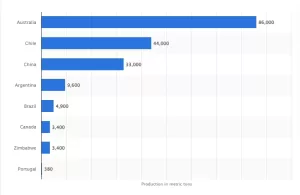
source: statistica
SQM and Albemarle to come under state ownership?
Chilean SQM (Sociedad Química y Minera) and US-based Albemarle, the sole producers in the country, conduct their operations in the Salar de Atacama under leases granted by Chile’s state development agency, Corfo. Both these industry giants drive Chile’s economic growth and hold its position as a key global lithium supplier.
With this nationalization move, separate state-owned companies will take control of Chile’s lithium operations from SQMandAlbemarle, without terminating their current contracts. As per reports, SQM’s contract will expire in 2030, while Albemarle’s contract extends until 2043.
Impact on EV manufacturers…
It’s speculative that this economic shift in Chile’s lithium production would be a challenge for EV manufacturers like Tesla Inc. and LG Energy Solution Ltd. This is because they are reliant on SQM and Albemarle for their lithium supplies.
On the other hand, some industry experts hail President Gabriel Boric’s 3-pointer business plan to exploit the new lithium reserves in Chile. They consider this project would automatically increase the demand for lithium from EV manufacturers across the world.
If the predictions come true, Chile will certainly receive tons of applause from the global EV industry. Hence, doubling its domestic lithium production would not be a tough job.
However, we understand from reports that this strategy does not 100% nationalize lithium production in Chile. Rather it highlights a shift towards stronger public-private partnerships, with the state holding a majority stake in forthcoming lithium projects.
Nevertheless, Chile’s action to double its lithium production is vital for careful resource management of this critical mineral and promises a sustainable future.