

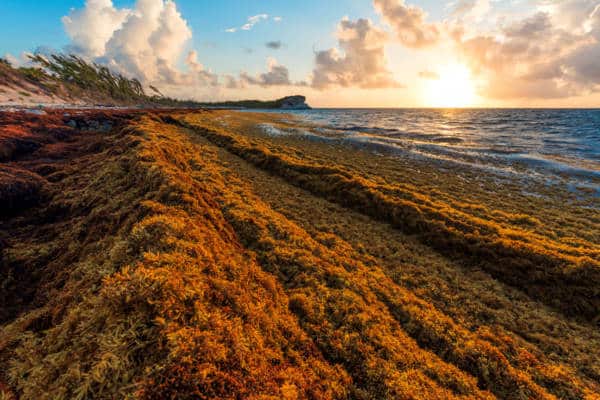
A wave of seaweed is covering the Caribbean coasts, killing wildlife while harming humans and tourism, but an innovative company is turning it into a revenue stream including carbon credits.
More than 24 million tonnes of sargassum blanketed the Atlantic in June, up by 20% from 18.8 million tonnes in May. This is a new historical record according to the report by the University of South Florida’s Optical Oceanography Lab.
The same amount of the “golden tide” was seen in July. Its concentration became so heavy in some parts of the eastern Caribbean shores that the island of Guadeloupe issued a health alert in late July.
Scientists said more research is necessary to know why sargassum levels in the Caribbean are reaching new highs. But the UN’s Caribbean Environment Program suggested that there are three major culprits for it:
- Rising water temperatures due to climate change,
- Fertilizers full of nitrogen running off from farms, and
- Sewage waste.
Seaweeds are, in fact, one of the greatest carbon sinks that capture and sequester carbon. But large masses of them can pose risks to human health and have a severe environmental impact.
Sargassum, in particular, sequesters carbon but it also releases it during decay in the form of a more potent and dangerous GHG – methane.
Carbonwave saw a business opportunity in this. The startup turns seaweed into sustainable, high-value, and innovative products. At the same time, producing carbon credits.
Turning Seaweeds into Carbon Credits
Sargassum is a wild seaweed that provides key habitat for wildlife in the ocean such as sea turtles, fish, crabs, and more.
But with its ability to double in size every 11 days, sargassum has the potential to become a monster. It chokes coral reefs and fish and riddles beaches with a smell of rotten organic material as it decays.
This sea of brown algae also alters water temperatures and pH balance while invisibly releasing CO2 and methane back into the atmosphere.
- About 20 – 30 million tonnes of sargassum are piling up on the Caribbean’s coastlines.
This hit the tourism industry very hard as hotels and beaches affected by the influx were closed.
Local measures were taken to harvest the algae pestering the region.
But after removal, the seaweed often ends up in landfills. This further prompts issues with decaying sargassum and its effects on water runoff and pollution.
Fortunately, new initiatives are exploring ways to monetize sargassum harvesting via processing.
And while some decided to bury the algae deep down into the oceans, Carbonwave turns this seaweed into a solution generating carbon credits.
Carbonwave’s patented sargassum processing
The Puerto Rico-based startup began collecting sargassum as raw materials for their patented processing technology that turns it into high-value, carbon-neutral products.
Jason Cole, Executive VP of Innovations, said that:
“Our goal is to manage the Sargassum bloom responsibly, and to avoid the environmental impacts it has had in the Caribbean.”
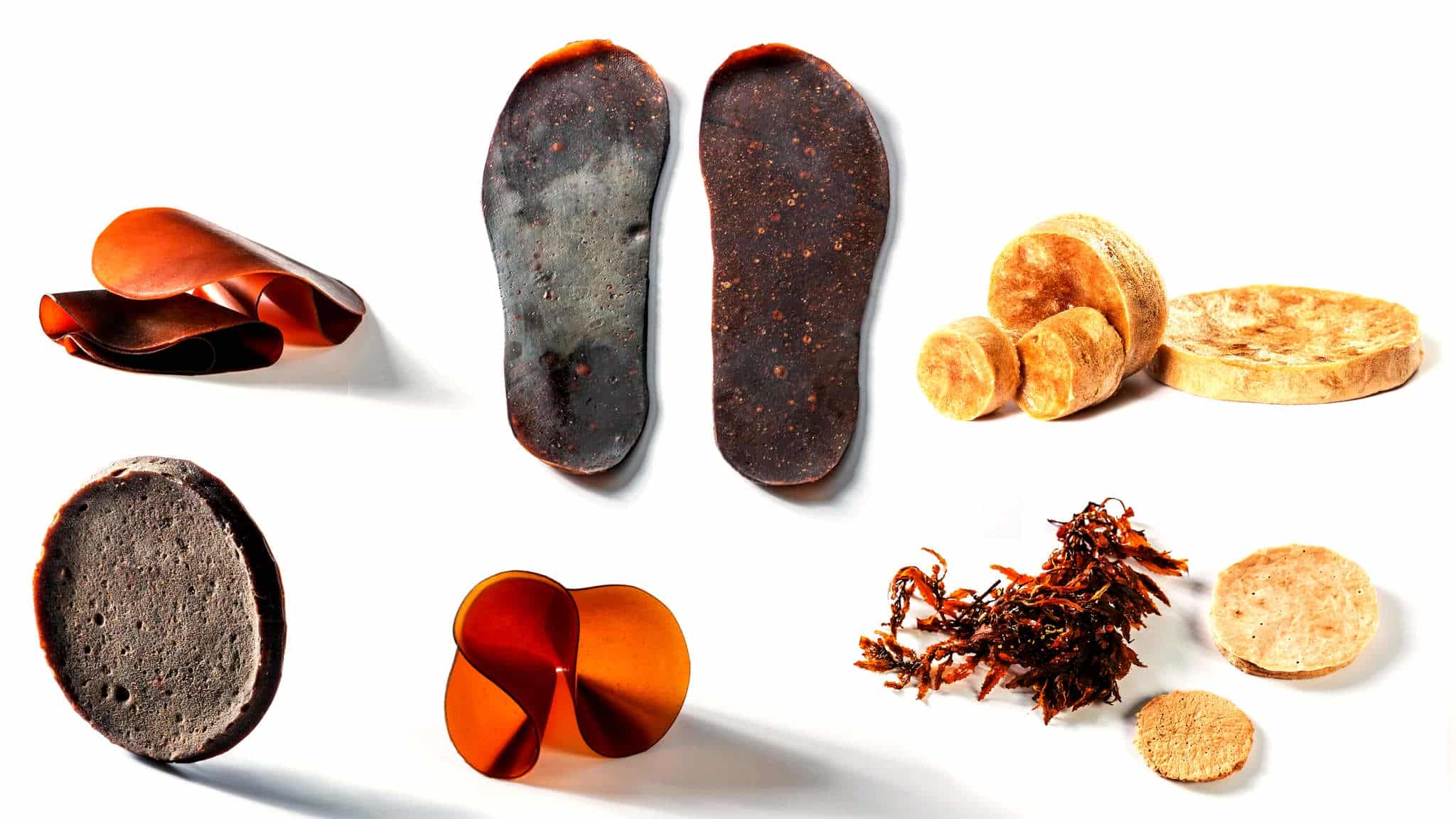
Instead of rotting away, the firm makes Sargassum into various products including the following:
- bio-stimulants for cultivation and ecosystem restoration,
- emulsifiers for pharmaceuticals and cosmetics, and
- bio-leathers for fashion, apparel, and interior design.
The company’s key advantage is the ability of its seaweed products to have the lowest carbon footprint on the market.
Not to mention that instead of paying for the raw materials, they’re paid by the hotels to collect sargassum in most cases. Plus, it’s basking on energy and a cost-efficient patented production process.
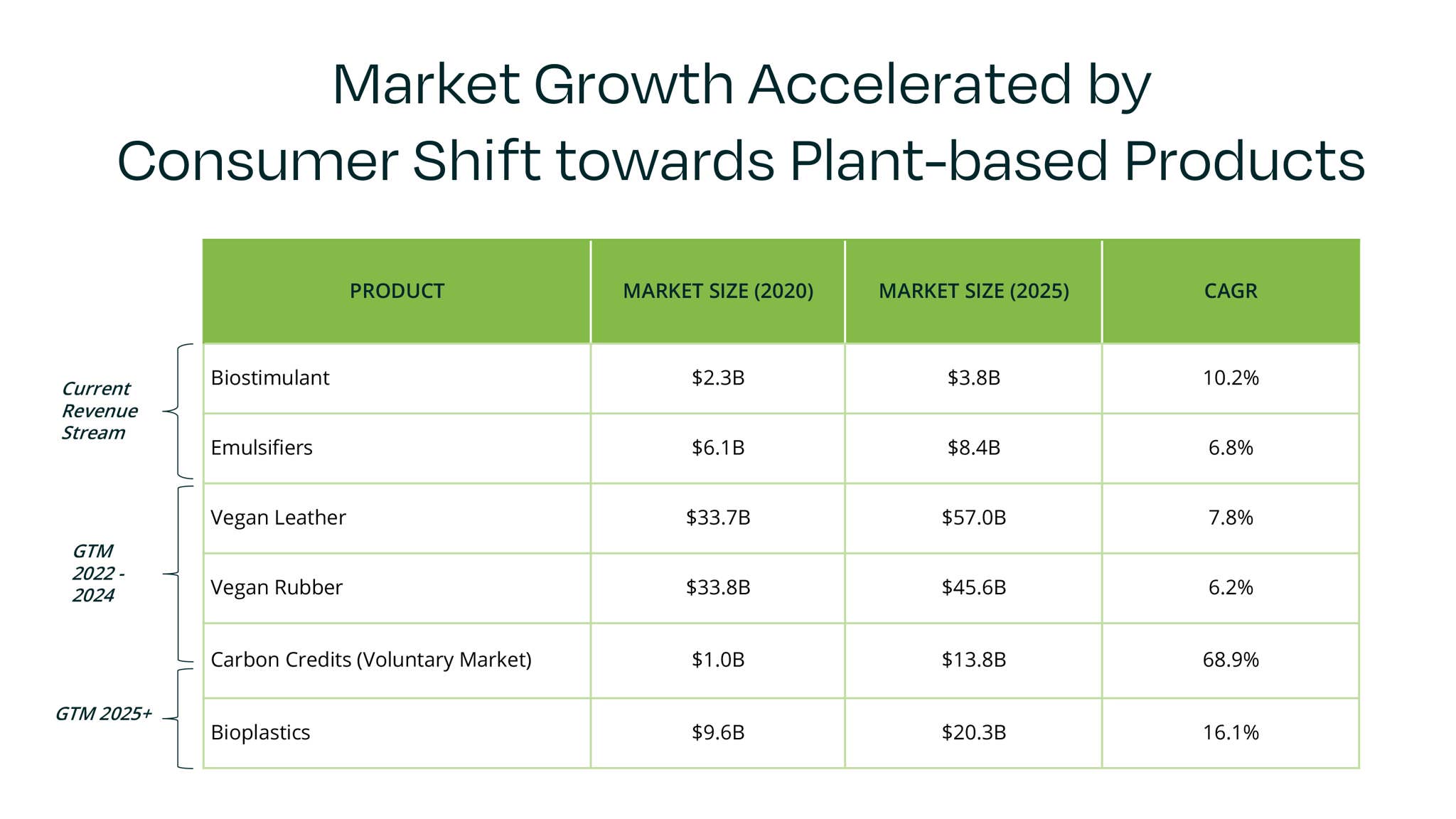
Carbonwave believes that their market is poised to grow due to strong demand for sustainable, plant-based inputs. Here are the firm’s major growth drivers:
Carbon credits from sargassum
Alongside other major products, the startup expects to amass revenue from carbon credits this year up to 2025. The market size for this product is seen to grow by around 70% (from 2020 – 2025) as per the firm’s projection.
A carbon credit represents one tonne of CO2, or its equivalent, avoided or removed from the air.
- The rotting sargassum on the shore releases methane, which is 34x worse than CO2 for causing global warming.
By turning the rotted seaweed into sustainable products, Carbonwave helps reduce and offset emissions from fossil fuels.
Also, as the company makes products that replace fossil fuels, it’s further cutting carbon emissions. And this qualifies them more to generate a corresponding amount of carbon credits once measured and verified.
The firm can then sell the credits to those who seek to offset their emissions.
Other initiatives include growing seaweed in the desert and making floating offshore farms to capture carbon and earn credits.