

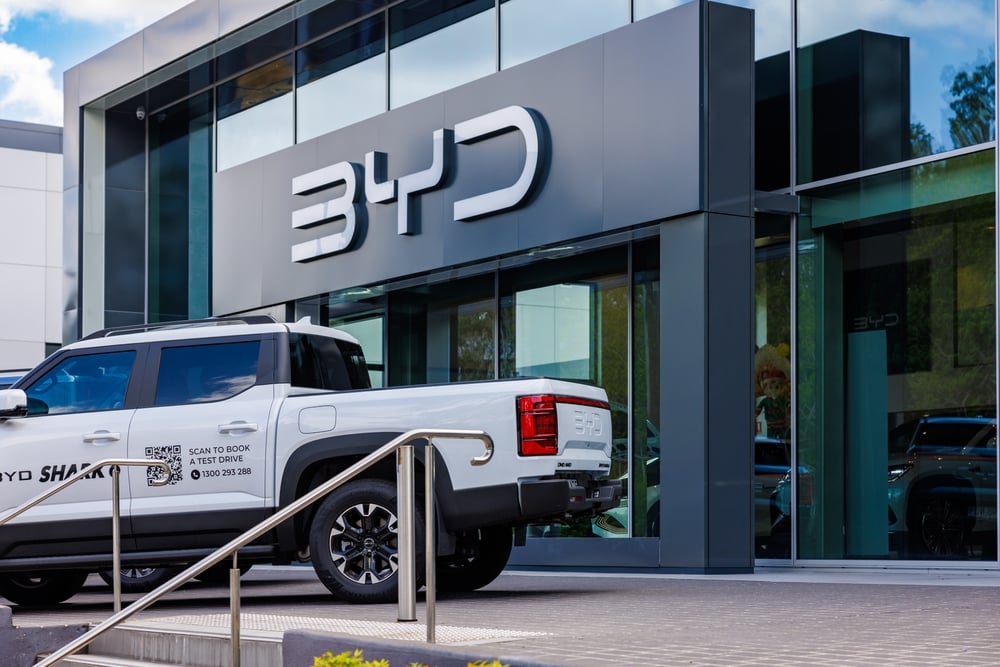
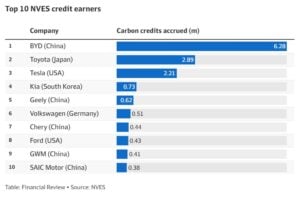
Chinese electric vehicle maker BYD has accumulated around 6.2 million carbon credits under Australia’s New Vehicle Efficiency Standard (NVES) scheme. This comes from its strong performance in low-emission vehicle production and sales in the country.
The credits reward manufacturers that make and import vehicles with low greenhouse gas emissions. BYD’s haul reflects the company’s large supply of electric vehicles (EVs) that meet or exceed strict emissions benchmarks.
These credits can be sold to other manufacturers that fall short of efficiency targets. They help other car makers comply with regulatory requirements, which can be costly to miss.
BYD’s strong carbon credit position highlights its quick growth in EV markets. This shows the importance of leading in clean vehicles, especially with carbon pricing and regulations.
How Australia’s NVES Turns Emissions Into Tradable Credits
Australia’s New Vehicle Efficiency Standard aims to cut vehicle emissions over time. It sets yearly targets for average CO₂ emissions of new light vehicle fleets sold in the country.
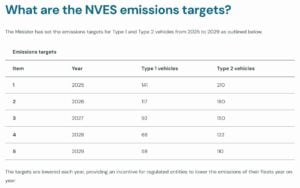
Manufacturers that sell more low-emission vehicles than required earn credits. Those that sell fewer low-emission vehicles can buy credits to balance their performance.
BYD benefited because its vehicles, especially EVs, have very low tailpipe emissions. Each EV imported or sold that performs better than the standard adds credits to BYD’s account. On the other hand, makers of heavier or higher-emission vehicles might face penalties. They may also need to buy carbon credits to comply.
This system creates a market for credits linked to carbon intensity. It rewards companies that adopt clean tech quickly and penalises those that lag. The 6.2 million-credit total shows BYD’s scale in clean vehicle supply under this compliance scheme.
Why BYD Leads in Carbon Credit Generation
BYD’s strong position in carbon credits reflects its dominance in EV production and global sales trends. Per the NVES data, the Chinese EV maker tops the list of companies earning carbon credits under the scheme.
BYD is now the biggest EV maker globally, beating Tesla in 2025. It has been selling millions of electric cars each year since 2023. The company is also growing in markets like Europe, Latin America, Southeast Asia, and Australia.

This scale makes BYD well-placed to earn credits when regulations reward low-emission vehicles. Other carmakers that depend on internal combustion engine (ICE) vehicles might find it hard to earn similar credits for efficiency or emissions programs.
In some regions — including Europe — BYD is even in talks to supply surplus carbon credits to traditional automakers. The aim is to help those automakers avoid fines under strict EU emissions rules by 2025.
These talks could expand BYD’s reach in carbon credit markets. They might go beyond Australia and into global regulatory frameworks.
From Regulation to Revenue: Carbon Credits as Strategic Assets
Carbon credits have become more important in the auto industry as regulators tighten emissions limits.
Under schemes like Australia’s NVES and the European Union’s emissions regulations, credits act as compliance instruments. They can reduce the cost of meeting regulatory targets for manufacturers.
For example, European automakers can form carbon credit pools. Carbon credit pooling, where companies share or trade surplus credits, is emerging as a compliance method. These pools allow companies that fall short of targets to buy credits from low-emission peers such as BYD or Tesla.
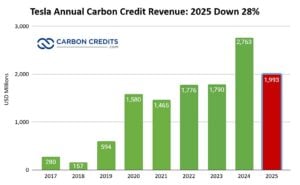
Tesla has also earned significant revenue from selling regulatory or carbon credits to other automakers. In 2025, the company generated almost $2 billion in total carbon credits from these sales, even as volumes shifted during the year. They are an important, though changing, revenue source for Tesla.
The pooling helps firms avoid large fines for missing emissions caps. In 2025, EU penalties for vehicles that exceed CO₂ limits could run into billions of dollars if automakers do not comply.
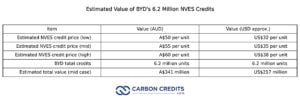
Under Australia’s NVES, credits are generated when a manufacturer’s fleet emissions fall below annual targets. While there is no fixed public trading price yet, industry modelling links the credit value closely to the penalty rate of A$100 per g CO₂/km per vehicle, per the NVES Act 2024.
Analysts estimate real trading values may range around A$50–A$60 per unit, or roughly US$32–US$38 at current exchange rates. Using a mid-range estimate of US$35 per credit, BYD’s 6.2 million credits could represent around US$217 million in potential compliance value.
For BYD, credit generation becomes an asset as well as a compliance indicator. It can potentially sell surplus credits to others and strengthen relationships across global auto markets.
This shift reflects a broader trend. More countries are now tying vehicle emissions to tradable credits. This helps boost EV adoption and cut transport emissions.
Policy Pressure Accelerates the EV Shift
Transport is a major source of global greenhouse gas emissions. Light-duty vehicles alone account for a large share of road transport emissions worldwide. Thus, many governments are tightening emissions standards. These include late-decade targets for EV sales and fleet emissions averages.
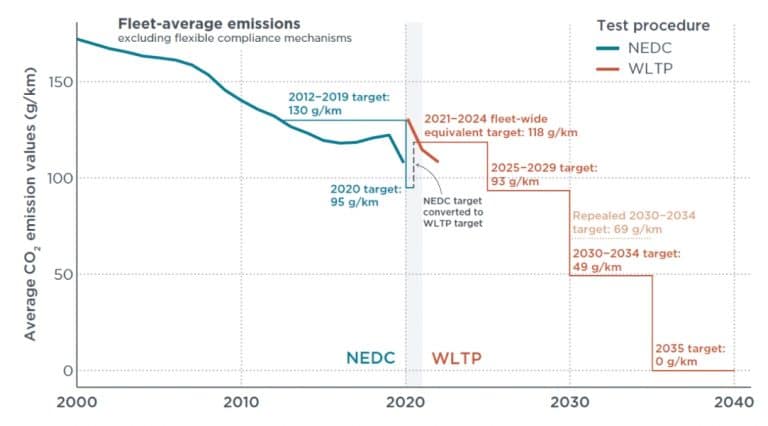
The European Union wants carmakers to cut average CO₂ emissions a lot by 2025. They aim for zero-emission sales by 2035.
In Asia, BYD is also pushing EV adoption hard, often outpacing legacy brands in unit sales. Its production volume helps it to be a major source of low-emission vehicles.
Australia’s NVES scheme reflects similar intentions. It seeks to shift the vehicle fleet toward cleaner technology by rewarding low emissions and penalizing high emissions. The 6.2 million credits that BYD amassed show the scale of emissions improvement achievable when a market leader focuses on EV supply.
Legacy Automakers Face a Compliance Squeeze
Traditional or legacy automakers face increasing pressure from efficiency and emissions regulations. Automakers that still sell many ICE vehicles often fall short of targets. This forces them to purchase carbon credits or pay penalties.
Both options can incur high costs. For example, if automakers don’t meet the 2025 emissions targets set by the EU, they could face fines up to $15.6 billion.
BYD’s possible participation in carbon credit pools could be significant for global emissions markets. These structures help companies with low EV production get credits from top EV sellers. The business and compliance value of credits thus goes beyond one scheme or country.
Beyond Sales: BYD’s Long-Term Climate Commitments
BYD’s strong carbon credit position supports its broader sustainability strategy. The company aims to reduce its carbon footprint and align with global climate goals.
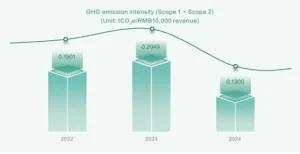
The EV maker has committed to achieving carbon neutrality across its value chain by 2045, guided by China’s national dual-carbon goals. It also aims to cut the carbon intensity of its own operations by 50% by 2030 compared with a 2023 base year.
BYD’s sustainability work spans beyond EV sales. It invests in battery technology, solar power solutions, and recycling efforts that support circular energy systems.
Each EV model is designed to support long life and high safety. These models, including those using BYD’s proprietary Blade Battery technology, also enable recycling and reuse.
These efforts reinforce BYD’s positioning not just as an EV maker but as a broader participant in low-carbon technology markets.
A Glimpse of the Auto Industry’s Carbon-Driven Future
BYD’s 6.2 million carbon credits show how regulatory incentives can amplify low-emission technology adoption. They provide a compliance advantage for BYD and a potential revenue stream if credits are sold or pooled.
Credit generation also signals strong EV market performance tied to emissions rules. BYD shows that as carbon pricing and efficiency standards grow, top EV makers can gain both environmentally and financially.
For traditional carmakers, the rise of tradable carbon credits tied to vehicle efficiency will likely remain a key part of emissions compliance strategies.
As global climate policies tighten, carbon credits may increasingly bridge technology gaps and help accelerate the transition to zero-emission mobility.