


Chanel has unveiled its first comprehensive climate transition plan, charting a clear path to net-zero emissions by 2040. Building on its earlier “Mission 1.5°” strategy, the plan aligns with global climate standards and follows the Science-Based Targets initiative (SBTi). This means Chanel must reduce at least 90% of its emissions and remove the remainder.
The move shows a bigger change in luxury brands. They face more pressure from investors, regulators, and customers to take real climate action. Many companies now publish detailed transition plans to show how they intend to meet their net-zero commitments.
For Chanel, climate considerations are no longer immaterial—they now inform core business decisions, from risk management to opportunity assessment.
Breaking Down Chanel’s 1M Tonnes Carbon Footprint
In its Climate Transition Plan, Chanel reported total emissions of about 1.12 million tonnes of CO₂e in 2024. Most of these emissions do not come from its own stores or offices. Instead, they come from its supply chain.
- Scope 1 and 2 emissions: 2% of total (about 24,071 tonnes)
- Scope 3 emissions: 98% of total (about 1.1 million tonnes)
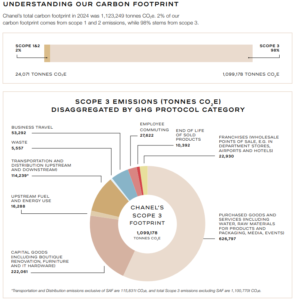
This shows a key challenge. Like many fashion brands, Chanel’s biggest impact is upstream. That includes raw materials, manufacturing, and logistics. The largest source is purchased goods and services, which account for over 626,000 tonnes of CO₂e.
Other major sources include:
- Capital goods: about 222,000 tonnes
- Transport and distribution: over 114,000 tonnes
- Business travel: over 53,000 tonnes
These figures highlight how complex the fashion supply chain is. It also shows why cutting emissions is harder than in other sectors.
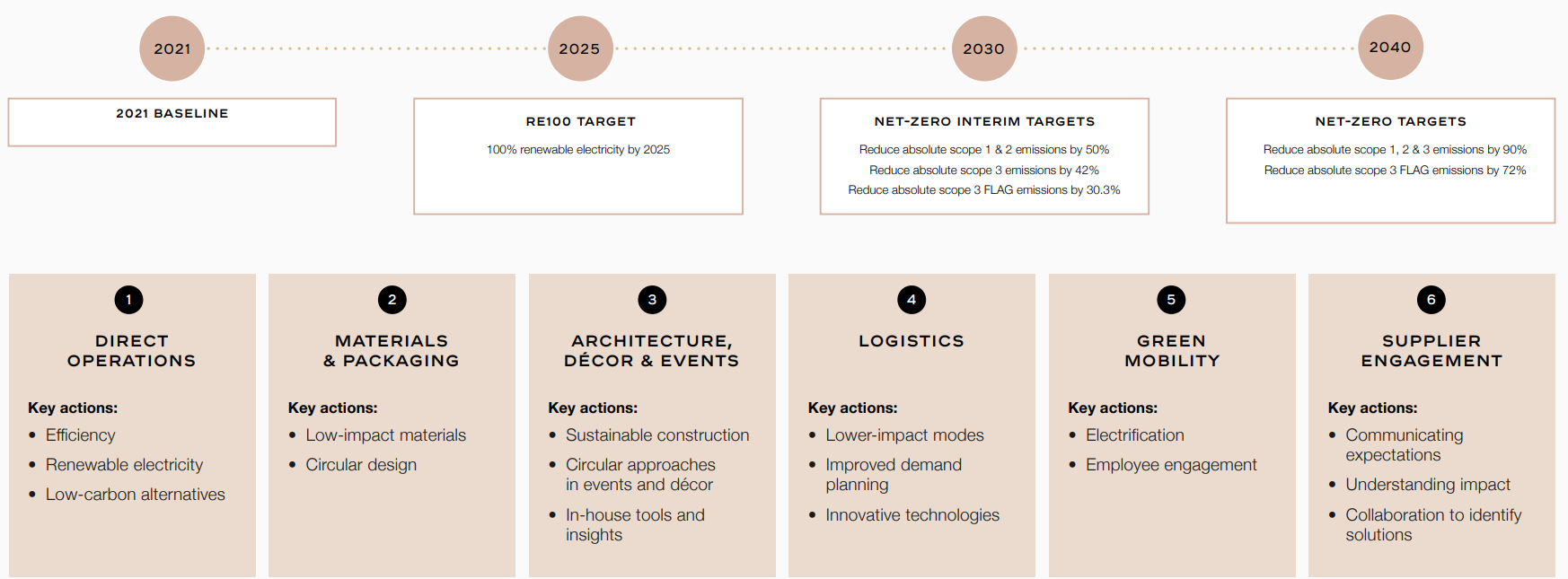
Clear Targets: 2030 and 2040 Milestones
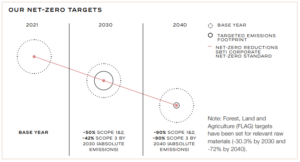
Chanel has set both near-term and long-term net-zero targets to tackle its carbon footprint. By 2030, the company aims to:
- Cut Scope 1 and 2 emissions by 50%, and cut Scope 3 emissions by 42%.
By 2040, the goal is deeper:
- Cut all emissions (Scope 1, 2, and 3) by 90%, and remove the remaining emissions through carbon removals.
Specific targets also cover land-based emissions associated with raw materials like leather and cashmere, with reductions of 30.3% by 2030 and 72% by 2040.
Importantly, Chanel does not rely on carbon offset credits to meet its targets. Instead, it focuses on real emissions cuts. This aligns with stricter global standards. Many frameworks now limit the use of offsets in net-zero plans.
Progress So Far: Renewable Energy and Supply Chain Improvements
The French luxury brand has already achieved measurable progress. Direct emissions have fallen 22% since 2021, driven primarily by the use of renewable energy. By 2024, 99% of the company’s electricity came from renewable sources, and the goal is to reach 100% by 2025.
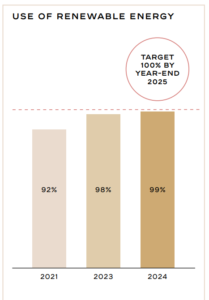
Long-term power purchase agreements, including solar projects across Asia and Europe, have supported this transition.
Scope 3 emissions have also improved, declining 10% relative to 2021. Raw material emissions dropped 20% in 2024, thanks to changes in sourcing and the adoption of lower-impact inputs such as sustainable leather and cashmere.
How Chanel Plans to Cut Emissions and Reach Net Zero
The company’s strategy to tackle its emissions focuses on six main areas:
- optimizing operations,
- adopting lower-impact materials and packaging,
- implementing sustainable design in construction and events,
- shifting to low-emission logistics,
- promoting electric mobility, and
- engaging closely with suppliers.
Since Scope 3 emissions dominate the total footprint, supplier engagement is crucial.
Innovation also plays a key role. Chanel supports initiatives that reduce energy consumption in manufacturing, such as a project that lowered energy use by 27% at a supplier site. Circular design is another focus, with investments in repair services and durable products to extend product life.
Beyond Emissions: Climate Investment and Social Impact
Chanel’s climate plan extends beyond emissions reductions. The company invests in nature and climate projects, including the LEAF Coalition for forest protection, sustainable agriculture programs, and community-based climate initiatives.
In 2024, Chanel committed $125 million to Fondation Chanel, part of which funds women-led climate programs, tying environmental action to social impact. This approach embodies a “just transition,” ensuring that climate action also benefits workers and communities.
The Luxury Sector Shifts: Chanel Sets the Bar for Fashion
Chanel’s plan reflects a wider shift in the fashion and luxury sector. The industry faces growing pressure to act on climate. Fashion accounts for an estimated 2% to 8% of global emissions, based on various global studies.
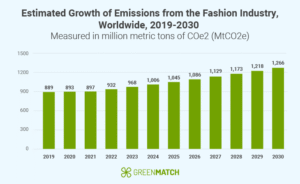
Supply chains are complex and global, making change harder. At the same time, regulations are tightening. New rules in Europe and other regions require companies to disclose emissions and transition plans.
Many brands are now setting net-zero targets. But not all have detailed plans. Chanel’s transition plan stands out because it includes:
- Full emissions data
- Clear reduction targets
- A roadmap for action
Still, challenges remain. Cutting Scope 3 emissions is difficult. It depends on suppliers, technology, and costs. There is also a risk of slow progress. New materials, clean energy, and circular systems take time to scale.
Looking Ahead: A Long Road to Net-Zero
Chanel’s transition plan represents a significant step in addressing over 1 million tonnes of emissions. Progress in operations and energy use is evident, but the supply chain remains the most difficult hurdle.
Achieving net-zero by 2040 will require transforming material sourcing, deep collaboration with suppliers, and investment in new technologies.
As consumer demand for low-carbon products grows and investors increasingly scrutinize climate risks, transition plans have become a business imperative. Chanel’s strategy highlights a key trend: climate action is no longer a peripheral responsibility—it is integral to growth, risk management, and long-term value creation.