
Carbon CreditsCarbon is Forever - Is this the End of the Diamond Industry?

Carbon is Forever – Is this the End of the Diamond Industry?

The world’s first “Air” mined diamonds could signal the end of the diamond industry as we know it.

Diamonds have been around for a long time, they were not a very important gem until De Beers began their successful marketing campaign in the 20th century.

De Beers began to convince people that diamonds were a show of love and that size matters. Over time celebrities and the global PR machine made diamonds extremely valuable and “rare”.

Traditional mined diamonds have a much larger environmental impact than lab-grown diamonds.

Lab-grown diamonds are nothing new, they are cheap and can produce the same quality as mined diamonds, the problem is perception.

It was ingrained in our minds that diamonds must be expensive to show how much you love someone, but that is changing fast.

Millennials and Generation Z, are now the main purchasers of diamonds for engagement rings. They are eco-conscious and 70% of them are considering buying lab-grown diamonds.

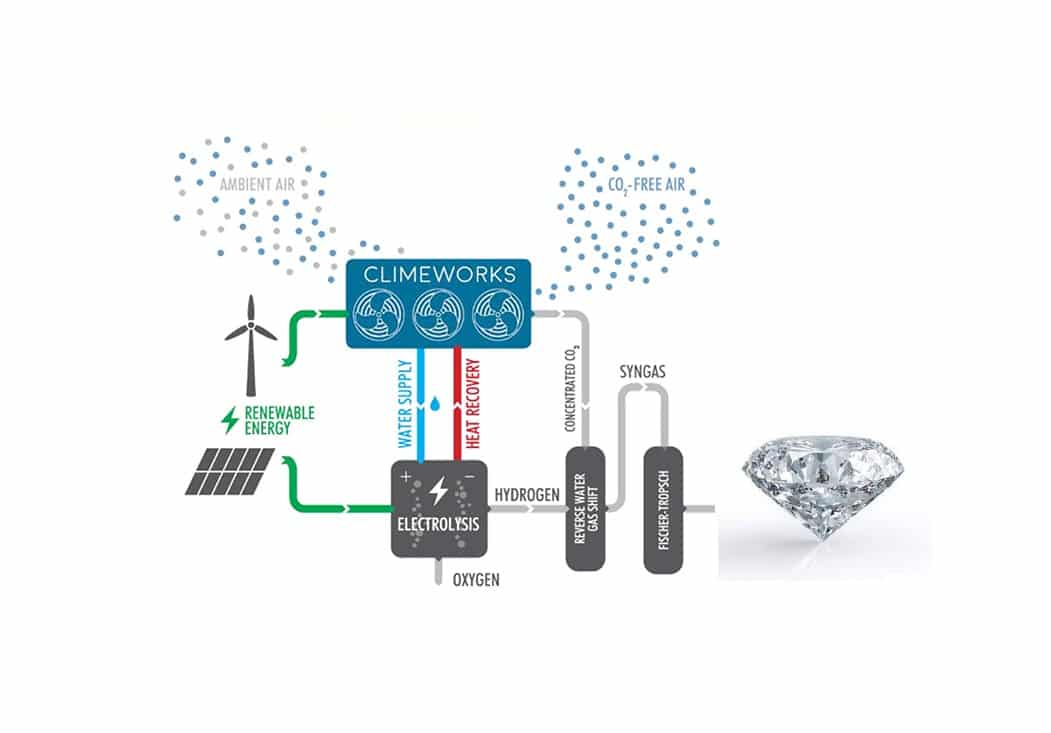
Climeworks has partnered with Aether Diamonds to produce Carbon-Negative Diamonds.

For every carat of diamond, Aether says it removes 20 metric tons of carbon dioxide from the air (i.e., 20 carbon credits). That is more than a year’s worth of emissions for the average American.

The costs are a lot more than traditional lab-made diamonds to produce, but then again diamonds are only expensive based on perception.

With Carbon set to become one of the biggest commodities of the future, maybe one day all diamonds will be graded by the 5 Cs: carat, cut, clarity, color, and carbon credits.


Most Popular


Ultimate Guide


Loading...


LATEST CARBON NEWS

AEMC’s Nikolai: America’s Answer to Indonesia’s Nickel Crunch

Disseminated on behalf of Alaska Energy Metals Corporation. As the global energy transition accelerates, access to critical minerals is becoming just as important as innovation...

The U.S. EV Supply Chain Race: Where Surge Battery Metals Fits in the National Critical Minerals Strategy

Disseminated on behalf of Surge Battery Metals Inc. Electric vehicles (EVs) are central to the global shift away from fossil fuels. EV sales continue to...

Who Will Drive the Next Wave of Carbon Credit Demand? Insights from AlliedOffsets

The voluntary carbon market (VCM) lets companies buy carbon credits to offset their greenhouse gas emissions. AlliedOffsets, a data and technology firm for carbon...

Nickel Demand for EVs Could Flip the 2030 Market Balance

Disseminated on behalf of Alaska Energy Metals Corporation. On the surface, the global nickel market looks comfortable. Supply appears ample. Prices remain under pressure. Inventories...
CARBON INVESTOR EDUCATION

Planting Trees for Carbon Credits: Everything You Need to Know

As climate change intensifies, nations and industries are seeking innovative ways to cut carbon footprints. Carbon credits have emerged as a key tool in...

What is SMR? The Ultimate Guide to Small Modular Reactors

Energy is the cornerstone of modern life. We need electricity for healthcare, transportation, communication, and more. Many countries are choosing nuclear power because it...

What Is Carbon Dioxide Removal? Top Buyers and Sellers of CDR Credits in 2024

The world must remove 5–16 billion metric tons of CO₂ annually by 2050 to limit global warming to 1.5°C. But with emissions still rising,...

Top 5 Carbon ETFs for Sustainable Investing in 2025

Like stocks, investors can buy and sell Exchange-Traded Funds (ETFs) whenever the market is open. Often investing in carbon credits through ETFs offers a...