

Germany has launched a new climate action plan aimed at cutting emissions and reducing fossil fuel use. The program includes 67 measures across energy, transport, industry, buildings, and agriculture, backed by €8 billion ($9.3 billion) in funding over the next four years.
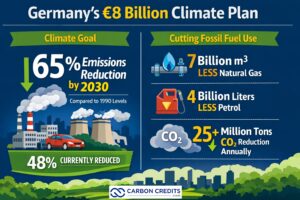
The goal is clear. Germany wants to cut greenhouse gas emissions by 65% by 2030 compared to 1990 levels and reach climate neutrality by 2045.
But progress has been uneven. Emissions are currently about 48% below 1990 levels, leaving a significant gap to close before the end of the decade.
This new plan is designed to close that gap while also reducing reliance on imported fossil fuels, which have become more costly and volatile in recent years.
How the Plan Cuts Emissions and Fuel Use
The German government expects the program to deliver measurable results. By 2030, the plan aims to:
- Cut more than 25 million metric tons of CO₂ per year,
- Reduce natural gas use by about 7 billion cubic meters, and
- Lower petrol consumption by roughly 4 billion liters.
These reductions will come from a mix of policies targeting different sectors.
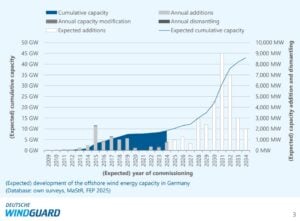
A major focus is on renewable energy. Germany plans to add 12 gigawatts of new onshore wind capacity, enough to replace the output of 15 to 20 gas-fired power plants.
In transport, the government will offer €3 billion in subsidies to support up to 800,000 electric vehicles (EVs). This alone could save more than 800 million liters of fuel by 2030.
Industry will also play a key role. About €2.9 billion is set aside to help companies switch to low-carbon technologies, including electrification and carbon capture solutions.
Together, these measures aim to reduce both emissions and dependence on fossil fuels at the same time.
Energy Security Meets Climate Policy
Germany’s climate strategy is closely tied to energy security. The country has faced rising energy costs and supply risks in recent years. These challenges have made reducing fossil fuel imports a priority.
The new plan reflects this shift. It aims to make Germany less dependent on volatile global market prices for fossil fuels, according to the government. Carsten Schneider, Germany’s Federal Environment Minister, remarked:
“This program will give a new boost to climate protection, making us less dependent on expensive and uncertain oil and gas imports. We are modernizing the economy, making society more resilient to crises, and helping nature to help us. What is at least as important to me is that we, as the Federal Government, have succeeded in developing this program without major controversy.”
By expanding renewable energy and electrification, Germany can reduce its exposure to oil and gas price swings. Wind and solar power offer more stable costs over time, especially once infrastructure is in place.
This approach also aligns with broader European trends. Many countries in the EU are accelerating clean energy investments to strengthen both climate resilience and energy independence.
For instance, Spain is quickly boosting its solar and wind energy. The national plan aims for renewables to provide over 70% of electricity by 2030. France is also investing heavily in both nuclear and renewable energy to cut fossil fuel use and stabilize power supply.
Meanwhile, the Netherlands is scaling offshore wind projects in the North Sea, targeting tens of gigawatts of capacity by 2030. These efforts reflect a region-wide push to reduce dependence on imported fossil fuels.
Challenges: A Gap Between Targets and Reality
Despite Germany’s new plan, challenges remain. The country’s emissions have not been falling fast enough in key sectors.
In 2025, total emissions were about 648.9 million tonnes of CO₂ equivalent, only slightly below the legal limit. Emissions dropped by just 0.1% from the previous year, far slower than needed.
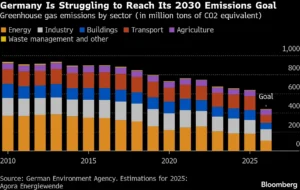
The transport and buildings sectors continue to miss their targets. These areas are harder to decarbonize because they rely heavily on fossil fuels and require large infrastructure changes.
According to a study by Agora Energiewende, Germany must cut emissions by about 42 million tonnes per year starting in 2026 to meet its 2030 goal.
Some advisors warn that the current plan may not be enough. Early assessments suggest it is “highly likely” that additional measures will be needed to meet long-term targets. This highlights the scale of the transition required.
Market Trends and Investment Outlook
Germany’s plan reflects wider global trends in climate policy and clean energy markets. Investment in renewable energy, electrification, and low-carbon technologies continues to grow worldwide.
According to the International Energy Agency, global energy investment reached about $3.3 trillion in 2025, with around $2.3 trillion (or about two-thirds) going to clean energy such as renewables, grids, and electrification.

Governments and companies are increasing spending to meet climate targets and reduce exposure to fossil fuel risks. Key trends include:
- Rapid expansion of wind and solar power,
- Rising adoption of electric vehicles,
- Increased investment in industrial decarbonization, and
- Growing interest in carbon capture and storage.
Germany’s plan supports all of these areas. The 12 GW wind expansion, EV subsidies, and industrial funding align with global investment patterns.
At the same time, the clean energy transition is becoming a major economic driver. Countries are competing to build new industries around renewable power, batteries, and low-carbon technologies.
However, the pace of investment must increase further. Global climate models suggest that emissions must fall sharply this decade to meet international targets under the Paris Agreement.
A Critical Decade for Germany’s Climate Goals
Germany’s new climate action plan marks an important step in its energy transition. It combines investment, policy measures, and sector-wide changes to reduce emissions and fossil fuel use.
The plan targets over 25 million tonnes of annual CO₂ reductions by 2030, along with major cuts in gas and petrol consumption.
But the path ahead is challenging. Emissions must fall much faster to meet national targets. Key sectors still lag behind, and experts question whether current measures will be enough.
What is clear is that the next few years will be critical. Germany’s ability to scale renewable energy, electrify transport, and decarbonize industry will determine whether it can meet its climate goals.
The outcome will also shape Europe’s broader transition. As the region’s largest economy, Germany plays a central role in setting the pace for climate action across the continent.