


Google has signed a major deal to buy carbon removal credits from an affiliate of AMP Robotics. The agreement targets the removal of 200,000 metric tons of carbon dioxide equivalent (CO₂e) by 2030. It is one of Google’s largest carbon removal purchases to date.
The project uses artificial intelligence (AI) to sort municipal solid waste. Organic waste is separated before it reaches landfills. Instead of decomposing and releasing methane, the waste is turned into biochar. Biochar is a stable material that can store carbon for hundreds of years.
The deal shows how large companies are moving beyond simple offsets. They are now funding durable carbon removal solutions that can scale over time.
AI + Biochar: Turning Trash into Carbon Storage
The project’s approach tackles two problems at once. It reduces methane emissions in the short term. It also removes carbon dioxide for the long term. Methane is a powerful greenhouse gas. In the United States, landfilled waste is the third-largest source of human-caused methane emissions, according to the U.S. Environmental Protection Agency.
Reilly O’Hara, Program Manager, Carbon Removal at Google, remarked:
“Beyond the carbon removal itself, we are excited to explore the dual-action impact of AMP’s approach on methane – a superpollutant 80x more potent than CO2. By diverting organic matter before it decomposes and utilizing biochar in landfill soil covers to neutralize existing gases, this partnership could serve as a blueprint for eliminating emissions at the source, leveraging existing industry, and creating a scalable model for the circular economy.”
The AMP system uses AI to identify and sort materials from mixed waste streams. The company says its platform has already identified more than 200 billion items and processed 2.9 million tons of recyclables globally.
In this project, the system will process up to 540,000 tons of waste per year in Virginia. At least 50% of this waste will be diverted from landfills. Each ton of waste diverted can reduce or remove more than 0.7 tons of CO₂e. That adds up to over 378,000 tons of CO₂ avoided or removed each year. This is equal to taking about 88,000 cars off the road annually.
The project is backed by a 20-year contract with a regional waste authority serving 1.2 million people. Over time, AMP aims to convert 5 million tons of organic waste into biochar over 20 years.
image here….
Biochar also has added uses. It can be used in landfills to reduce odors and control pollution. It may also be used in construction and cement. This creates new value streams while storing carbon.
Carbon Removal Market Gains Momentum
The deal reflects a wider shift in the carbon market. Companies are now focusing on carbon dioxide removal (CDR) instead of traditional offsets. Carbon removal captures CO₂ from the atmosphere and stores it for long periods.
The market is still small but growing fast. A coalition backed by major companies, including Google, has committed to spending $1 billion on carbon removal credits by 2030.
Recent deals show rising demand:
- Google agreed to buy 100,000 tons of carbon removal credits from an agricultural biochar project in India.
- It also signed a deal for 50,000 tons of removal credits using underground waste storage technology.
Prices for high-quality removal credits remain high. Some deals have reached around $362 per ton, reflecting early-stage technology and limited supply.

At the same time, developers are working to scale production and lower costs. Biochar is seen as one of the more practical options today because it uses existing waste streams and proven processes.
Methane Matters: Quick Wins for the Climate
One reason this deal matters is its focus on methane. Methane causes much faster warming than CO₂ in the short term. Reducing methane can deliver quick climate benefits.
Waste is a major methane source. When organic waste breaks down in landfills, it releases methane gas. By diverting this waste early, AMP’s system prevents methane from forming at all.
This makes waste-based carbon removal different from many other methods. It combines emissions avoidance and carbon removal in one process.
This dual benefit is attracting attention from companies and policymakers. Many climate strategies now include methane reduction as a priority. Technologies that can do both removal and avoidance may scale faster than single-purpose solutions.
Beyond market impact, the deal highlights how Google is managing its rising emissions.
How This Fits Google’s Climate Strategy
The deal is part of Google’s wider plan to reduce its climate impact. The company has set a goal to reach net-zero emissions across its operations and value chain by 2030. It also aims to run on 24/7 carbon-free energy by 2030, meaning every hour of electricity use is matched with clean energy.

However, Google’s emissions have risen in recent years. In its 2024 environmental report, the company noted around 11.5 million tonnes of ambition-based CO₂e emissions. This marks an 11% rise from 2023 and is about 51% higher than in 2019. The increase shows ongoing growth in energy use, mainly from AI-powered data centers and expanded infrastructure.
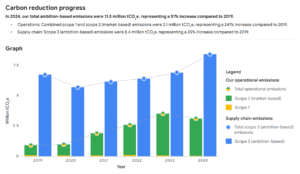
Because of this, Google is using carbon removal to address emissions it cannot fully eliminate. The company has said it will rely on high-quality carbon removal credits instead of traditional offsets. These credits must remove carbon from the atmosphere and store it for long periods.
The tech giant is also a founding member of Frontier, a coalition of companies committed to spending $1 billion on carbon removal by 2030. The group helps fund early-stage technologies and scale supply.
This strategy reflects a broader shift among tech companies. As energy use grows, especially from AI and cloud computing, firms are investing more in carbon removal to meet climate targets.
Carbon Removal Demand Surges, But Supply Falls Short
The Google–AMP deal shows how fast the carbon removal market is growing. But the market is still far from the scale needed to meet climate goals. Today, global emissions remain high at about 38 gigatonnes of CO₂ in 2024, according to the International Energy Agency.
To balance these emissions, demand for carbon removal is rising quickly. Estimates show the market could reach 40 to 200 million tonnes of CO₂ removal per year by 2030, and as much as 80 to 900 million tonnes by 2040. This could create a $10 billion to $40 billion market by 2030, growing to as much as $135 billion by 2040.
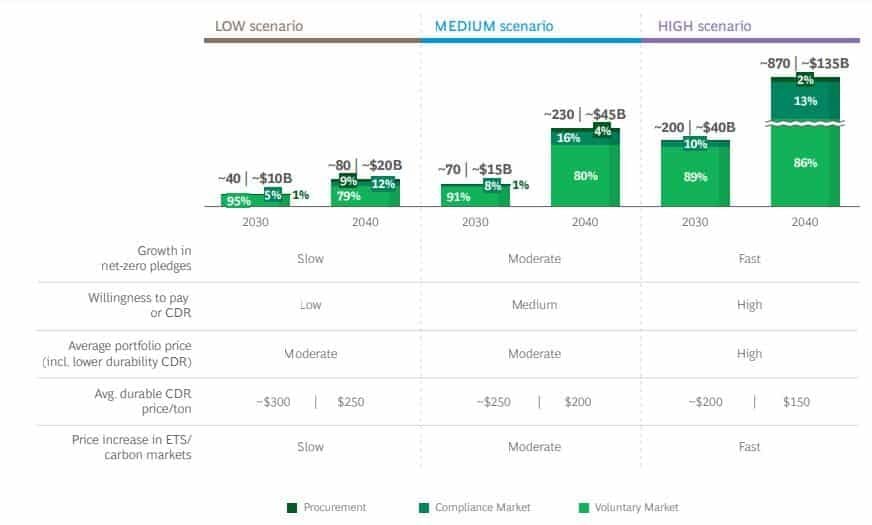
At the same time, supply is still limited. Current announced projects may only deliver around 33 million tonnes by 2030, far below expected demand. This gap is one reason large buyers like Google are signing long-term deals early. These agreements help scale new technologies and secure future supply.
Long-term, carbon removal will play a major role in climate strategy. Some projections show that removal capacity must reach around 1.7 gigatonnes per year by 2050 to meet global climate targets. Carbon capture alone could deliver about 12% of total emissions reductions between 2030 and 2050, especially in heavy industries like cement and steel.

Investment is also rising fast. In the past five years, the number of carbon removal startups has grown fivefold, and venture funding has increased sevenfold. This shows strong interest from both private investors and large companies.
Closing the Carbon Gap
Still, challenges remain. Costs are high, and standards are still evolving. Some forecasts suggest the market could reach up to $100 billion per year by the early 2030s, but only if policy support and financing improve.
In this context, the Google–AMP deal reflects a clear shift. Companies are moving early to secure high-quality carbon removal. They are also helping build the market from the ground up. Waste-based solutions like biochar may scale faster because they use existing systems and deliver both methane reduction and carbon storage.
Overall, carbon removal is moving from a niche idea to a core part of climate strategy. But the gap between current supply and future demand remains large. Closing that gap will require strong investment, clear rules, and continued innovation across the sector.