

Google has signed a long-term offshore wind power deal in Germany as it expands artificial intelligence and cloud infrastructure across Europe. The agreement is a 15-year power purchase agreement (PPA) with German utility EnBW. It covers 100 megawatts (MW) of electricity from the He Dreiht offshore wind farm in the North Sea.
The deal links Google’s growing electricity demand directly to new renewable generation. It also reflects a wider shift among large technology firms toward long-term clean power contracts tied to specific projects.
Adam Elman, Director of Sustainability EMEA at Google, remarked:
“Meeting the demand for AI infrastructure requires direct investment in the energy systems that make this technology possible. By contracting for new wind power from EnBW, we are bringing more clean energy online in Germany to power our operations, while accelerating the broader transition to a more sustainable electricity grid.”
AI Is Turning Electricity Into a Strategic Asset
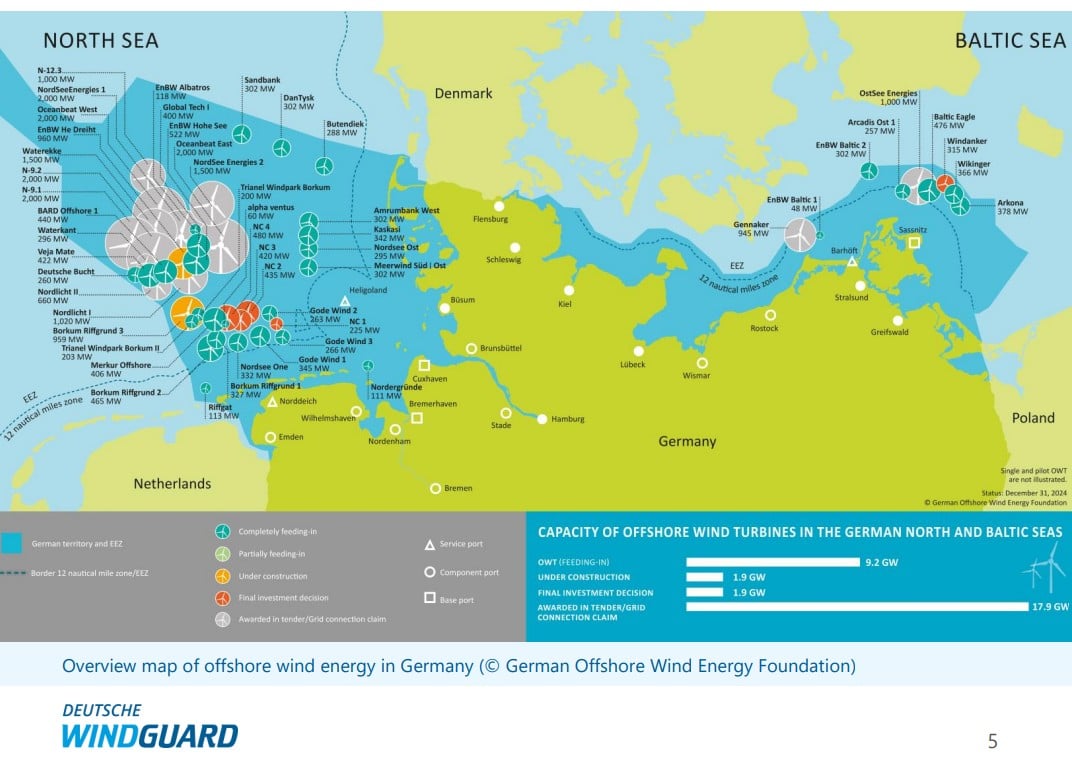
According to EnBW, the He Dreiht wind farm will have a total capacity of 960 MW. It will use 64 offshore wind turbines and is expected to connect to the grid by spring 2026. The site is located around 90 kilometers northwest of Borkum and 110 kilometers west of Helgoland.
For Google, the agreement supports its goal of operating on 24/7 carbon-free energy by 2030. This means matching electricity use with carbon-free power every hour of the day, not just on an annual basis.
Google’s power demand is rising quickly. The main driver is artificial intelligence. AI systems need large amounts of computing power, which in turn requires large amounts of electricity.
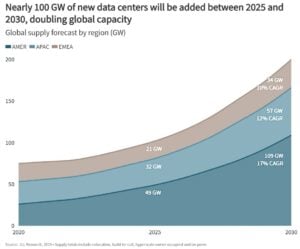
The International Energy Agency (IEA) estimates that data centers used about 415 terawatt-hours (TWh) of electricity in 2024. That equals around 1.5% of global electricity demand. The IEA also notes that data center demand has grown at a double-digit annual rate in recent years. The same trend is forecasted by an industry report, as shown below.
Germany plays a key role in Google’s European expansion. In late 2025, Google announced plans to invest €5.5 billion in the country between 2026 and 2029. The investment includes a new data center in Dietzenbach, near Frankfurt, and continued development of its Hanau data center campus, which opened in 2023.
Data centers need reliable power around the clock. They also face rising pressure from governments, investors, and customers to reduce emissions. Long-term renewable PPAs help companies manage both issues.
- MUST READ: Environmental Groups Urge U.S. Congress to Pause Data Center Growth as Federal AI Rule Looms
By signing a 15-year contract, Google gains price certainty and supply stability. At the same time, the contract helps EnBW finance a large offshore wind project that adds new clean electricity to Germany’s grid.
A Flagship Wind Farm in the North Sea
Germany already has one of Europe’s largest offshore wind fleets. By the end of 2024, the country had 31 offshore wind farms fully in operation. Installed offshore wind capacity reached about 9.2 gigawatts (GW) in total. Around 7.4 GW sits in the North Sea, while about 1.8 GW is in the Baltic Sea.
He Dreiht is one of the largest offshore wind projects currently under construction in Germany. With 960 MW of capacity, it will add a meaningful share to the national total once it comes online.
The project also reflects a broader trend toward larger offshore turbines. According to industry data, offshore turbines commissioned in Germany in 2024 had an average capacity of 10.2 MW. The first 11 MW turbine entered operation that year, and 15 MW turbines are expected to appear in German waters starting in 2025.
Larger turbines can generate more electricity with fewer units. This can reduce seabed disturbance and installation time. However, it also requires stronger foundations, larger vessels, and more robust grid connections.
For EnBW, He Dreiht is a flagship project. The utility has already signed multiple PPAs for the wind farm with corporate buyers. This shows how offshore wind developers are increasingly relying on long-term corporate demand alongside traditional utility customers.
Why Corporates Are Becoming Power Buyers
Power purchase agreements play a growing role in clean energy finance. A PPA is a contract where a buyer agrees to purchase electricity from a specific project at agreed terms over many years.
For developers, PPAs reduce financial risk. They help secure loans and attract investors by offering predictable revenue. For buyers, PPAs provide access to clean power without owning generation assets.
This model is becoming more common as electricity demand rises and clean energy targets tighten. The IEA reports that global energy investment exceeded $3 trillion in 2024 for the first time. Around $2 trillion of that went into clean energy technologies and infrastructure, including renewables, grids, and storage.
Europe is a key market in this shift. Offshore wind plays a major role because it can produce large volumes of electricity close to industrial and urban centers. Germany plans to keep expanding offshore wind as part of its long-term energy strategy. It plans to expand grid-connected offshore wind power capacity to at least 30 gigawatts by 2030, 40 gigawatts by 2035, and 70 gigawatts by 2045.
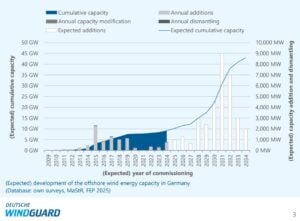
Corporate PPAs like Google’s agreement with EnBW help speed up this build-out. They send clear demand signals to developers and help reduce reliance on government subsidies.
From Annual Offsets to 24/7 Clean Power
Google’s long-term climate strategy goes beyond buying renewable energy certificates. The company aims to operate on 24/7 carbon-free energy in every region where it runs data centers and offices.
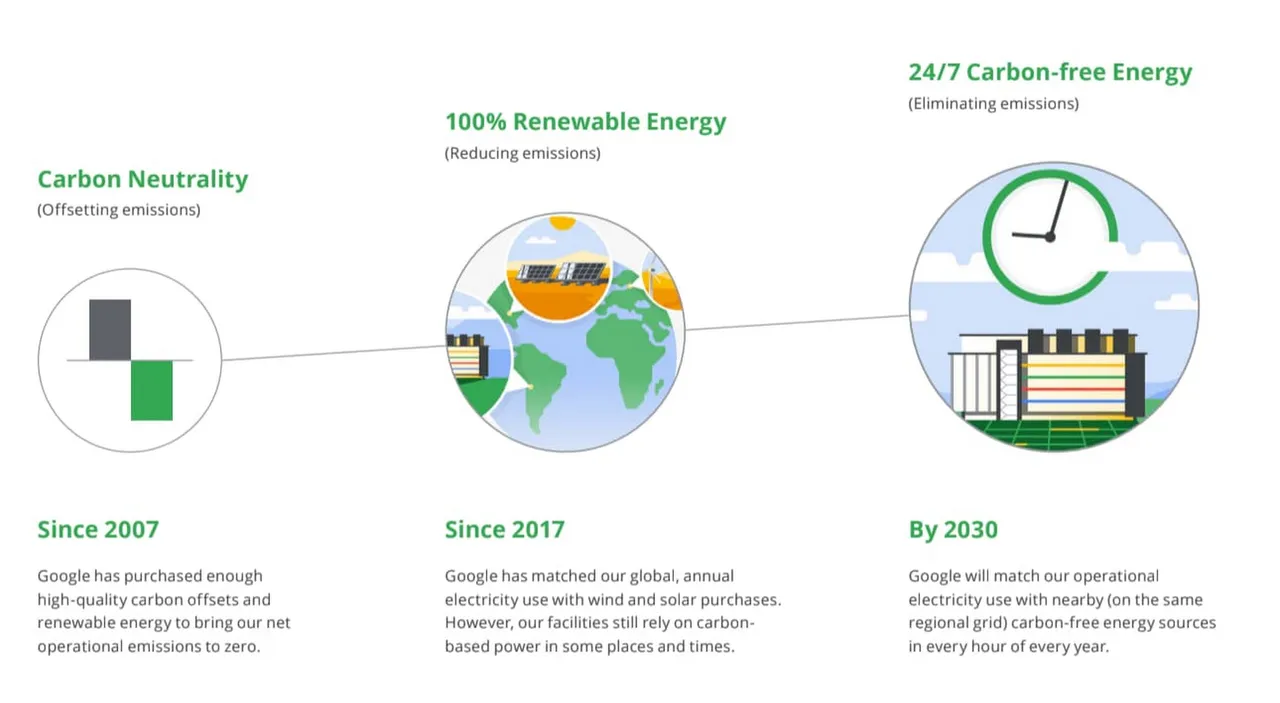
This approach focuses on real-time matching. It encourages a new, clean generation in the same places where electricity is used. Offshore wind PPAs fit well into this strategy in coastal countries like Germany.
Still, a 100 MW contract covers only part of Google’s total electricity needs. Large data centers can consume hundreds of megawatts on their own. As AI workloads grow, total demand could rise further.
That means Google will likely need a mix of solutions. These may include additional wind and solar PPAs, energy storage, grid upgrades, and partnerships with utilities and governments.
SEE MORE on Google:
- Google Rides the Wind: First Offshore Wind Deal in Asia Pacific For 24/7 Carbon-Free Energy
- Google Powers U.S. Data Centers with 1.2 GW of Carbon-Free Energy from Clearway
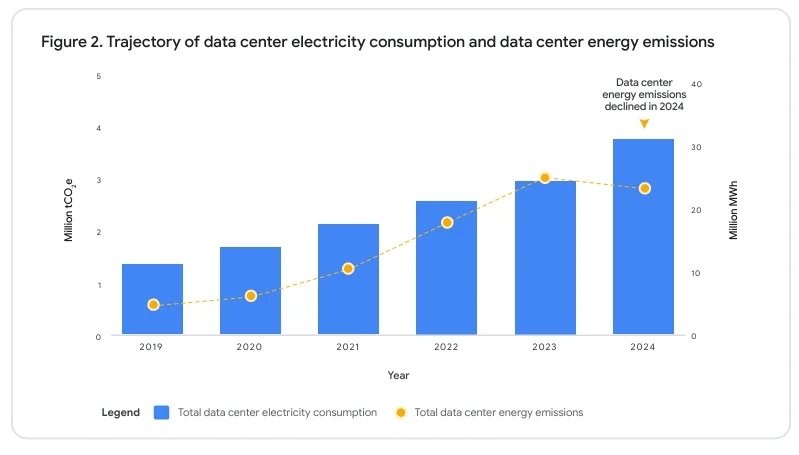
Google’s clean energy buying reached a new scale in 2024, as rising AI and digital demand pushed electricity use higher. The company signed contracts for over 8 gigawatts (GW) of new clean energy this year. This is its largest annual procurement ever and double the amount from 2023.
Since 2010, Google has secured over 22 GW of clean energy through more than 170 agreements. This amount is about the same as Portugal’s total renewable power output in 2024. More than 25 projects came online in 2024 alone, adding 2.5 GW of new generation.
Despite a 27% rise in electricity use, Google cut data center energy emissions by 12%. This shows how clean energy purchases support its goal to run on 24/7 carbon-free energy by 2030.
The EnBW agreement shows one way forward. It ties new AI infrastructure directly to new renewable supply. It also spreads investment risk between a technology company and a utility.
Big Tech Is Reshaping How Power Gets Built
Google’s 15-year offshore wind deal highlights a broader shift in how clean energy projects are financed and used. Large corporate buyers are no longer just passive consumers of electricity. They are becoming active players in energy markets.
For Germany, the deal supports offshore wind expansion at a time when power demand is rising from electrification, industry, and digital services. For EnBW, it provides long-term revenue certainty, and for Google, it helps align AI growth with climate goals.
The next phase will test execution, but the direction is clear. As AI drives electricity demand higher, long-term renewable contracts are becoming a central part of energy planning. Google’s offshore wind agreement in Germany is one of the clearest examples of how these trends are coming together.