

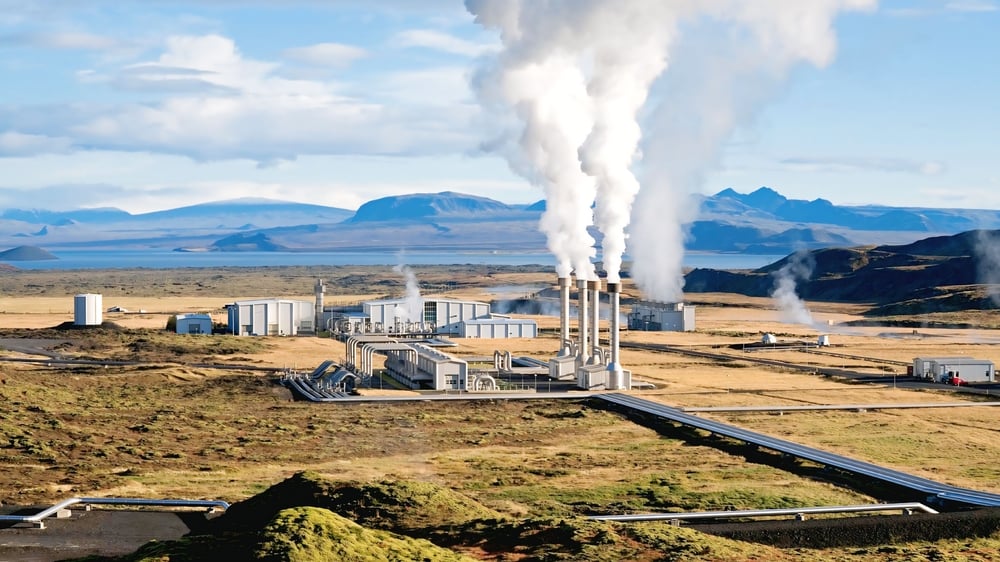
Google has signed a long-term agreement with renewable energy company Ormat Technologies to bring new geothermal power to its data centers in Nevada, U.S.A. The deal could deliver up to 150 megawatts (MW) of electricity from geothermal sources under a special tariff program.
Ormat will develop a portfolio of geothermal projects across Nevada. These projects are set to come online between 2028 and 2030. Once operational, the electricity will support Google’s growing digital infrastructure.
The guide for this arrangement is NV Energy’s Clean Transition Tariff (CTT), a utility program designed to let large energy users buy new clean power while covering costs without shifting them to other customers.
The contract will begin when the first project starts commercial operation. It will run for 15 years beyond the final project’s completion, creating a long-term revenue stream for Ormat and a stable source of clean energy for Google.
Why Geothermal Delivers 24/7 Clean Baseload Power
Geothermal energy uses heat from deep underground to generate electricity. It can run 24 hours a day, unlike solar or wind, which depend on sunlight or wind. This makes it a baseload power source — always available. That feature is critical for data centers, which require constant electricity.
Ormat is one of the world’s longest-standing geothermal power companies. It designs, builds, and runs plants that convert heat into electricity. Its global portfolio includes nearly 1,700 MW of capacity, with about 1,310 MW in geothermal and solar generation and 385 MW in energy storage.
Here’s how Ormat’s geothermal process works:
In recent years, the tech industry has shown rising interest in geothermal energy. Some operators, including Google, have already signed smaller geothermal power deals in other regions. For example, Google previously secured a 10 MW geothermal PPA in Taiwan and a separate arrangement to procure 115 MW of geothermal power from Fervo Energy in Nevada.
AI’s Energy Appetite and the Need for Clean Power
Data centers consume large amounts of electricity. They house computers that run search engines, Artificial Intelligence (AI), cloud services, and other digital tools. As digital activities grow, so does demand for power.
AI and advanced computing drive particularly strong electricity use. Without reliable clean energy sources like geothermal, data centers often depend on fossil fuels or intermittent renewables that don’t run continuously.
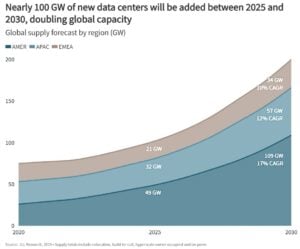
By partnering with Ormat, Google ensures a reliable, carbon-free power supply to meet its needs and reduce its environmental footprint. The new geothermal portfolio is expected to scale with future energy demand from AI and cloud computing workloads.
The Clean Transition Tariff (CTT) model used in this deal is designed so that Google pays full costs for its electricity. This limits cost impacts for other utility customers while enabling investment in new clean generation.
The Ormat–Google Deal: A 150MW Bet on Long-Term Clean Power
The Ormat–Google agreement covers up to 150 MW of geothermal capacity. To put that in context:
- 150 MW can power tens of thousands of homes if it were used for residential consumption.
- For data centers, it represents a meaningful share of electricity demand, especially as AI services expand.
The projects will ramp up over time. The first facilities are expected to start operating by 2028, with additional capacity coming online through 2030. This flexible build-out allows Ormat to expand the portfolio site by site.
The long-term nature of the contract, with a 15-year term after the final project completes, gives both Ormat and Google forecasting clarity. It assures stable revenue for Ormat and long-duration clean power for Google.
From Climate Pledges to Policy-Backed Power Deals
Google has long pledged to reduce its carbon footprint. It aims to operate on carbon-free energy 24/7 by 2030 across all its data centers and offices. This new geothermal deal aligns with that goal by adding dispatchable clean energy to its power mix.

Geothermal energy can play a key role in meeting this aim because it provides baseload power that complements other renewables like wind and solar. Together, these sources help tech firms reach net-zero goals more reliably.
On the policy side, the extension of federal geothermal tax credits under U.S. law strengthens the economics of geothermal development. Programs such as the Oil and Gas Geothermal Tax Credit (OGBTC) and incentives in the Inflation Reduction Act (IRA) have expanded support for geothermal and other clean technologies.
The Clean Transition Tariff is another policy signal. It creates a scalable structure that utilities in other U.S. markets might adopt. This could help large users, not just Google, secure new clean generation that aligns with climate and reliability goals.
- MUST READ: TotalEnergies and Google’s 1 GW Solar Deal Signals a New Phase in the Data Center Energy Race
Tech Giants Turn to Deep Earth Energy
The Ormat–Google deal fits a broader industry trend. As demand for reliable, low-carbon power grows, more tech and cloud companies seek direct ties to physical clean energy projects.
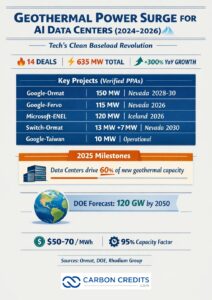
Tech giants signed 14 geothermal PPAs totaling 635 MW in 2025 alone, up 3x from 2024. Data centers now drive 60% of new geothermal capacity, targeting 120 GW by 2050, per DOE’s forecast.
One example is Switch, a major data center operator that signed a 20-year Power Purchase Agreement (PPA) with Ormat to supply about 13 MW of geothermal power from the Salt Wells plant in Nevada. That agreement begins energy deliveries around 2030, contingent on upgrades to the facility.
Switch’s PPA also includes an option to add roughly 7 MW of solar PV to support the geothermal site’s auxiliary needs. This hybrid approach supports stability and broader sustainability objectives.
Other tech giants are exploring geothermal and other firm clean energy sources, recognizing that intermittent renewables alone cannot supply constant power for large computing loads. Key deals are:
- Google-Fervo: 115 MW enhanced geothermal (Nevada, online 2026) via NV Energy CTT—Ormat deal doubles Google’s NV commitment.
- Microsoft-ENEL: 120 MW Hellisheidi (Iceland, operational 2026)—world’s largest geothermal data center link.
- Google-Taiwan: 10 MW PPA (operational).
These moves underline a broader shift toward long-term, grid-connected clean power strategies. Grid-tied PPAs signal seismic shift: tech won’t wait for battery breakthroughs.
For Google, geothermal unlocks 24/7 carbon-free baseload when it needs it online: 2028, matching the NV data center expansion phase.
A Blueprint for Future Clean Power Partnerships
The Ormat–Google geothermal deal could serve as a model for future clean power partnerships. If the Nevada Public Utilities Commission approves the agreement in late 2026, the structure may be replicated in other states.
Developers may use similar portfolio PPAs to build geothermal and other clean energy projects. Utilities and policymakers may also adopt clean transition tariffs or flexible frameworks that allow large users to co-finance new clean generation.
For Google, securing scalable clean power helps future-proof data centers against rising energy demand from AI and cloud services. For Ormat, the deal provides long-term revenue and validates its strategy to expand geothermal capacity.
Geothermal energy, once a niche clean source, is gaining traction as a firm, reliable part of the renewable mix. And as digital infrastructure grows, deals like this one show how deep underground heat can power the next wave of cloud and AI computing sustainably.