


Cameco has signed a major long-term uranium supply agreement with India. The Canadian uranium giant will deliver nearly 22 million pounds of uranium ore concentrate (U3O8) to India over nine years. The contract is valued at about $2.6 billion.
Deliveries will begin in 2027 and continue through 2035. The uranium will power India’s growing fleet of nuclear reactors. The agreement strengthens energy ties between Canada and India at a time when nuclear power is gaining fresh momentum worldwide.
A Strategic Boost for India–Canada Relations
The agreement was celebrated in New Delhi in the presence of Narendra Modi, Mark Carney, and Saskatchewan Premier Scott Moe. Carney’s 2026 visit marked a reset in India–Canada relations.
As we have read and heard earlier, diplomatic ties have been strained in recent years. However, both leaders described this visit as the start of a “new era of partnership.”
The uranium deal was one of the key outcomes of the visit. In addition, both countries renewed efforts to finalize a Comprehensive Economic Partnership Agreement (CEPA) by the end of 2026.
India and Canada also set a bold trade target. They aim to increase bilateral trade to $50 billion by 2030, up from nearly $9 billion in 2024–25.
Both sides agreed to deepen cooperation in:
- Critical minerals
- Renewable energy
- Energy security
- Advanced nuclear technologies, including SMRs
This uranium agreement fits directly into that broader economic and strategic framework.
India’s Nuclear Ambitions and Uranium Demand
India currently operates 24 nuclear reactors. However, the country has much larger plans. Under its long-term energy roadmap, India aims to reach 100 gigawatts (GW) of nuclear capacity by 2047.
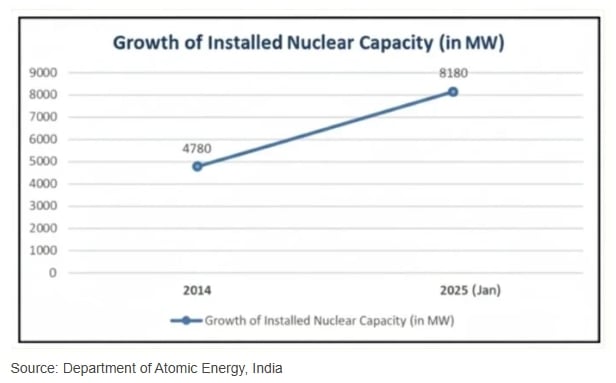
The Union Budget 2025–26 placed nuclear energy at the center of this strategy. The government launched the Nuclear Energy Mission for Viksit Bharat. This mission focuses on expanding nuclear capacity, cutting fossil fuel use, and boosting energy security.
- A key part of the plan is the development of small modular reactors (SMRs) that are smaller, more flexible, and easier to deploy. They can power remote regions and replace retiring coal plants.
The government has allocated $2.4 billion to build at least five indigenously designed SMRs by 2033. This move signals strong policy backing for advanced nuclear technology.
As electricity demand rises due to industrial growth and data centers, nuclear power offers a stable, round-the-clock, low-carbon energy source. Therefore, securing a long-term uranium supply is critical for India’s expansion goals.
Cameco Strengthens Its Long-Term Strategy
For Cameco, the deal aligns perfectly with its disciplined contracting model. The company avoids chasing short-term spot fces. Instead, it focuses on securing long-term contracts with reliable customers.
By the end of 2025, Cameco had about 230 million pounds of uranium under long-term contracts. This provides strong revenue visibility for years.
The new India agreement was already included in the company’s disclosed long-term contracting volumes and price sensitivity analysis. The estimated $2.6 billion value is based on a uranium price of $86.95 per pound, reflecting late February 2026 spot price averages.
Uranium: The Backbone of Cameco’s Business
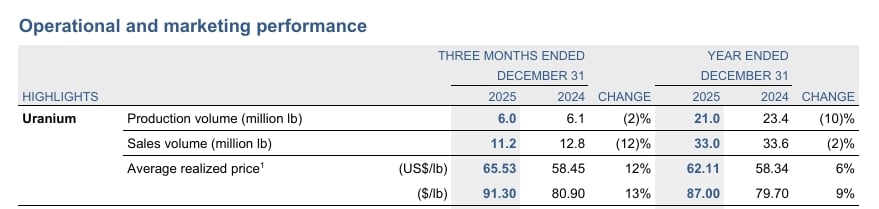
In 2025, the company reported strong financial results. Earnings before income tax in the uranium segment rose by $50 million year over year. Adjusted EBITDA increased by $76 million.

Although fourth-quarter earnings dipped slightly due to sales timing, underlying pricing remained strong. But operationally, Cameco delivered solid production results:
- At Cigar Lake, production reached 19.1 million pounds (100% basis), exceeding annual expectations.
- At McArthur River/Key Lake, production totaled 15.1 million pounds, meeting revised guidance.
Average realized uranium prices improved as market-linked and escalated contracts reflected higher pricing.
Canada’s Expanding Uranium Role
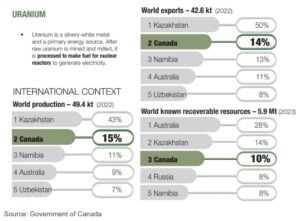
Canada is one of the world’s leading uranium producers. Saskatchewan hosts some of the richest uranium deposits globally. Major mines such as Cigar Lake, McClean Lake, and Rabbit Lake have supplied uranium for decades. Recently, Canada approved its first large-scale uranium mine in over 20 years.
The federal and provincial governments cleared the Phoenix In Situ Recovery (ISR) uranium project. This project is part of Denison Mines’ Wheeler River development in Saskatchewan. Approval allows the construction of both the mine and its processing facilities.
This decision signals Canada’s commitment to supporting global nuclear growth. As more countries expand nuclear capacity, demand for a secure uranium supply continues to rise.
A Deal With Long-Term Impact
Around the world, nuclear energy is regaining policy support. Countries are seeking reliable, low-carbon power to meet climate targets and rising electricity demand. India stands out as one of the fastest-growing nuclear markets. Its target of 100 GW by 2047 represents a massive expansion from current levels.
To reach that goal, India will need a steady uranium supply, new reactor builds, and strong international partnerships. The Cameco deal addresses one key piece of that puzzle: fuel security.
Overall, this agreement goes beyond a simple supply contract. It reflects deeper economic and strategic alignment between the two major democracies. While India secures uranium to power its future reactors, Canada strengthens its role in the global nuclear fuel market. Meanwhile, bilateral trade and diplomatic ties gain fresh momentum.
As nuclear energy returns to the global spotlight, long-term fuel partnerships will become even more important. In that context, Cameco’s $2.6 billion agreement with India marks a decisive step toward a more secure and low-carbon energy future for both nations.