

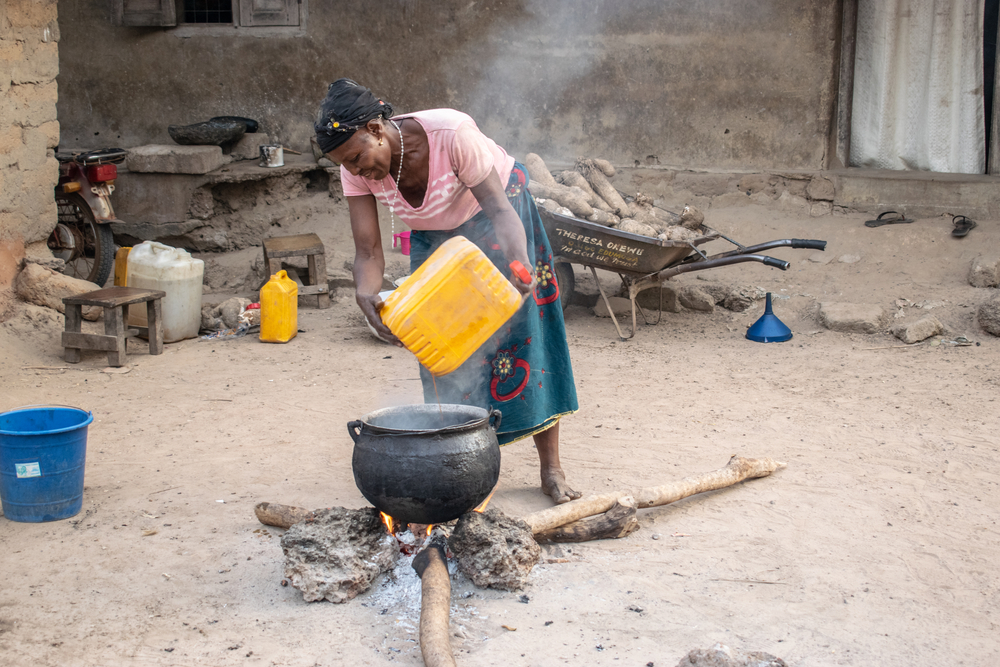
Nigeria is planning a large clean cooking program that aims to distribute 80 million efficient cookstoves to households. Project backers say the rollout could help reduce smoke from cooking, cut pressure on forests, and create a new stream of carbon credits.
Recent reporting in Nigeria says the project is also tied to a revenue target. A senior finance executive at project developer GreenPlinth Africa said the Federal Government could earn up to $5 billion each year from “verified carbon credit revenues” when the program reaches full scale.
Lagos State has also described itself as an early “anchor” for the program. Lagos State Government announced it will lead the way in providing 6 million free cookstoves. Distribution in the state has started in June 2025, beginning in Makoko.
Mr. Tunde Lemo, former Deputy Governor of the Central Bank of Nigeria, commented:
“This is not a pilot. It is not a promise. It is a nationally endorsed, structured, and scalable intervention…This is one of the most ambitious clean cooking and household energy transition programmes ever undertaken globally.”
An 80 Million Stove Rollout With National Ambitions
Lagos State’s climate office describes the initiative as a nationwide effort to deploy 80 million efficient cookstoves free of charge. It says the goal is to sharply reduce traditional firewood use for women and low-income households.
Large stove programs usually try to replace or improve traditional cooking methods that produce heavy smoke indoors. In many households, cooking uses wood, charcoal, or other solid fuels. These fuels can release fine particles and other pollutants, especially in kitchens with poor airflow.
The Clean Cooking Alliance’s Nigeria dashboard uses official sources like the World Bank. It estimates that over 167 million people, or 73.8%, in Nigeria did not have access to clean cooking in 2023.
That gap is wider outside cities. The same dashboard reports that 26.2% of Nigeria’s population had access to clean fuels and technologies for cooking in 2023. It also reports 48.7% access in urban areas versus 9.7% in rural areas in 2023.
Cooking Smoke as a Public Health Crisis
Global health agencies link household smoke from cooking to major health harms. The World Health Organization (WHO) estimates that household air pollution led to around 2.9 million deaths in 2021. This includes more than 309,000 children under age 5.
WHO also estimates that household air pollution caused about 95 million DALYs in 2021. This measure combines years lost to early death and disability. The organization notes that the health burden is tied to diseases such as heart disease, stroke, and lung disease.
Moreover, a WHO technical page shows how household air pollution causes deaths. Here’s the breakdown:
- Ischaemic heart disease: 32%
- Stroke: 23%
- Lower respiratory infections: 21%
- COPD: 19%
- Lung cancer: 6%
Global energy data also shows the scale of the challenge. The International Energy Agency (IEA) estimates 2.3 billion people worldwide still cook using open fires or basic stoves that create harmful smoke.
In Nigeria, a large stove program could affect health most in communities that rely heavily on fuelwood or charcoal. It could also change how much time families spend collecting fuel. It could lower daily smoke exposure for cooks and nearby children when stoves are used correctly and consistently.
From Kitchen Emissions to Carbon Markets
The project narrative links emissions cuts from cleaner cooking to carbon markets. Carbon crediting usually relies on measuring and verifying how much a project cuts greenhouse gas emissions compared to a baseline.
International rules also matter if the project aims to generate credits for compliance uses under the Paris Agreement. Under Article 6, countries can cooperate to meet climate targets, including through carbon credits created from verified emission reductions.
Within Article 6, the Article 6.4 mechanism (also called the Paris Agreement Crediting Mechanism) has a UN-backed governance structure. UNFCCC explains that an Article 6.4 Supervisory Body develops and supervises requirements to run the mechanism. This includes approving methodologies, registering activities, accrediting verification bodies, and managing a registry.
This matters because cookstove projects often face scrutiny over real-world use. Carbon credit quality can depend on factors like whether households actually use the new stove, how long they keep using it, and whether old stoves stay in use at the same time. Credible monitoring and verification are central to project integrity under any crediting pathway.
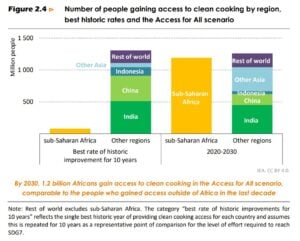
The IEA predicts that clean cooking access will hit around 85% by 2030. This means over 350 million people, mainly in sub-Saharan Africa, will still lack safe cooking options. They will continue to rely on polluting open fires and basic stoves.
To achieve universal access by 2030, there’s a need to connect 160 million people each year. However, funding shortages and infrastructure issues make this unlikely. That requires about $2 billion a year just for Africa to make it happen.
The IEA believes full access by 2040 is more realistic. This will come from increased use of LPG, which will cover about 60% of new connections. It will also involve electric cooking, advanced biomass stoves, and various financing options such as carbon credits. And Nigeria is heading in that direction.
What a $5 Billion Carbon Claim Would Require
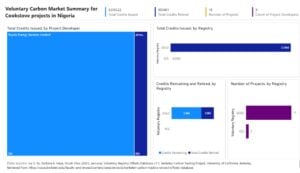
Nigeria already has experience with cookstove carbon projects on a smaller scale. The Clean Cooking Alliance’s Nigeria dashboard says the country has 18 registered cookstove projects that have generated 3.4 million carbon credits to date.
The credits from 9 developers are verified by Verra’s VCS and Gold Standard, as seen:
The proposed 80 million-stove rollout is far larger than typical programs. Supporters argue that scale could also mean large volumes of credited emission reductions, especially if adoption remains high over many years.
The $5 billion per year figure has drawn attention because it implies both a large credit volume and a strong credit price. The figure cited in Nigerian reporting was presented as a projection tied to “verified” carbon credit revenues once the project is fully deployed.
Still, projected revenue is not the same as guaranteed income. Real outcomes depend on several conditions, including:
- The number of stoves actually delivered and used,
- The verified emissions reductions per household,
- Approval under the chosen crediting pathway,
- Market demand, and
- The price and transaction costs for credits.
Lagos State’s official post highlights a key milestone: 6 million stoves in Lagos. However, it does not confirm future credit volumes or prices.
Delivery, Use, and Verification Will Decide the Outcome
Several signals will help observers judge the program’s progress and credibility.
First is delivery at scale. A plan for 80 million stoves requires large manufacturing or import capacity, distribution logistics, and after-sales support. Maintenance matters because stoves can fail or be abandoned if they do not meet cooking needs.
Second is sustained use. Clean cooking benefits and emissions cuts depend on households consistently using the new stove. Programs often track usage through surveys, sensors, or fuel consumption checks. Strong monitoring also supports more credible carbon claims.
Third is alignment with recognized rules. If the project aims to issue credits under Paris Agreement pathways, it must follow the requirements of Article 6.4 Supervisory Body. This includes using accepted methodologies and verification practices.
Finally, there is the public data baseline. Nigeria’s clean cooking access is still low overall. The Clean Cooking Alliance dashboard, using World Bank data, reported 26.2% access in 2023, with much lower access in rural areas. A well-run program could shift those numbers over time, but it will require steady funding and coordination across states.
For now, the story combines a large public health goal with a climate finance goal, and the scale is ambitious. The key question is whether implementation, monitoring, and market demand can match the size of the revenue promise.