

AtkinsRéalis Group has announced a collaboration with NVIDIA to explore nuclear‑powered large‑scale “AI factories.” These facilities are meant to support next‑generation artificial intelligence computing using stable, low‑carbon energy. The work combines AtkinsRéalis’s engineering and nuclear expertise with NVIDIA’s digital and AI design tools.
The project aims to use AI tools like NVIDIA’s Omniverse libraries and accelerated computing systems. These tools help engineers design and test physical infrastructure in a digital, 3D environment before actual construction. AtkinsRéalis said this could speed up the deployment of highly efficient computing hubs powered by nuclear energy.
Ian L. Edwards, President and CEO, AtkinsRéalis stated:
“AtkinsRéalis brings deep engineering and delivery expertise across complex infrastructure and a 70-year legacy of excellence in the nuclear industry. This collaboration enables us to leverage these strengths in energy, infrastructure, and complex project delivery to complement NVIDIA’s leadership in accelerated computing to help power critical AI data centers.”
Why Nuclear Power Matters for AI
Nuclear energy is seen as a potential solution for very large energy needs. AI data centers and high‑performance computing facilities require constant, very high levels of electricity. Nuclear plants can run 24/7, unlike intermittent sources like solar or wind. This makes them attractive for energy‑intensive AI operations.
AI computing is driving huge increases in data center energy use. In 2024, global data centers consumed about 415 terawatt-hours (TWh) of electricity. That is enough to power all of Japan for a year.
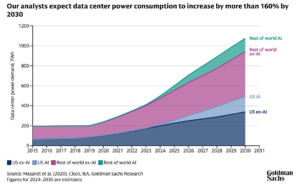
This figure is forecast to grow to 800 TWh by 2026 and possibly beyond as AI workloads expand rapidly. Some analysts predict that AI will drive 165% increase in data center power demand by the same period.
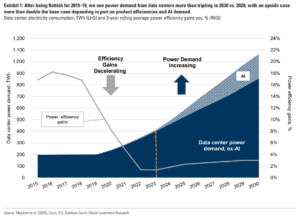
The world’s leading research and consulting firms also view nuclear as key to meeting future electricity demand. For example, analysts at Goldman Sachs estimate that new nuclear capacity of 85 to 90 gigawatts (GW) may be needed by 2030 to supply power for data centers worldwide.
Nuclear power offers stable, continuous energy — a trait industry leaders call baseload power. This helps facilities operate reliable computing systems without interruptions. Nuclear plants also have very low operational emissions compared with fossil fuels.
AI Tools Designing the Next Power Plants
The AtkinsRéalis–NVIDIA deal highlights another trend: AI is not just a load on power systems. It is also a tool for designing and optimizing new power infrastructure.
NVIDIA’s Omniverse and AI analytics can simulate everything from heat flow to electrical load in highly complex systems. This allows engineers to design layouts and workflows with precision. It also helps in digital twin modeling: creating virtual replicas of physical systems to test performance before building.
These tools can support nuclear reactor design, safety planning, and integration with computing facilities. AI can also help optimize operations, lowering costs and improving reliability.
The partnership focuses on three key areas to support the development of nuclear-powered AI infrastructure:
- Nuclear + AI integration: AtkinsRéalis will link its CANDU® reactors with AI data centers, while NVIDIA provides computing and digital twin tools.
- Faster project delivery: AI, simulation, and Omniverse tools aim to speed up design and construction and improve safety.
- Data center engineering: AtkinsRéalis will deliver power, cooling, and modular systems for efficient AI facility deployment.
SEE MORE: From Code to Core: How AI is Fueling the Rise of Small Modular Reactors
Energy analysts believe that using digital tools with nuclear power can speed up new energy projects. This includes small modular reactors (SMRs), which are viewed as a key source of carbon-free energy for the future.
SMRs are typically smaller and more modular than traditional reactors. They may be built faster and at lower cost. Many technology companies and utilities are exploring SMRs for new power capacity to meet rising energy demand.
Data Center Boom Reshapes Global Energy Demand
AI’s rise has reshaped energy demand. As shown below, power needs for data centers could double or more by 2030 compared with 2024 levels. This growth comes from both AI training workloads and everyday data processing.
Data center energy demand is expected to grow faster than many other industrial sectors. Some forecasts suggest that electricity consumption by data centers could account for up to 12% of total U.S. power demand by 2028.
Globally, around 15% of data center energy comes from nuclear power. This number is growing as companies make long-term deals with nuclear providers. Renewables (wind and solar) also play a growing role, with their share expanding due to climate goals and cost declines.
Despite this growth, fossil fuels still supply a large share of data center power today — around 56% globally — leading to rising carbon emissions unless clean sources are scaled rapidly.
Many major tech companies have set ambitious targets for net‑zero emissions. These targets focus on three main goals:
- Powering data centers with zero-carbon electricity.
- Improving energy efficiency.
- Adopting new technologies like nuclear energy or carbon capture.
Can Nuclear Keep Up with AI Growth?
Investments in nuclear energy are rising. In 2025, nuclear capacity is expected to grow by about 29 GW worldwide, with more than half of that expansion in China and India.
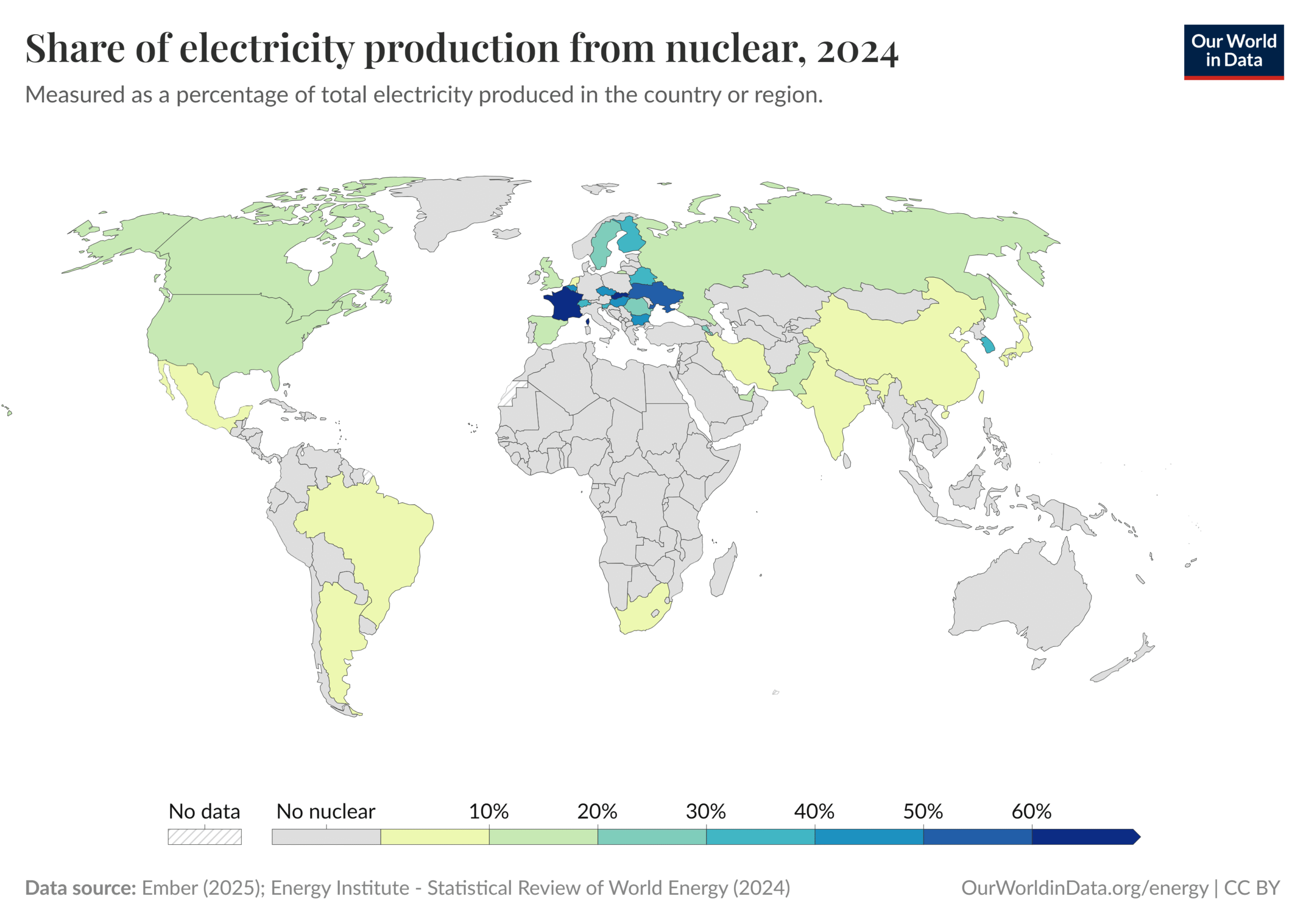
Some nations are doubling down on nuclear power to support digital growth and energy security. France, for example, gets over 70% of its electricity from nuclear and is pushing to power new AI facilities with low‑carbon energy.
SMRs are gaining attention because they can be located closer to industrial or urban centers. Full commercialization of SMR technology is expected around 2030, making it a key component for future data center energy strategies.
In the clean energy market overall, nuclear power’s share is expected to grow alongside wind and solar. The International Energy Agency says that nuclear, renewables, and other low-carbon sources must grow a lot. This growth is needed to meet increasing electricity demand and reduce emissions.
Cost, Regulation, and Public Trust
Despite these trends, challenges remain. Nuclear infrastructure is expensive and time‑intensive to build. Regulatory hurdles, licensing processes, and community acceptance can slow deployment. Public perception of nuclear safety also affects project timelines. Analysts say streamlined permitting and clear safety standards will be needed to scale nuclear for data center support.
Moreover, deploying nuclear‑powered AI factories requires long‑range planning. Construction can take years, and financing relies on government incentives and private investment. Nuclear projects often require large capital outlays upfront, which can slow adoption without policy support.
At the same time, data centers are rapidly evolving. Advanced cooling systems help reduce energy use. AI workload scheduling makes tasks more efficient. Energy-efficient hardware also cuts the sector’s footprint. These technologies can reduce overall energy demand, but they do not eliminate the need for stable, baseload power sources like nuclear.
The Convergence of Energy and Computing
The collaboration between AtkinsRéalis and NVIDIA points to a future where energy and computing strategies are tightly linked. As AI demand grows, the need for reliable, low‑carbon energy becomes more urgent. Nuclear energy offers a potential answer — one that can deliver power around the clock without emissions.
Big tech companies are already exploring nuclear solutions. For example, Meta has signed long‑term agreements to secure hundreds of megawatts of nuclear power for its data centers, and Google is building small modular reactors to power AI operations.
The integration of AI design tools with nuclear engineering can speed up planning, improve safety, and reduce cost risk. This is important if large‑scale AI infrastructure is to be built in a way that supports sustainability goals.
As the energy and tech sectors converge, nuclear‑powered AI factories may represent a new evolution in how computing hubs are powered and designed. If successful, this trend could reshape data center energy strategies and help meet the growing power demand of the AI era with low‑carbon solutions.