


Oklo, an advanced nuclear company, aims to turn surplus plutonium into clean electricity in the U.S. The U.S. Department of Energy (DOE) selected Oklo for talks under the Surplus Plutonium Utilization Program.
This program seeks to reuse excess plutonium from U.S. defense activities. Companies can convert it into fuel for advanced nuclear reactors instead of burying it for years. Strict federal safety rules guide this process.
Oklo believes this will address two major issues: reducing long-term nuclear waste and providing reliable, carbon-free electricity.
Co-founder and CEO of Oklo, Jacob DeWitte said,
“Fuel supply constraints are a key throttle to advanced reactor development. This program creates a pathway to use existing surplus material as bridge fuel for advanced reactors to bring more reactors online sooner. Material that has been set aside for disposal can instead be converted into fuel to produce electricity through fission.”
What Is DOE’s Surplus Plutonium Program?
The DOE started the Surplus Plutonium Utilization Program in October 2025. Its goal is to find productive uses for plutonium no longer needed for military purposes.
The U.S. has about 34 metric tons of surplus plutonium. The government seeks safe ways to manage this material. One option, called “dilute-and-dispose,” mixes plutonium with other materials and buries it.
However, this method is costly. Estimates suggest it could cost taxpayers nearly $19 billion over 30 years.
Oklo offers a better option. Instead of treating the material as waste, the company wants to convert it into fuel for advanced reactors.
The DOE chose Oklo and four other companies for negotiations in this program. This supports Oklo’s plan to secure various fuel sources as the U.S. expands its nuclear fuel production.
How Oklo’s Technology Works
Oklo is developing advanced fast reactors known as Aurora powerhouses. These small reactors aim to produce reliable electricity with strong safety systems. Notably, the technology is based on the Experimental Breeder Reactor-II (EBR-II), which operated successfully in the U.S. for about 30 years.
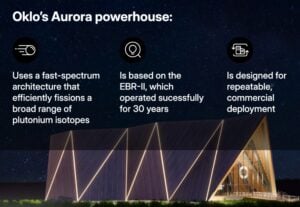
Unlike traditional reactors, fast reactors can use recycled nuclear material more efficiently. Oklo plans to use surplus plutonium as fuel in early deployments.
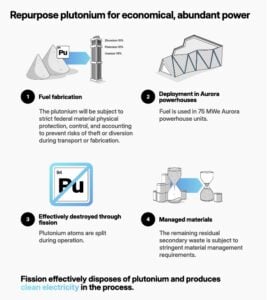
The process has four main steps:
- Convert surplus plutonium into reactor fuel under strict federal controls.
- Load the fuel into Oklo’s 75-megawatt electric Aurora reactors.
- Inside the reactor, plutonium atoms undergo fission, releasing significant energy.
- Manage the remaining nuclear waste per federal safety regulations.
This process generates electricity and reduces the amount of plutonium needing long-term storage.
Oklo states its reactor design includes several passive safety features. The reactors are self-stabilizing and rely on natural cooling, simplifying operations. The company names this tech “walk-away safe.” This means the reactor can shut down safely on its own during emergencies.
Oklo’s fast-fission technology is designed for this bridge-fuel pathway
A Temporary Fuel Solution
Oklo emphasizes that surplus plutonium is not its long-term fuel strategy.
The company sees it as a temporary “bridge fuel” while the U.S. increases domestic supplies of HALEU, or high-assay low-enriched uranium.
HALEU is expected to be a key fuel source for advanced reactors, but current production is limited. According to Oklo’s timeline:
- The company plans to use recycled EBR-II fuel starting in 2028 for initial Aurora deployments.
- From 2028 to 2029, surplus plutonium may fill fuel supply gaps.
- By the early 2030s, expanded HALEU production and more recycled material are expected to support long-term operations.
Oklo stresses that its proposal focuses only on consuming existing surplus plutonium stockpiles. The company is not creating new plutonium or establishing a permanent market for plutonium fuel.
Potential Energy Impact
Oklo sees significant energy potential in surplus material.
The company claims that 34 metric tons of surplus plutonium could power New York City for nearly six years, depending on reactor design and conditions.
If successful, the project could provide several long-term benefits:
- Reliable carbon-free electricity
- Reduced nuclear waste management costs
- Improved U.S. energy security
- Lower dependence on foreign nuclear fuel
- Faster deployment of advanced reactors
The project also aligns with broader clean energy goals as nations seek dependable low-carbon power to meet rising electricity demand.
Oklo Inc. (NYSE: OKLO) has attracted strong investor interest as advanced nuclear energy gains popularity. Following the DOE announcement, Oklo shares surged, seen as a major milestone for the company’s future fuel strategy and reactor plans. The stock is currently trading around $67 on the NYSE.
Partnership With newcleo
Oklo has partnered with European nuclear company newcleo to support fuel development and reactor deployment in the U.S.
In this partnership, Oklo will lead the use of surplus plutonium, while newcleo will provide fuel-making expertise and possible funding. In October 2025, both companies announced plans for advanced fuel fabrication infrastructure in the U.S., with a potential investment of up to $2 billion.
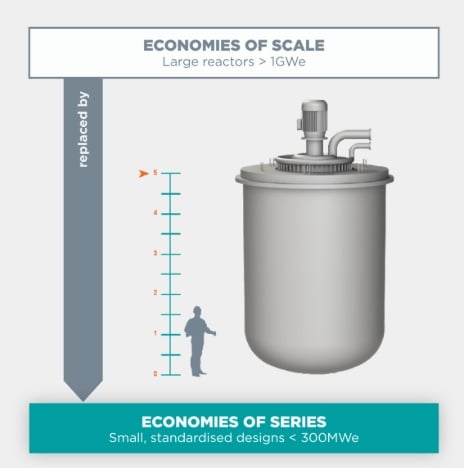
Newcleo is developing lead-cooled fast reactors, a type of next-generation nuclear technology. The company believes smaller modular reactors can lower costs and speed up deployment compared to traditional plants.
Its liquid lead cooling system offers several benefits:
- Operates at low pressure, enhancing safety
- Uses chemically stable lead coolant
- Provides strong cooling during emergencies
- Delivers high efficiency at elevated temperatures
Newcleo is also working on a compact 200-megawatt reactor for easier transport and installation.
A New Approach to Nuclear Waste
The Oklo-newcleo partnership marks a shift in how advanced nuclear companies view nuclear waste.
Instead of seeing surplus plutonium only as a disposal issue, companies now view it as a potential energy resource.
Oklo and newcleo describe the DOE program as “disposition through use.” The idea is simple: convert existing nuclear material into fuel, generate electricity, and consume the material through fission under strict safeguards.
Supporters believe this approach could lower taxpayer costs while boosting domestic energy production and reducing nuclear stockpiles.
This announcement comes as global interest in advanced nuclear energy continues to grow. Governments and private firms are investing in SMRs and next-generation nuclear technologies to meet climate goals and ensure energy security.
For Oklo, the DOE selection marks another important step toward commercial reactor deployment. Investors reacted positively to the news, with Oklo shares (OKLO stock) rising after the announcement.

While many regulatory and technical challenges remain, the project could become one of the first real-world examples of converting surplus plutonium into large-scale clean electricity in the modern nuclear industry.