

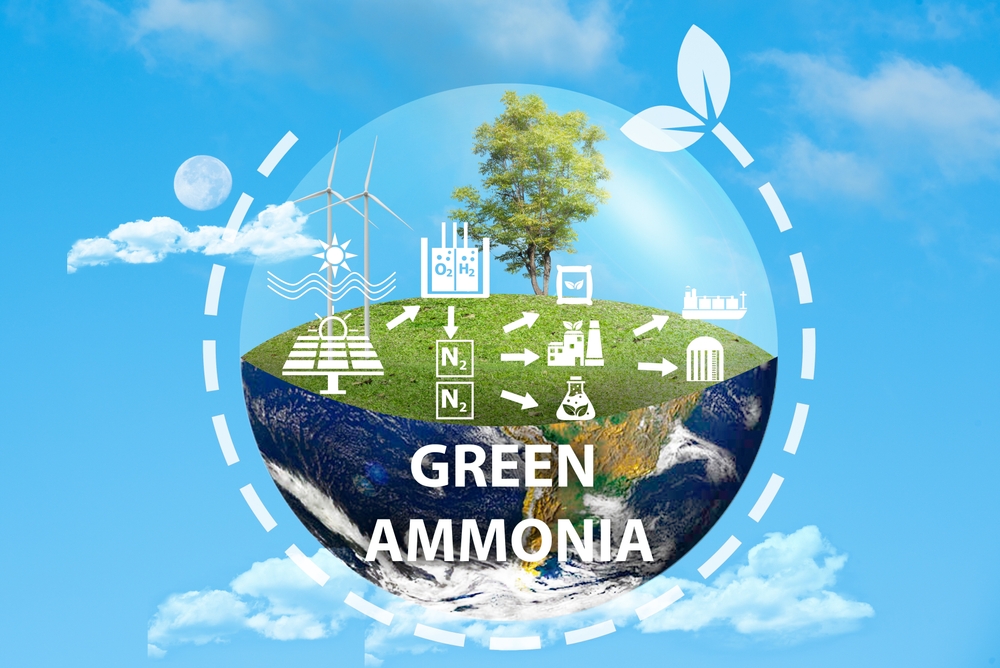
India’s clean energy transition is entering a new phase. Reliance Industries Limited (RIL) has signed a long-term green ammonia supply agreement with Samsung C&T Corporation. The deal, worth over $3 billion, will run for 15 years starting in the second half of FY2029.
This agreement reflects a structural shift in global energy markets. India is positioning itself not just as a clean energy producer, but as a future exporter of green fuels.
At the same time, the deal highlights a growing global race to secure long-term supplies of low-carbon energy. As industries look to decarbonize, green hydrogen and ammonia are becoming critical building blocks of the future energy system.
India’s Hydrogen Vision Meets Global Demand Reality
The agreement aligns with India’s broader policy push. Led by the Ministry of New and Renewable Energy, the National Green Hydrogen Mission aims to turn the country into a global hub for hydrogen production and exports.
The government has proposed around $2.2 billion in funding through 2030. Its targets are ambitious. India plans to build at least 5 million metric tonnes of annual green hydrogen capacity, supported by 125 GW of new renewable energy.
The economic and environmental impact could be substantial. Investments may exceed ₹8 lakh crore. The mission could create over 600,000 jobs while cutting fossil fuel imports by ₹1 lakh crore. In addition, it aims to reduce around 50 million tonnes of greenhouse gas emissions each year.
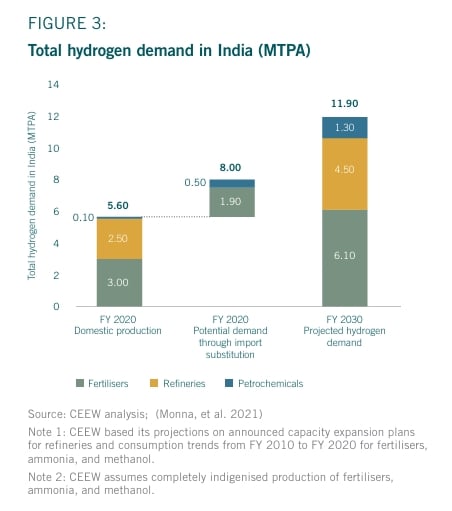
However, market realities remain complex. As of August 2025, about 158 hydrogen projects were under development. While announced capacity is already more than double the government’s target, only a small fraction is under construction or operational. This gap highlights execution risks.
Reliance Builds a Fully Integrated Green Energy Platform
To capture this opportunity, Reliance is building a deeply integrated clean energy ecosystem. The company is not only producing green hydrogen but also controlling the entire value chain.
This includes renewable power generation, energy storage, hydrogen production, and downstream products like green ammonia. A key focus is domestic manufacturing of critical technologies such as solar modules, battery systems, and electrolysers.
This strategy serves two purposes:
- First, it reduces costs by localizing supply chains.
- Second, it strengthens India’s position as a manufacturing hub for clean energy technologies.
At the center of this ecosystem is the Dhirubhai Ambani Green Energy Giga Complex in Jamnagar. Spread across 5,000 acres, it will house multiple gigafactories producing solar panels, batteries, electrolysers, fuel cells, and power electronics.
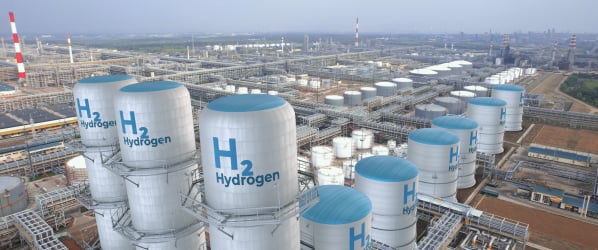
In parallel, Reliance is developing a large renewable energy project in Kutch. By combining solar, wind, and storage, the project will provide round-the-clock clean electricity. This power will feed into hydrogen and ammonia production facilities in Jamnagar.
The company has also committed to achieving net-zero emissions by 2035, placing it among the more aggressive corporate climate targets globally.
- ALSO READ: India-Europe Hydrogen Highway: AM Green and Rotterdam Join Forces to Drive $1B Green Fuel Trade
Samsung’s Offtake Deal Brings Stability to the Green Hydrogen Market
The partnership with Samsung C&T plays a crucial role in addressing one of the hydrogen sector’s biggest challenges—demand uncertainty.
By securing a 15-year offtake agreement, Reliance gains revenue visibility. This makes it easier to finance large-scale projects. At the same time, Samsung C&T Corporation benefits from a stable and cost-competitive supply of green ammonia.
The company operates across more than 40 countries and is active in trading industrial materials and developing renewable energy projects. Access to green ammonia strengthens its ability to decarbonize operations and expand its clean energy portfolio.
This is particularly important as global companies face rising pressure to meet environmental, social, and governance (ESG) targets. Green ammonia can be used in fertilizers, as a hydrogen carrier, and even as a shipping fuel. Therefore, securing supply early provides a strategic advantage.
From Slow Start to Rapid Scale: McKinsey and PwC Map Hydrogen Growth
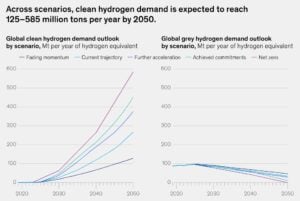
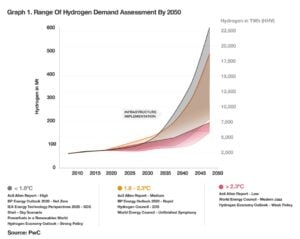
Global demand trends add another layer to the story. According to McKinsey & Company, clean hydrogen demand could reach between 125 and 585 million tonnes per year by 2050. This is a sharp increase from today’s levels, where nearly 90 million tonnes of hydrogen are still produced using fossil fuels.
In the near term, demand growth is expected to remain gradual. McKinsey notes that traditional sectors like fertilizers and refining will drive early adoption as they switch from grey to cleaner hydrogen. However, newer applications—such as steelmaking, synthetic fuels, and heavy transport—will likely scale up after 2030, accelerating overall demand.
While long-term demand looks strong, short-term growth is expected to be gradual. Insights from PwC suggest that hydrogen demand will remain limited until 2030.
There are several reasons for this. First, most current projects are still in early stages and operate at relatively small scales. Many electrolyser facilities today have capacities below 50 MW. Even planned projects, which may exceed 100 MW, are still small compared to existing fossil-based hydrogen plants.
Second, infrastructure development takes time. Building pipelines, storage systems, and export terminals can take seven to twelve years. Without this infrastructure, large-scale hydrogen trade cannot take off.
As a result, PwC expects stronger demand growth after 2030, with a more rapid acceleration after 2035. This timeline aligns with broader climate goals and the need to scale clean energy systems globally.
Challenges Still Loom Over the Sector
Despite growing momentum, the green hydrogen sector faces several hurdles. High production costs remain a major barrier. In many regions, green hydrogen is still more expensive than fossil-based alternatives.
In addition, global standards are still evolving. Different countries use different definitions for “green” or “low-emission” hydrogen. This creates uncertainty and complicates international trade. Demand visibility is another concern. Although many projects have been announced, actual uptake depends on policy support, pricing mechanisms, and technological progress.
These challenges explain why only a small portion of announced capacity has moved into construction or operation so far.
In conclusion, the Reliance-Samsung deal highlights a key turning point. It shows how large-scale, long-term agreements can unlock investments and accelerate project development.
At the same time, it signals India’s growing role in the global hydrogen economy. With strong policy backing, rising investor interest, and integrated industrial strategies, the country is building a foundation for large-scale exports of green fuels.