
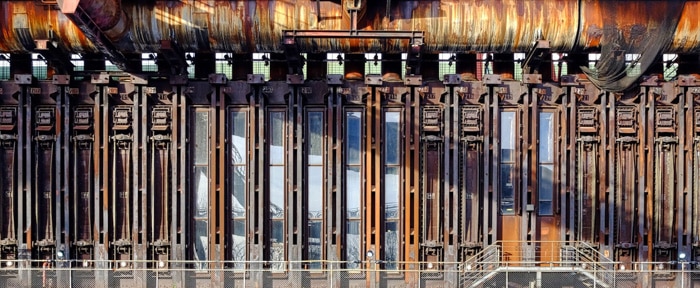
Net-Zero Steel Could Cost Industry $278 Billion

The global steel industry could reach net-zero by 2050 through recycling, hydrogen, and carbon capture – but it won’t be cheap. Bloomberg’s energy data and analysis unit said it could cost the steel industry anywhere from $215 billion to $278 billion – but there’s a catch.

Steel produced under green conditions could, in fact, cost less to make long-term. Right now, steel costs $726 per metric ton. Under new technology, it could cost $418 to $598 per ton – significant savings.

Steel production currently emits about 7% of the world’s greenhouse gases into the atmosphere. 69% of steel production is fueled by coal.

According to the Bloomberg report, “The steel industry has a challenging path to decarbonization: It is heavily reliant on coal, has limited opportunities to increase its share of recycled production due to scrap availability, and will need to wait for hydrogen costs to fall to realize cost-competitive clean production.”

Companies cannot expect to do this alone; government support will be needed. Bloomberg believes that subsidies up to $145 per ton of carbon would help incentivize change.

Some steel companies, such as ArcelorMittal SA, find alternate ways to offset emissions while working towards net-zero. Their program, XCarb green steel certificates, was launched this year. It provides customers with the chance to lower their carbon footprint through carbon savings that are verified and converted into certificates – like a carbon credit.

The carbon credit industry has grown over this past year. Countries and companies alike recognize its potential to improve the environment and spark economic development.

Through innovative technology, the use of carbon offsets, and increased regulation, net-zero steel production seems within reach – even if it is expensive upfront.

For businesses to continue to thrive, reduced emissions are a must. Countries, along with consumers, will not have it any other way.

ExxonMobil to Spend $15B to Reduce Carbon Emissions

ExxonMobil has announced its corporate plans through to 2027, which include reducing carbon emissions. They have committed $15 billion to this cause – totaling $2.5 billion per year.

Exxon will focus on projects to lower emissions, while investing in low-carbon solutions (like carbon capture and storage, biofuels, and hydrogen).

Right now, Exxon is on track to meet its 2025 GHG reduction plans. They are even 4 years ahead of schedule!

According to Chairman and Chief Executive Officer Darren Woods, “The focused actions we have taken have enabled us to accelerate greenhouse gas reductions, particularly in the areas of methane and flaring.”

Exxon’s Greenhouse Gas Emission-Reduction Plans include a:

  • 20-30% reduction in corporate-wide intensity
  • 40-50% reduction in Upstream intensity
  • 70-80% reduction in corporate-wide methane intensity
  • 60-70% reduction in corporate-wide flaring intensity

It is important to note that these plans are limited to Exxon’s operations; they do not cover customers who are burning their fuel. However, many of Exxon’s customers such as BP and Royal Dutch Shell have committed to reducing their own emissions. Even Chevron, Exxon’s largest US competitor, is spending $10 billion towards low-carbon ventures.

As more companies seek to reduce emissions, carbon offsets will continue to play an integral role. With a new global standard in place, many expect the carbon credit and offset industry to be valued at $100 billion by 2030 – up from just $300 million in 2018.

Woods went on to say that “[Exxon’s] strategy is designed to create shareholder value by leveraging our competitive advantages while maintaining flexibility to respond to future policy changes and technology advances associated with the energy transition.”

Exxon believes their new plan will double their earnings by 2027.

UN Shipping Body Looks to Cut Black Carbon in the Arctic

Through the International Maritime Organization (IMO), countries are urging ship operators to cut back on carbon emissions when operating within Arctic waters. The goal would be to limit the emission of black carbon by switching to cleaner fuels.

Black carbon is filled with particles that absorb the sun and trap heat. It is such a problem in the Arctic that it darkens the ice – reflecting less light back into space.

According to the Clean Arctic Alliance, black carbon emissions have increased 85% from 2015 to 2019, so immediate action is needed.

Though the resolution to cut black carbon is voluntary, many are hopeful that most private companies will seek to reduce emissions.

Sian Prior, from the Clean Arctic Alliance, said, “If all shipping currently using heavy fuel oils while in the Arctic were to switch to distillate fuel, there would be an immediate reduction of around 44% in black carbon emissions from these ships.”

She went on to say that, “If particulate filters were installed onboard these vessels, black carbon emissions could be reduced by over 90%.”

Saudi Arabia, the UAE, and Russia resisted measures to cut black carbon. India and South Africa also resisted – but on the grounds of equity. They feel that wealthier counties should act first and then help them transition to cleaner fuels.

The UK, the US, and Panama were the most prominent supporters.

Though some nations wanted an option for carbon offsets to be included, John Maggs, President of the Clean Shipping Coalition, said, “Most of those who spoke were talking about absolute net-zero…not net-zero with ‘get out of jail free’ offsets.”

With a new global standard being implemented for carbon offsets at COP26 – carbon offsets may still have a role in cutting black carbon.

The shipping industry currently emits about one billion tons of carbon into the atmosphere annually. However, with increased regulation, carbon offsets, and innovative technology, black carbon emissions can be drastically reduced.

IMO’s goal is to decrease that by 50% by 2050. They are expected to implement a long-term strategy by 2023.

GRNB – VanEck Vectors ETF Trust – VanEck Vectors Green Bond ETF

0

[stock_market_widget type=”card” template=”color-header” color=”#00559F” assets=”GRNB” api=”yf”]

[stock_market_widget type=”table-quotes” template=”basic” assets=”GRNB” fields=”previous_close,open,market_cap,52_week_low,52_week_high” links=”{‘GRNB’:{}}” display_header=”true” display_chart=”false” display_currency_symbol=”true” pagination=”false” search=”false” rows_per_page=”5″ sort_field=”logo_name” sort_direction=”asc” alignment=”left” api=”yf”]

GRNB Stock Predictions, Articles, and News

BGRN – iShares Global Green Bond ETF

0

[stock_market_widget type=”card” template=”color-header” color=”#00559F” assets=”BGRN” api=”yf”]


[stock_market_widget type=”table-quotes” template=”basic” assets=”BGRN” fields=”previous_close,open,market_cap,52_week_low,52_week_high” links=”{‘BGRN’:{}}” display_header=”true” display_chart=”false” display_currency_symbol=”true” pagination=”false” search=”false” rows_per_page=”5″ sort_field=”logo_name” sort_direction=”asc” alignment=”left” api=”yf”]

BGRN Stock Predictions, Articles, and News

SPYX – SPDR S&P 500 Fossil Fuel Reserves Free ETF

0

[stock_market_widget type=”card” template=”color-header” color=”#00559F” assets=”SPYX” api=”yf”]


[stock_market_widget type=”table-quotes” template=”basic” assets=”SPYX” fields=”previous_close,open,market_cap,52_week_low,52_week_high” links=”{‘SPYX’:{}}” display_header=”true” display_chart=”false” display_currency_symbol=”true” pagination=”false” search=”false” rows_per_page=”5″ sort_field=”logo_name” sort_direction=”asc” alignment=”left” api=”yf”]

SPYX Stock Predictions, Articles, and News

SMOG – VanEck Low Carbon Energy ETF

0

[stock_market_widget type=”card” template=”color-header” color=”#00559F” assets=”SMOG” api=”yf”]


[stock_market_widget type=”table-quotes” template=”basic” assets=”SMOG” fields=”previous_close,open,market_cap,52_week_low,52_week_high” links=”{‘SMOG’:{}}” display_header=”true” display_chart=”false” display_currency_symbol=”true” pagination=”false” search=”false” rows_per_page=”5″ sort_field=”logo_name” sort_direction=”asc” alignment=”left” api=”yf”]

SMOG Stock Predictions, Articles, and News

LOWC – SPDR MSCI ACWI Low Carbon Target ETF

0

[stock_market_widget type=”card” template=”color-header” color=”#00559F” assets=”LOWC” api=”yf”]


[stock_market_widget type=”table-quotes” template=”basic” assets=”LOWC” fields=”previous_close,open,market_cap,52_week_low,52_week_high” links=”{‘LOWC’:{}}” display_header=”true” display_chart=”false” display_currency_symbol=”true” pagination=”false” search=”false” rows_per_page=”5″ sort_field=”logo_name” sort_direction=”asc” alignment=”left” api=”yf”]

LOWC Stock Predictions, Articles, and News

LCTD – BlackRock World ex U.S. Carbon Transition Readiness ETF

0

[stock_market_widget type=”card” template=”color-header” color=”#00559F” assets=”LCTD” api=”yf”]


[stock_market_widget type=”table-quotes” template=”basic” assets=”LCTD” fields=”previous_close,open,market_cap,52_week_low,52_week_high” links=”{‘LCTD’:{}}” display_header=”true” display_chart=”false” display_currency_symbol=”true” pagination=”false” search=”false” rows_per_page=”5″ sort_field=”logo_name” sort_direction=”asc” alignment=”left” api=”yf”]

LCTD Stock Predictions, Articles, and News

LCTU – BlackRock U.S. Carbon Transition Readiness ETF

0

[stock_market_widget type=”card” template=”color-header” color=”#00559F” assets=”LCTU” api=”yf”]


[stock_market_widget type=”table-quotes” template=”basic” assets=”LCTU” fields=”previous_close,open,market_cap,52_week_low,52_week_high” links=”{‘LCTU’:{}}” display_header=”true” display_chart=”false” display_currency_symbol=”true” pagination=”false” search=”false” rows_per_page=”5″ sort_field=”logo_name” sort_direction=”asc” alignment=”left” api=”yf”]

LCTU Stock Predictions, Articles, and News