

Tesla, Inc. released its fourth-quarter and full-year 2025 earnings on January 28, 2026, showing a mixed financial picture. Revenue exceeded market expectations slightly. However, profits dropped due to weaker vehicle demand and tighter margins.
For the fourth quarter, Tesla reported revenue of about $24.9 billion, a small beat versus analyst forecasts. However, this figure was around 3% lower year over year, reflecting slower growth in global electric vehicle (EV) deliveries. Adjusted earnings per share reached $0.50, down by nearly double digits compared with the same quarter last year.
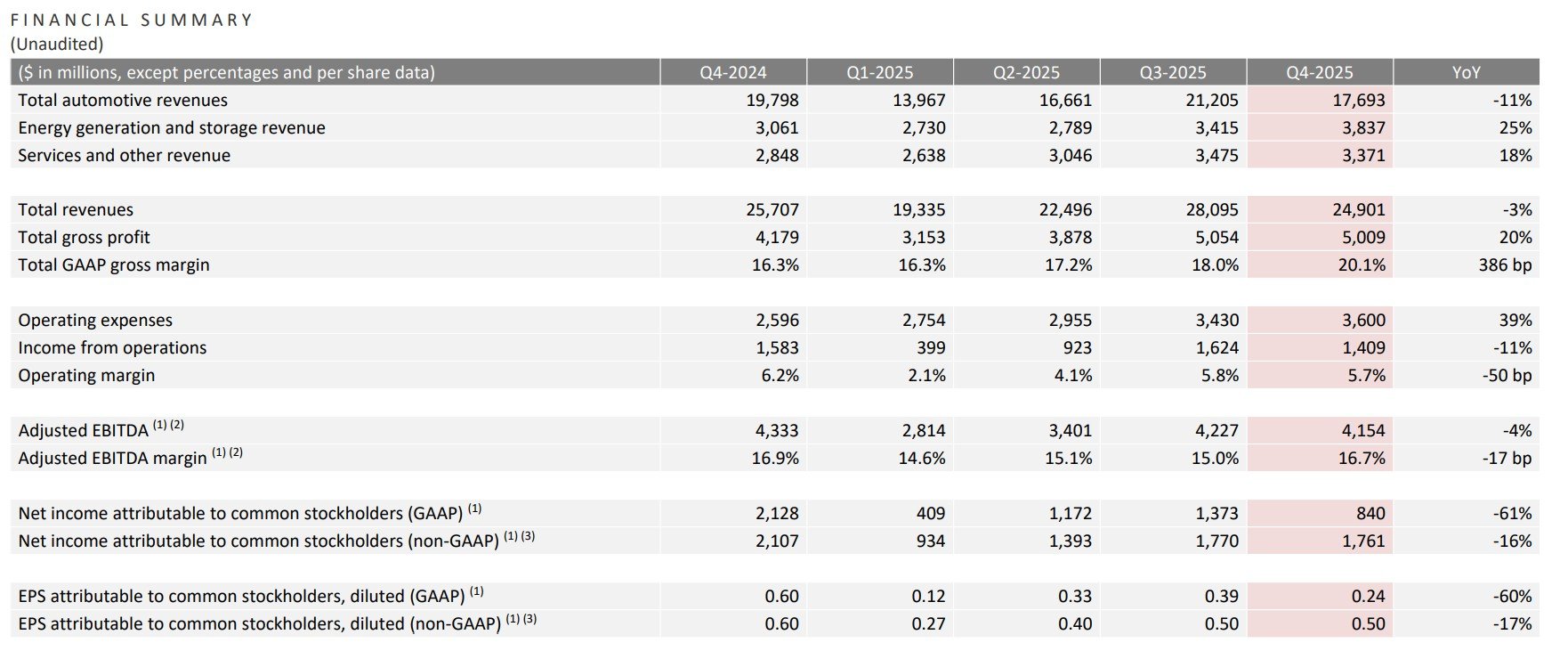
For the full year, Tesla posted total revenue of around $94.8 billion, marking its first annual revenue decline. Sales fell by about 3% year over year, mainly due to price cuts, higher competition, and softer demand in key markets. Net income dropped, and operating margins got tighter. Production costs and pricing pressure hurt the results.
Despite these challenges, Tesla shares moved higher by 3% in after-hours trading. Investors seemed less worried about short-term struggles. Instead, they focused on the company’s long-term strategy, which goes far beyond just vehicle sales.
Strategic Shifts Beyond EVs: Vision for AI, Robotaxis, and Optimus
During the earnings call, Tesla Chief Executive Officer, Elon Musk, highlighted the company’s shift into a technology and energy platform. He noted several initiatives that are expected to shape Tesla’s next phase of growth.
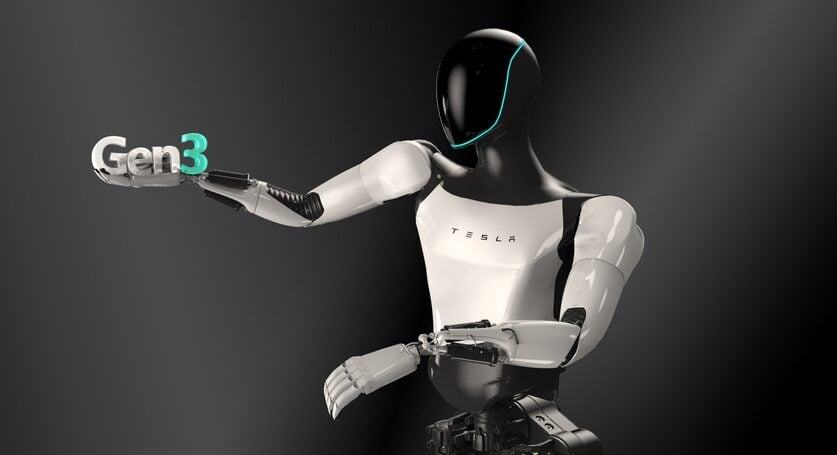
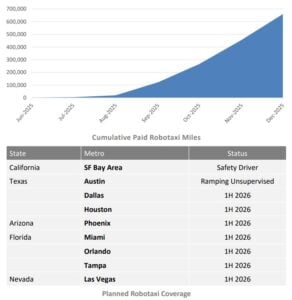
One major focus is autonomous mobility. Tesla continues to prepare for the launch of its Cybercab robotaxi, which the company positions as a future driver of high-margin, recurring revenue. Musk also talked about Optimus, Tesla’s humanoid robot. It’s still in early development, but key to their long-term vision.
Musk stated:
“As we increase vehicle autonomy and begin to produce Optimus robots at scale, we are making very big investments. This is going to be a very big CapEx year, as we will get into. That is deliberate because we are making big investments for an epic future. I think all these investments make a lot of sense…But it’s a lot of things. Major investments in batteries and the entire supply chain of batteries. We are also going to be significant manufacturers of solar cells, and we are making massive investments in AI chips.”
Artificial intelligence also featured prominently. Tesla confirmed a $2 billion investment in xAI, Musk’s artificial intelligence venture. The investment reflects the company’s growing emphasis on AI systems that support autonomy, robotics, and advanced software applications.
At the same time, Tesla’s energy generation and storage business remains a key growth area. The company is expanding its battery storage systems. These systems thrive on rising electricity demand, grid instability, and the push for renewable energy. While this segment still represents a smaller share of total revenue, it provides diversification at a time when automotive sales face pressure.
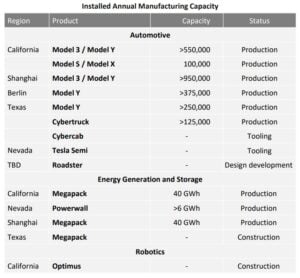
These initiatives show Tesla’s plan to rely less on vehicle sales. The EV giant aims to create new revenue streams to support long-term profitability.
Carbon Credit Revenue: From Record Highs to Slower Growth
Tesla’s regulatory or carbon credit revenue fell in 2025 from 2024. However, quarterly data reveals significant changes throughout the year that impacted margins.
In Q1 2025, carbon credit sales fell to $595 million, a 14% decline quarter over quarter. This drop reduced margin support at a time when vehicle pricing pressure remained high.
The decline accelerated in Q2 2025, when Tesla reported $439 million, down 26% from Q1. The weaker credit contribution coincided with continued margin compression in the automotive segment.
In Q3 2025, credit revenue slipped further to $417 million, a 5% sequential decline. This marked the lowest quarterly level of the year. With fewer credits available, Tesla relied more heavily on vehicle sales and cost controls to protect margins.
In Q4 2025, regulatory credit revenue rebounded to $542 million, a 30% increase from Q3. This recovery provided year-end margin support and helped offset weaker automotive profitability. The rebound suggests higher compliance-driven demand late in the year.
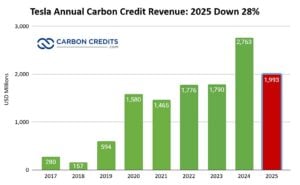
Even with the Q4 boost, Tesla’s total regulatory credit revenue for 2025 was still far below 2024, down 28%. That year, Tesla made a record $2.76 billion from credit sales. The 2025 pattern shows lower volumes and greater volatility.
Tesla’s regulatory credits are sold to other automakers that do not meet emissions requirements. These buyers are typically large, global manufacturers such as Stellantis, Toyota, Ford, Mazda, and Subaru.
The EV maker has confirmed its role in carbon credit pooling. This means it shares emissions credits with other automakers. This helps them meet regional rules, especially in Europe. Tesla sells extra zero-emission credits to partner automakers under pooling agreements. In return, they receive payments.
The 2025 data shows that carbon credits are still high-margin and important. However, they no longer provide steady support each quarter. Their effect on operating margin now relies on timing, regulatory cycles, and year-end compliance needs, not steady growth.
A Shifting Financial Landscape: What Earnings Say About Tesla’s Model
Tesla’s latest earnings underline a clear shift in its financial structure. In the past, carbon credit sales helped offset lower vehicle margins and protected profitability. As those credits decline, Tesla must rely more heavily on its core operations and emerging businesses.
The automotive segment continues to face pressure from competition, pricing strategies, and uneven global demand. While Tesla remains one of the world’s largest EV producers, the market has matured, and growth rates have slowed.
At the same time, new business lines such as energy storage, software, autonomy, and AI offer potential upside. Yet, many of these segments require significant investment and may take years to deliver consistent profits.
From a financial perspective, Tesla’s earnings report highlights a transition phase. Short-term results reflect margin compression and revenue contraction. Long-term performance hinges on new technologies. They must scale up and produce a steady cash flow, especially as regulatory credit income decreases.
Driving Sustainability: EVs, Batteries, and Tesla’s Role in Net-Zero
Sustainability is a key part of Tesla’s identity and long‑term plan. The company says its mission is to accelerate the world’s shift to clean energy. It focuses on EVs, energy storage, and renewable integration — all aimed at cutting greenhouse gas emissions.
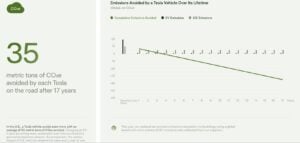
Tesla’s EVs help reduce emissions by replacing internal combustion engine cars. According to Tesla’s 2024 impact figures, each Tesla user avoided around 35 million metric tons of CO₂ equivalent over 17 years.
Carbon credits form part of this sustainability ecosystem. By selling credits, Tesla helps other automakers comply with emissions regulations, indirectly supporting lower sector-wide emissions. However, as more manufacturers electrify their fleets, the need for such credits naturally declines.
Battery storage is another part of Tesla’s sustainability work. In 2025, Tesla deployed the highest energy storage, which supports clean energy grids and renewable expansion. Its Powerwall and Megapack units help balance power systems and reduce reliance on fossil fuels.
Tesla has not publicly stated a formal corporate net‑zero target year as some peers do. However, it continues to report on lifecycle emissions, energy efficiency, and avoided emissions in its impact reporting. The company is also working to improve manufacturing, recycling, and supply chain transparency.
As the EV market evolves, Tesla’s role may shift. Carbon credit sales are likely to shrink as more automakers electrify their fleets, and fewer credits are needed. Instead, Tesla’s direct emissions reductions — through cleaner vehicles, grid‑scale storage, AI, and energy products — could become more important in helping global decarbonization.