

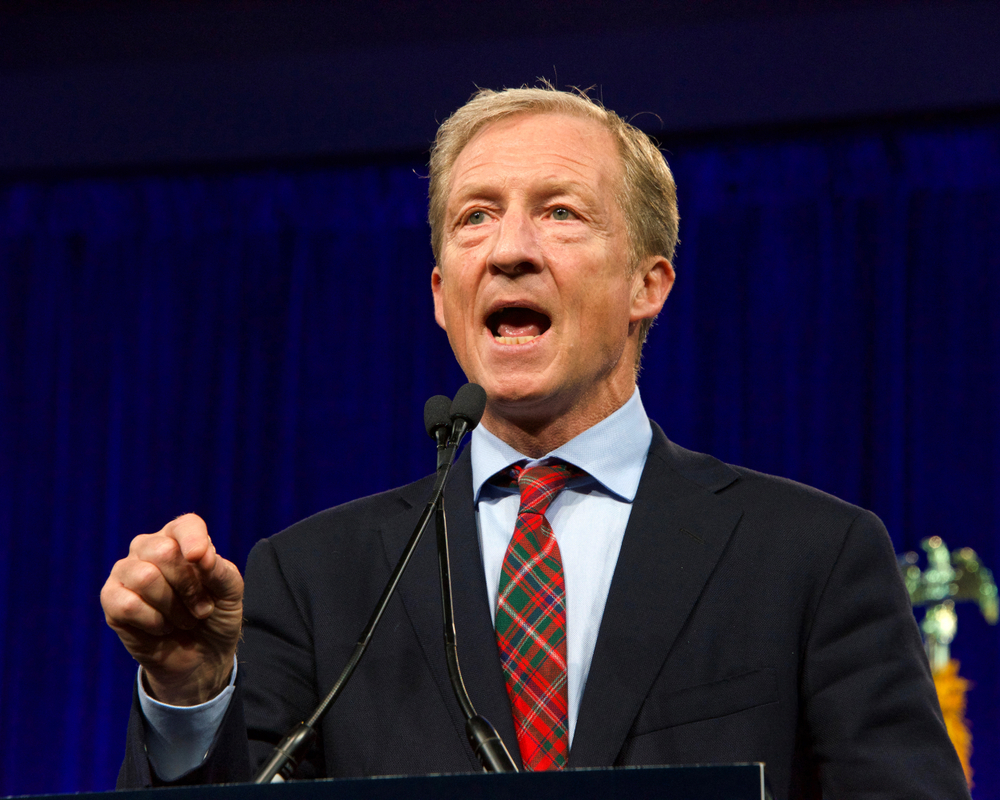
Climate investor and billionaire Tom Steyer is scaling up efforts to cut emissions from buildings. His firm, Galvanize Climate Solutions, has raised $370 million for a new strategy focused on decarbonizing commercial real estate.
The new vehicle, Galvanize Real Estate Fund I, will invest in aging commercial properties and upgrade them with clean energy and efficiency technologies. The goal is to reduce emissions while increasing building value and operating income.
The fund secured commitments from a broad group of institutional investors. These include pension funds, foundations, family offices, banks, and registered investment advisers.
From Hedge Fund Billionaire to Climate Investor
Galvanize was launched in 2022 by Tom Steyer and investment executive Katie Hall. The firm focuses entirely on climate and energy transition investments.
The company’s strategy reflects a growing shift in climate finance. Investors are recognizing energy efficiency and building electrification as both a climate solution and a profitable business opportunity.
Katie Hall, Co-Chair & CEO of Galvanize, said:
“GRE’s strategy demonstrates a different role for sustainability, one that places it at the center of profit generation and product differentiation. In an environment where the combined impact of rising electricity prices and market volatility is accelerating, there is a large and ongoing opportunity for the team to leverage decarbonization as a driver of value creation.”
Galvanize plans to use the funds to buy and improve properties in high-growth U.S. markets. These areas have rising demand and increasing energy costs.
Steyer is best known for founding Farallon Capital Management, a global hedge fund that grew to tens of billions of dollars in assets. He later became a prominent climate advocate and ran for U.S. President in 2020 on a climate policy platform.
At Galvanize, Steyer and Hall built a platform that invests across multiple asset classes. These include venture capital, growth equity, public equities, private credit, and real estate.
The firm’s strategy focuses on sectors that must transform to reach net-zero emissions. These include power generation, transportation, industry, agriculture, and buildings. Buildings are a major priority because they represent one of the largest sources of global emissions.
The fund also builds on Galvanize’s earlier capital raises. In 2023, the firm closed its first venture and growth fund with more than $1 billion in commitments to climate technology companies.
- RELATED: How Standard Chartered’s €1 Billion Green Bond Is Scaling Climate Finance in Emerging Markets
Why Buildings Are One of the Biggest Climate Targets
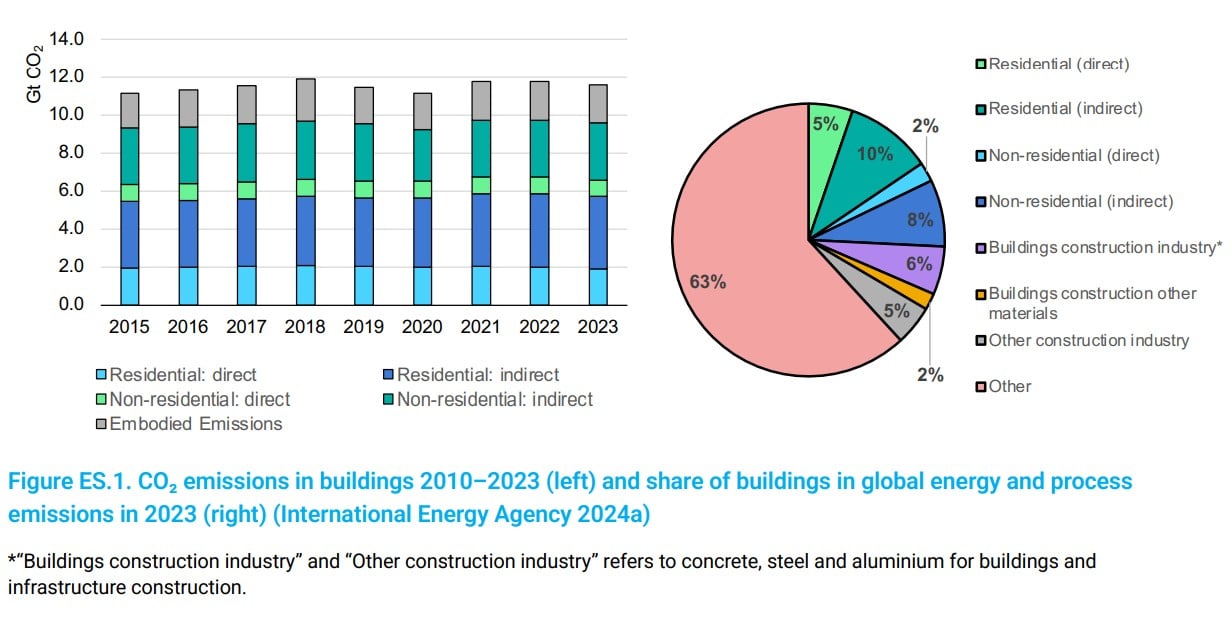
Buildings are responsible for a large share of global emissions. The International Energy Agency says that buildings use about 30% of global energy. They also produce around 26% of energy-related CO₂ emissions.
Commercial buildings in particular consume huge amounts of electricity and fossil fuel energy for heating, cooling, lighting, and data and equipment. Many older buildings were built decades ago. They lack modern efficiency technologies or electrified heating systems.
This creates a large opportunity for investors.
Installing solar panels, energy-efficient HVAC systems, heat pumps, and smart energy management systems helps building owners lower energy costs. This also cuts emissions.
Galvanize’s strategy targets properties where energy upgrades boost net operating income. This approach goes beyond simply lowering carbon footprints.
That investment model reflects a broader shift in climate finance. Investors increasingly see decarbonization projects as value-creating infrastructure upgrades rather than simple compliance costs.
Inside Galvanize’s First Real Estate Portfolio: 15 Buildings Across 11 U.S. Cities
Galvanize has already begun deploying capital through the new strategy. So far, the fund has completed five investments covering 15 buildings across 11 U.S. cities. The properties represent about 2.4 million square feet of real estate.
The firm expects large emissions reductions from upgrades in this initial portfolio. Their planned improvements include:
- Solar installations
- Electrification of heating systems
- Energy efficiency retrofits
- Smart building energy management
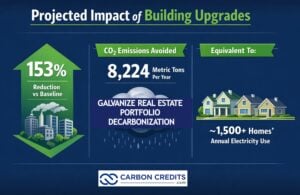
Together, these measures are expected to deliver portfolio-level decarbonization of about 153% compared with baseline emissions. They could also avoid roughly 8,224 metric tons of carbon dioxide emissions each year.
For comparison, that amount of emissions is roughly equal to the annual electricity use of more than 1,500 U.S. homes, based on U.S. Environmental Protection Agency estimates.
How Energy Retrofits Turn Climate Action Into Profit
A key feature of the fund is its focus on profitability. Traditional climate policies often treat emissions reduction as a regulatory burden. Galvanize instead frames decarbonization as a driver of real estate value creation.
Energy upgrades can increase property income in several ways, including:
- Lower energy bills for tenants
- Higher building occupancy rates
- Higher rent for energy-efficient space
- Protection from rising electricity prices
Katie Hall said the strategy places sustainability “at the center of profit generation and product differentiation.” Energy markets also support this investment thesis.
Electricity demand is rising in many U.S. regions due to data centers, electrification of transport, industrial electrification, and population growth in urban areas.
At the same time, energy price volatility has increased. Buildings with on-site generation or lower energy demand can protect owners from rising costs. That makes energy upgrades financially attractive for property investors.
The Trillion-Dollar Opportunity in Building Decarbonization
The opportunity in building decarbonization is enormous. Buildings are one of the largest sources of global emissions, as the IEA data shows.
The building and construction sector, together, is responsible for about 37% of global CO₂ emissions. This includes emissions from materials like cement, steel, and aluminum.
- Operational emissions from buildings alone reached about 9.8 gigatonnes of CO₂ in 2023, according to global building sector reports.
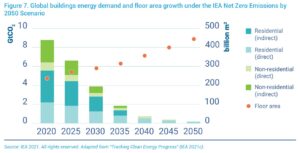
At the same time, demand for buildings continues to grow. The United Nations Environment Programme (UNEP) says that from 2015 to 2023, cities grew and added 51 billion square meters of new floor space worldwide.
This means much of the world’s building stock still needs upgrades. Efficiency improvements, electrification, and renewable energy can cut building emissions by 80–90% in some areas, says UN climate assessments.
The IEA data reveals how much this sector should grow under the net-zero scenario. For investors, this creates a massive market. Retrofitting commercial properties with clean technologies can reduce emissions. It also lowers energy costs and boosts property value.
Galvanize’s strategy fits squarely into that trend. The firm believes that energy upgrades can transform older properties into high-performance climate assets.
Climate Capital Is Flooding Into Real Estate
The $370 million real estate fund reflects the rapid growth of climate-focused investment firms. Across the broader market, investment in clean energy infrastructure is expected to grow rapidly.
Analysts estimate that more than $5 trillion could be invested globally in energy transition infrastructure by 2030, covering areas such as renewables, grid systems, electrification, and efficiency. Buildings will be a major part of that spending.
Galvanize has also launched a new $1.3 billion credit and capital solutions strategy. This will help finance energy transition projects, along with its venture and growth funds.
As cities and companies pursue net-zero goals, commercial properties are under pressure to reduce emissions. Investors who can upgrade buildings quickly may capture significant financial value.
For Tom Steyer and Galvanize, the new fund represents another step in scaling climate capital. If successful, it could show that cutting emissions and generating investment returns can happen at the same time.