

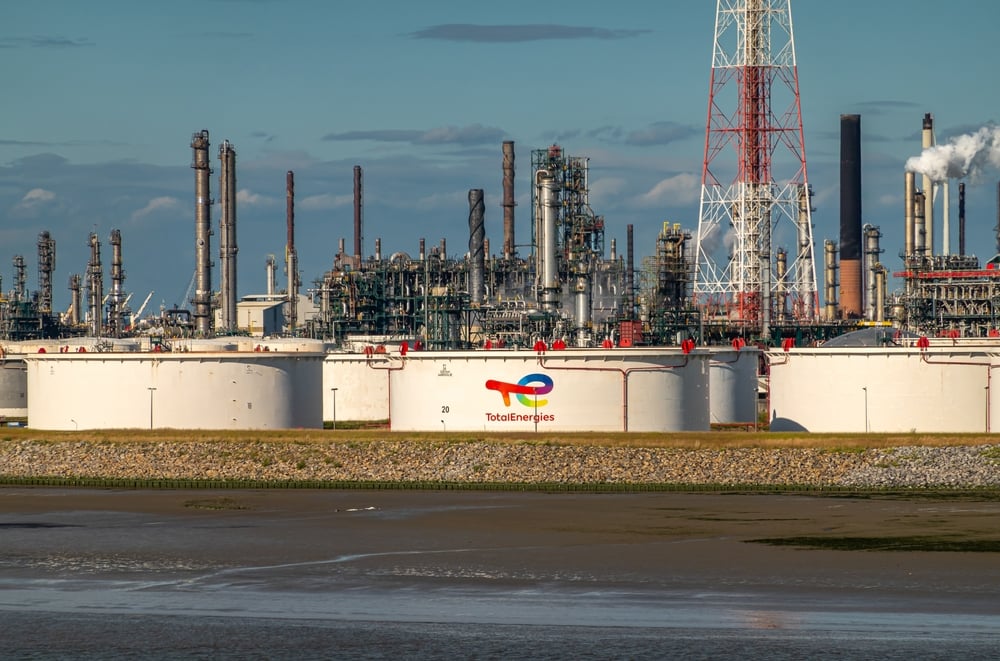
TotalEnergies agreed to sell a 50% stake in a large portfolio of battery storage projects in Germany to Allianz Global Investors. The move includes an investment of about €500 million, or over $580 million. This funding will go toward large-scale battery storage infrastructure, a landmark deal in Europe’s energy transition.
The partnership underlines growing investor confidence in battery storage as a key pillar of the clean energy transition. It also shows how private capital is moving into critical power infrastructure that supports renewable electricity.
Stéphane Michel at TotalEnergies said:
“We are delighted to welcome Allianz, a first-class partner in Germany, as a shareholder in 11 of our battery storage projects, representing a total capacity of nearly 800 MW. This operation strengthens our development momentum in Germany, Europe’s largest power market, where we are deploying our clean firm power strategy…”
Deal Overview: What Was Agreed Upon
Under the agreement, AllianzGI will buy a 50% stake in TotalEnergies’ portfolio of 11 battery storage projects currently under construction in Germany. The portfolio’s total planned capacity is 789 megawatts (MW) and 1,628 megawatt-hours (MWh) of storage. This translates to about 800 MW of power potential.
The partners will invest about €500 million in total to complete these projects. About 70% of this investment will come from debt. This shows that lenders are now willing to finance large battery storage deals on a commercial scale.
The projects were developed by Kyon Energy, a German battery storage developer that is a subsidiary of TotalEnergies. Most sites will use next-gen battery tech supplied by Saft, a TotalEnergies subsidiary. The oil major will continue to operate the assets once they become operational.
Both AllianzGI and TotalEnergies expect the battery projects to be fully operational by 2028.
Money in Motion: How the Deal Is Funded
The €500 million investment in this battery portfolio shows how big energy infrastructure is getting. It’s a sign of growing mobilization in the sector.
Battery storage was once seen as an emerging or niche technology. Now it attracts significant capital from institutional investors like AllianzGI.
The fact that 70% of the total investment will be debt‑financed — rather than equity — suggests that lenders also view these assets as bankable. This means stable revenue projections and confidence in long‑term returns.
AllianzGI stated this is its first direct equity investment in a battery storage portfolio. The deal fits well with the firm’s focus on energy transition. It has invested in wind, solar, green hydrogen, and electricity infrastructure.
TotalEnergies, in turn, retains operational control of the assets. This allows the company to manage daily operations and system integration across Germany.
Why Batteries Are the Backbone of a Stable Grid
Battery storage is a key technology for clean power systems. Unlike traditional power plants, batteries do not generate electricity. Instead, they store excess electricity when production is high (for example, on windy or sunny days). They then release this energy when demand is higher or supply from renewables falls. This helps stabilize grids, reduce congestion, and balance supply and demand.
Germany is Europe’s largest electricity market. The quick growth of wind and solar power has raised the need for flexible systems. These systems must adjust to changing energy production. Batteries support renewable integration and help keep power prices stable.
Several industry reports indicate that large-scale battery storage in Germany and Europe is expanding. Projects like this one boost grid resilience. They also help prevent bottlenecks as more renewable energy becomes available.
Germany’s Grid Upgrade: Storage as a Strategic Asset
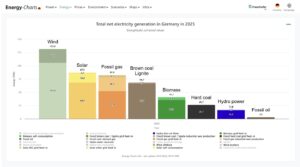
Germany’s power system is shifting quickly toward renewables. In 2025, wind, solar, biomass, and other renewable sources supplied about 58.5% of Germany’s total electricity, according to data from the Federal Network Agency and the Fraunhofer Institute for Solar Energy Systems.
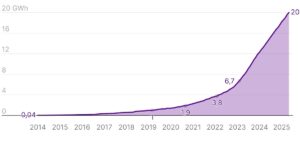
As renewable output grows, storage has expanded rapidly. By the end of 2025, Germany had installed around 2.22 million battery storage systems. These systems provide about 16 GW of power capacity and 25.5 GWh of storage capacity.
Large-scale grid batteries are also increasing. Capacity for systems above 1 MW rose by about 60% in 2025, reaching roughly 3.7 GWh. This growth reflects rising demand for grid balancing services.
Germany aims to reach around 80% renewable electricity by 2030. To manage this shift, storage is becoming essential. The Fraunhofer Institute estimates Germany could need 100 to 170 GWh of battery storage by 2030 to maintain grid stability.
Battery systems store surplus wind and solar power and release it when needed. This reduces grid congestion and lowers reliance on fossil fuel backup plants. For this reason, storage is now viewed as a strategic asset in Germany’s energy transition and meeting emissions targets.
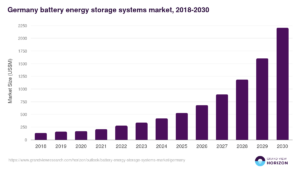
In 2024, Germany’s battery energy storage systems market generated USD418.9 million in revenue. Data centers were the top revenue-generating application that year. The market is projected to reach USD2,204 million by 2030.
For the European nation, grid stability and flexibility are rising priorities. A national energy strategy aims to increase storage capacity. This helps fix imbalances from variable renewable generation. Large portfolios like the one TotalEnergies and AllianzGI are building help deliver this flexibility.
Power Players: TotalEnergies and AllianzGI Strengths
TotalEnergies has emphasized its integrated power strategy in Germany. By early 2026, the company had over 34 GW of gross renewable capacity worldwide. It aims to produce more than 100 TWh of net electricity by 2030 from renewables and flexible power assets.
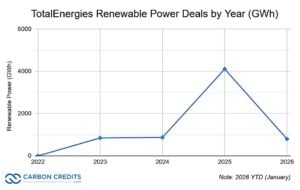
The company has been present in Germany since 1955 and employs around 4,000 people there. It is active across the energy value chain in the country, including:
- Renewable generation (like wind and solar)
- Battery storage capacity
- Electricity trading and supply
- Vehicle charging infrastructure
Allianz Global Investors manages significant assets on behalf of insurance clients and third-party investors. The firm includes ecological and social factors in its investment choices. It is also listed in sustainability indices. In 2025, Allianz reported a business volume of €186.9 billion and an operating profit of €17.4 billion.
The partnership blends strengths from both companies. TotalEnergies brings its operational skills to energy assets. AllianzGI contributes investor capital and expertise in long-term financing.
Storage in Action: Scaling the Energy Transition
This deal reveals broader trends in the energy transition:
- Institutional capital is entering energy infrastructure beyond generation, moving into flexibility and storage assets.
- Debt financing is playing a key role in scaling project pipelines, reflecting lender comfort with long‑term returns.
- Large storage projects help manage grid stability and integrate renewable energy at scale.
- Strategic investments like this can help reduce carbon emissions by enabling cleaner power systems.
In Germany’s energy transition context, storage systems will be essential to meet national and European climate goals. Battery storage complements wind and solar, ensuring electricity is available even when the sun doesn’t shine or the wind doesn’t blow.
A New Phase for Battery Infrastructure Investment
The TotalEnergies‑AllianzGI deal marks a clear shift in how energy projects are financed and built in Europe. Utility‑scale battery storage has moved from pilot projects to institutional investment scale.
Their partnership provides €500 million in capital and nearly 800 MW of storage capacity. It also features a shared ownership model, blending operational know-how with long-term financial support.
With the projects expected to be online by 2028, they will help Germany and Europe manage growing electricity demand and integrate more renewables. Institutional investment like this could accelerate the energy transition and support climate goals in the years ahead