

TotalEnergies signed a 10-year deal to supply 800 GWh of renewable electricity to SWM International. SWM is a big paper maker in France. The contract began in January 2026 and will cover electricity for three industrial sites over a decade. This deal marks another step in TotalEnergies’ push to expand its clean power business and help heavy industries reduce carbon emissions.
Under the agreement, TotalEnergies will deliver renewable electricity with a stable output profile, also known as clean firm power. This means SWM will receive low-carbon electricity that meets its energy needs around the clock. The supply will come from around 50 megawatts (MW) of renewable energy assets that TotalEnergies already has in France.
SWM says the deal will provide about half of its electricity needs in France and strengthen its plan to cut Scope 1 and Scope 2 emissions by 2033. The long-term contract also gives SWM better cost predictability and support for its decarbonization goals.
Giuliano Scilio, SWM’s Vice President and Chief Information Officer, stated in the release:
“For an energy-intensive industry like ours, this isn’t just an environmental milestone; it’s a strategic investment that gives us cost predictability and strengthens our ability to offer customers genuinely sustainable solutions.”
TotalEnergies’ Clean Energy Strategy
TotalEnergies has been expanding its renewable power business in recent years. The company blends renewable sources, like solar and wind, with flexible assets. These include gas turbines and storage.
This way, the oil giant provides customized clean energy solutions for industrial and corporate clients. These solutions are known as “Clean Firm Power.” They provide stable, low-carbon electricity that meets demand all day long.
As of late October 2025, TotalEnergies had more than 32 gigawatts (GW) of installed gross renewable electricity capacity. The company plans to hit 35 GW by the end of 2025. By 2030, it aims to generate over 100 terawatt-hours (TWh) of net electricity. This will include renewable and flexible power sources.
This clean power offering is part of a broader shift within TotalEnergies. The company is moving beyond its traditional oil and gas business to build a diverse portfolio of energy solutions. These include renewables, low-carbon hydrogen, biofuels, and electricity contracts. They help industrial clients meet climate goals while keeping operations reliable.
Big Deals, Big Impact
The SWM deal adds to the clean power contracts TotalEnergies has signed with big companies.
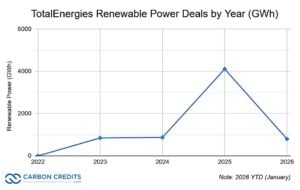
The chart shows TotalEnergies’ clean power deals from 2020 to 2026. Between 2020 and 2022, no large renewable contracts were publicly announced. Deals started increasing in 2023 with 850 GWh, then grew sharply in 2024 and 2025. Data for 2026 includes only this SWM deal.
In November 2025, TotalEnergies signed a 10-year deal to provide 610 GWh of renewable electricity to Data4. This contract begins in January 2026 and supports a European data center operator in Spain. This energy comes from wind and solar farms in Spain. It shows the rising need for clean power in digital infrastructure.
The oil major also signed a renewable electricity deal with Saint-Gobain. This agreement covers 875 GWh over five years, starting in 2026. It supports industrial decarbonization in France.
In December 2025, the company made a 21-year renewable power deal with Google. This agreement will provide 1 terawatt-hour (1 TWh) of certified renewable energy from a solar plant in Malaysia. This deal supports Google’s data-centre energy needs and renewable targets in Southeast Asia.
Taken together, these contracts show TotalEnergies’ growing role as a supplier of long-term clean energy to major corporate and industrial customers.
Why This Deal Matters for Industry Decarbonization
Long-term renewable power contracts like the SWM deal are important for several reasons:
-
Emission reductions:
Renewable power deals help companies reduce their Scope 1 and Scope 2 greenhouse gas emissions. Scope 1 covers direct emissions from operations. Scope 2 includes emissions from purchased electricity.
By securing renewable electricity, SWM expects to cut these emissions significantly on its way to net‑zero goals. In the SWM case, the clean power deal covers about half of its electricity needs and supports its target to reduce emissions by 2033.
-
Growing corporate demand:
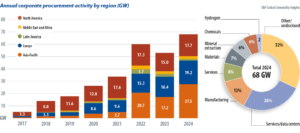
Global corporate demand for clean energy continues to rise. In 2024, companies worldwide signed record volumes of renewable power purchase agreements (PPAs), with around 68 GW of deals announced. This was about 29% growth from the year before. Data centers, manufacturers, and heavy industries are some of the largest buyers of renewable energy.
-
Stable costs:
Long‑term contracts provide predictable power costs. They help companies plan budgets and capital spending. This is important where electricity prices change quickly or where energy costs are a large part of total expenses.
-
Clean energy growth:
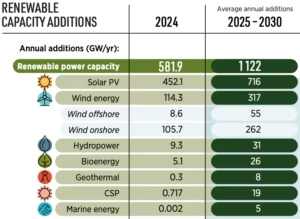
Such power deals support more solar, wind, and low‑carbon energy on the grid. Across the world, renewable capacity is growing fast. In 2024, renewables accounted for nearly all new power installed, with solar and wind making up about 96% of new capacity. This expansion helps reduce reliance on fossil fuels.
-
Reliable power:
Clean firm power mixes renewable generation with flexible resources. This approach helps keep the electricity supply steady even when the sun isn’t shining or the wind isn’t blowing. TotalEnergies designs its contracts this way so heavy industrial users can run without interruptions.
The Growing Market for Clean Power
The market for renewable energy and long-term power contracts continues to grow worldwide. Corporate procurement of renewable energy via power purchase agreements (PPAs) hit record highs recently. The surge came from strong corporate climate commitments. It also rose due to higher electricity demand from data centers and industry.
In 2024, global corporate renewable power purchase agreements reached 68 GW of capacity. Big energy users, such as tech firms, manufacturers, and utilities, want to match their electricity use with clean energy. This growth reflects that demand.
By 2030, analysts expect renewable generation capacity to top 5,000 GW globally. That’s more than double the levels seen in 2024. Countries and companies are investing in clean energy to hit climate targets and boost energy security.
In this climate landscape, energy companies such as TotalEnergies are becoming integrated power suppliers. Their business model seeks to meet the growing corporate demand for stable, low-carbon electricity. Long-term clean power deals boost investment in new renewable projects. They also provide steady revenue for energy producers.
Providing Clean, Reliable Power to Users Globally
TotalEnergies’ 10-year, 800 GWh renewable electricity deal with SWM shows the company’s growing role in clean energy. The deal will help SWM cover half of its electricity needs with low-carbon sources. This supports its decarbonization goals through 2033.
TotalEnergies’ strategy mixes renewable energy with flexible assets. This approach provides clean, reliable power to industrial users globally. As renewable capacity grows and corporate demand increases, such long-term supply agreements will likely play a larger role in the global energy transition.