

The UK aims to replace its old nuclear fleet and hit its 2050 net-zero target. Advanced nuclear technology plays a key role in this effort. Rolls-Royce has partnered with the UK National Nuclear Laboratory (UKNNL) and the Japan Atomic Energy Agency (JAEA). Together, they are fast-tracking the development of next-gen nuclear reactors and advanced fuel technology.
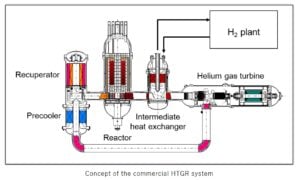
The new agreements focus on High-Temperature Gas-Cooled Reactors (HTGRs). These Advanced Modular Reactors (AMRs) can generate both clean electricity and industrial heat. The collaboration also aims to advance coated particle fuel, which enhances reactor safety and performance.
For the UK, this partnership boosts long-term energy security and helps reduce industrial carbon emissions. For Japan, it allows for wider use of HTGR technology, honed over decades of research.
Why the UK Needs More Nuclear Power
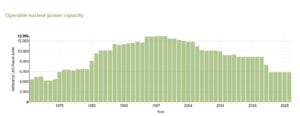
Nuclear energy currently makes up about 15% of the UK’s electricity. Most current reactors will retire before the decade ends, creating an urgent need for low-carbon power sources.
- The UK government aims to increase nuclear capacity to around 24 gigawatts by 2050. This would mean nuclear power could supply roughly a quarter of the nation’s electricity, supporting its net-zero emissions target.
While large nuclear plants are part of the plan, smaller, more flexible reactors are seen as a way to speed up deployment and cut costs. And this is where Advanced Modular Reactors come in.
Chris Cholerton, Group President, Rolls-Royce, said:
“Our two agreements with UKNNL and JAEA are a milestone moment for the UK’s nuclear sector. Strengthening existing relationships between our nations and combining our broad nuclear capability, they will enable us to jointly address technical challenges and accelerate the development of Advanced Modular Reactors and their advanced coated particle fuel, to deliver industrial growth, skilled jobs and energy security for our nations.”
The Growing Promise of Advanced Modular Reactors
Advanced Modular Reactors are smaller, more flexible, and easier to build than traditional plants. Many parts can be made in factories and assembled on-site, cutting construction risks and speeding up timelines.
High-Temperature Gas-Cooled Reactors are among the most promising AMR designs. Unlike traditional reactors, HTGRs can work at much higher temperatures, producing both electricity and industrial heat.
- This capability could help decarbonize hard-to-electrify sectors like chemical manufacturing, steel production, and hydrogen generation.
Rolls-Royce views HTGR technology as a natural fit for its growing nuclear portfolio. The company is already developing Small Modular Reactors (SMRs) in the UK and plans to enter the advanced reactor market.
While HTGRs and SMRs differ in design and output, both benefit from modular construction, improving project certainty and lowering costs.
Coated Particle Fuel (CPF) Could Be the Key
A major focus is on developing coated particle fuel (CPF), a specialized fuel for HTGRs.
CPF is one of the most advanced nuclear fuel technologies today. Each small uranium particle is surrounded by protective layers that contain radioactive materials even in extreme conditions. This design improves reactor safety and allows for very high operating temperatures.
The partners will collaborate on:
- Fuel qualification
- Manufacturing processes
- Supply chain development
Most importantly, a reliable fuel supply chain will be crucial for the success of HTGR projects in both the UK and Japan.
More Than Just Clean Electricity
HTGR technology offers benefits beyond power generation.
- These reactors can provide heat and electricity, making them suitable for various applications.
- This includes industrial facilities, hydrogen production, remote energy systems, and critical infrastructure.
The partnership also plans to create new manufacturing jobs, boost research cooperation, enhance access to specialized facilities, and strengthen local nuclear supply chains
Furthermore, knowledge gained from UK licensing and deployment could help Japan’s HTGR projects. Similarly, Japan’s years of reactor experience can help reduce risks for the UK.
This exchange of expertise could shorten deployment times and strengthen both countries in the advanced nuclear sector.
Building on Existing UK-Japan Nuclear Cooperation
These new agreements build on years of collaboration between JAEA and UKNNL.
Since 2022, the UK government has backed HTGR development through its Advanced Modular Reactor Research, Development, and Demonstration Programme. This initiative has funded reactor design studies, fuel development, engineering assessments, and licensing activities to prepare the technology for commercial use.
- Both JAEA and UKNNL have been key players in these programs, laying the groundwork for HTGRs.
The UK has also launched its Advanced Nuclear Framework to attract private investment in innovative nuclear technologies. Rolls-Royce is interested in deploying HTGRs under this framework, seeing collaboration with UKNNL and JAEA as a way to speed up commercialization.
Thus, the partnership aims to move the technology from research to real-world use.
A New Chapter for Nuclear Energy
Governments worldwide are increasingly turning to advanced nuclear technologies for energy security and to cut greenhouse gas emissions.
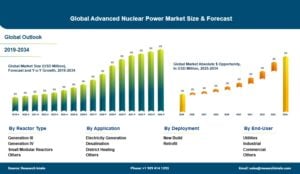
HTGRs stand out for combining reliable power generation, industrial heat production, and strong safety features in one platform. These advantages make them appealing for industries seeking alternatives to fossil fuels.
For Rolls-Royce, these agreements are a chance to expand beyond SMRs and play a larger role in the nuclear market. For the UK, they support building a secure, low-carbon energy system. For Japan, they paved the way for bringing years of HTGR research closer to commercial use.
As countries seek practical solutions for net-zero emissions, partnerships like this could help turn advanced nuclear technologies into real-world clean energy projects.