

The UK government recently released its Fusion Energy Strategy 2026, where it has laid out a bold plan to turn fusion into a commercial, clean power source while building a strong domestic industry.
The key vision is a £2.5 billion investment over five years. The goal is clear: make the UK the first country with a real pathway to commercial fusion energy. At the same time, the strategy connects clean power goals with economic growth, job creation, and long-term energy security.
A Clear Push Toward Energy Independence
The UK’s strategy comes at a time when global energy markets remain volatile. Fossil fuel dependence continues to create risks. As a result, the government sees fusion as a long-term solution for energy sovereignty.
Fusion offers several advantages. It is clean, abundant, and reliable. Unlike solar or wind, it can provide constant power. Because of this, it could play a major role in meeting future electricity demand, especially as industries and AI systems consume more energy.
The government believes that reducing reliance on fossil fuels is the only way to secure long-term stability. Fusion, therefore, is not just a research goal—it is a strategic priority.
Investing Across the Fusion Ecosystem
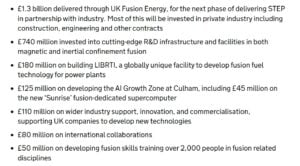
Together, these investments aim to strengthen the entire value chain—from early research to final deployment.
At the same time, the UK is working closely with the private sector. More than 500 companies are already involved in the fusion space. This number is expected to grow as global competition increases.
The potential market is massive. Estimates suggest that fusion could become a £3 trillion to £12 trillion global industry. Therefore, countries are racing to secure leadership positions early.
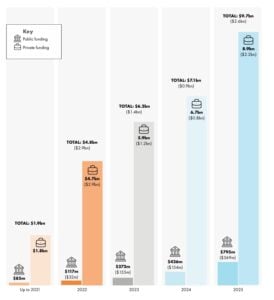
Five-Year Fusion Trends: Total Funding Till 2025
STEP Program: Building the First Fusion Power Plant
A major part of the funding—£1.3 billion—will go to the Spherical Tokamak for Energy Production (STEP) program. This initiative aims to design and build the UK’s first prototype fusion power plant.
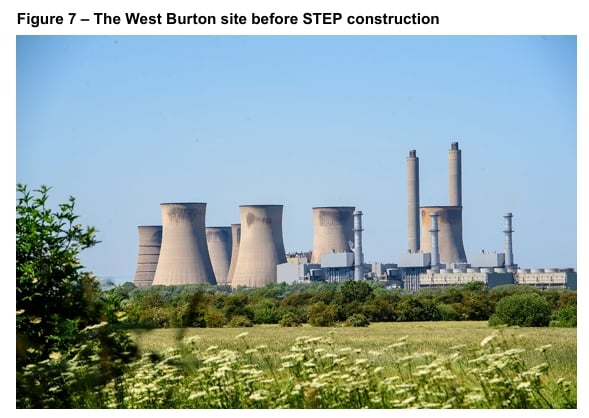
The plant will be located at a former coal site in Nottinghamshire. Construction is expected to begin in 2030, with completion targeted for 2040. The mission is ambitious: generate net energy from fusion and prove that the technology can work at a commercial scale.
To deliver this, the UK has partnered with a consortium called ILIOS. This group, led by Kier and Nuvia, will handle construction, engineering, and supply chain management. Their role covers everything from design integration to infrastructure development.
Importantly, STEP is meant to act as a catalyst. By building this prototype, the UK hopes to stimulate a broader fusion ecosystem, including suppliers, engineers, and technology firms.
UK Fusion Energy
A key part of this shift is the creation of UK Fusion Energy, a subsidiary responsible for delivering the STEP program. This organization will act as a systems integrator. It will bring together multiple technologies and partners to build a complete fusion power plant.
In summary, the three main goals for UK Fusion Energy are:
- Make future fusion power plants safer and more reliable
- Build strong UK industries and supply chains
- Bring lasting economic benefits and energy security to the UK
UKAEA Group: The Backbone of the UK’s Fusion Ambition
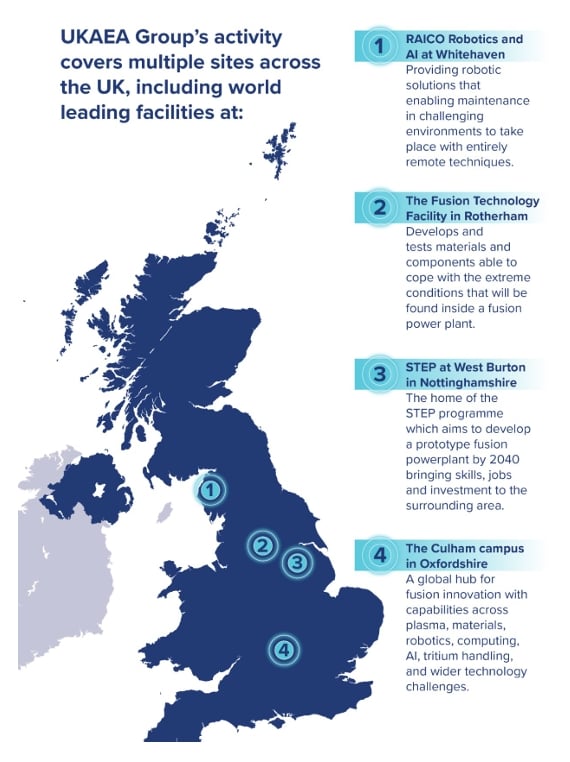
The backbone of the UK’s fusion strategy is the UK Atomic Energy Authority (UKAEA Group). It acts as the country’s main public body driving fusion research, innovation, and delivery.
The UKAEA operates the National Fusion Laboratory based in Culham, Oxfordshire. This facility leads advanced research in plasma science, robotics, materials, tritium systems, and high-performance computing. Over time, it has built a strong global reputation for technical excellence.
However, the UKAEA’s role is now expanding. Other than research, it is actively helping to turn scientific progress into commercial outcomes.
- Neutral beam systems are used for plasma heating
- Robotics for remote maintenance in extreme environments
- Advanced diagnostics and sensor technologies
- Fusion fuel cycle systems and materials
This approach ensures that public research does not remain in the lab. Instead, it flows into real-world applications, supporting both fusion and other industries.
- ALSO SEE: France Shocks Energy Sector and Rewrites Energy Future: New Law Boosts Nuclear, Cuts Renewables
Building a Strong Industrial Base
The UK’s strategy goes beyond technology. It focuses heavily on building a full industrial ecosystem.
The plan supports companies of all sizes—from startups to multinational firms. It also aims to develop strong supply chains within the country. By doing so, the UK wants to become a top destination for fusion investment.
Key areas of opportunity include:
- High-temperature superconducting magnets
- Advanced materials
- Robotics and remote maintenance
- Plasma systems and lasers
- AI-driven control systems
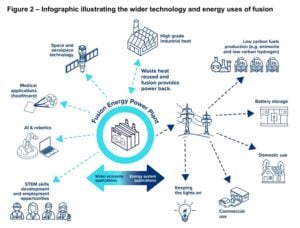
These technologies are not limited to fusion. They also have applications in sectors like aerospace, automotive, healthcare, and telecommunications. As a result, fusion investment could drive innovation across multiple industries.
For example, UK-based companies are already exploring how fusion-related technologies can be used in power grids and advanced manufacturing. This creates near-term economic benefits, even before fusion becomes fully commercial.
AI Meets Fusion: A Game-Changing Combination
One of the most forward-looking parts of the strategy is its focus on artificial intelligence. The government sees AI as a key tool for unlocking fusion energy.
Fusion systems are highly complex. They involve extreme temperatures, fast reactions, and dynamic plasma behavior. Managing these systems requires advanced data analysis and real-time decision-making. This is where AI becomes critical.
Revealing an AI supercomputer: Sunrise
The UK plans to invest £45 million in a dedicated AI supercomputer called Sunrise. This system will support fusion research by accelerating simulations, improving designs, and optimizing operations.
In addition, the UKAEA’s Culham campus will become an AI Growth Zone. This hub will bring together scientists, engineers, and AI experts. The goal is to create a collaborative environment where innovation can thrive.
The government’s broader AI strategy supports this effort. It focuses on building strong data systems, expanding computing power, and encouraging multidisciplinary research. Fusion stands out as one of the priority sectors where AI can deliver rapid breakthroughs.
Interestingly, the relationship works both ways. While AI helps make fusion possible, fusion could eventually power energy-intensive AI data centers. This creates a strong link between future clean energy and digital growth.
DESNZ Sets Clear Rules for Fusion Development
Investors and developers need clear rules to plan fusion projects with confidence. This includes understanding safety, environmental, and planning approvals, as well as which UK organizations must be involved.
To provide clarity, DESNZ (Department for Energy Security and Net Zero) will release a roadmap for the UK fusion regulatory process by Summer 2026. This will guide developers on how to get approvals and engage with regulators early.
The plan also aims to help regulators understand fusion technologies better and support early collaboration, reducing risks in plant design. Fusion regulators are already working with industry and will continue reviewing processes as the sector grows.