

Vistra Corp. (NYSE: VST) closed 2025 with strong operational and financial momentum. Headquartered in Irving, Texas, the Fortune 500 power producer operates one of the largest competitive electricity portfolios in the United States.
Last year, the company expanded its fleet, strengthened long-term partnerships, and delivered record operational performance. At the same time, it positioned itself to benefit from rising electricity demand driven by data centers, electrification, and AI growth.
- It now owns and operates roughly 44,000 megawatts (MW) of generation capacity across natural gas, nuclear, coal, solar, and battery storage assets. That capacity can power about 22 million homes.
Financial Performance Shows Underlying Strength
For the year ended December 31, 2025, Vistra reported GAAP net income of $944 million. This figure included an $808 million unrealized pre-tax loss from commodity hedges expected to settle in future years.
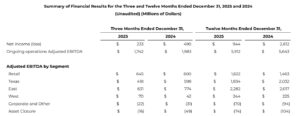
Although net income declined compared to 2024, the drop mainly reflected accounting impacts from rising forward power prices. Higher forward prices typically increase the long-term value of Vistra’s generation portfolio. As a result, the underlying business remains strong.
Ongoing Operations Adjusted EBITDA reached $5.9 billion, up $269 million year over year. Stronger retail margins and contributions from newly acquired assets supported the increase. Cash flow from operations totaled $4.07 billion, reinforcing liquidity and balance sheet strength.
2026 Expectations
For 2026, Vistra expects its adjusted EBITDA to range between $6.8 billion and $7.6 billion, while its adjusted free cash flow before growth is projected between $3.93 billion and $4.73 billion.
Importantly, these projections exclude potential impacts from the pending Cogentrix acquisition and recently signed nuclear agreements.
Meta and Amazon Anchor Vistra’s Nuclear Growth Strategy
The company operates the second-largest competitive nuclear fleet in the United States, providing steady, carbon-free baseload electricity that supports both grid reliability and corporate decarbonization goals.
- In early 2026, the company signed 20-year power purchase agreements with Meta, covering more than 2,600 megawatts of nuclear energy across its PJM facilities. As Meta expands its AI capabilities and data center footprint, it needs dependable, around-the-clock power. These agreements secure long-term access to emissions-free electricity while giving Vistra predictable revenue streams.
Importantly, the structure of the contracts goes beyond traditional energy sales. They include capacity payments and plant uprates, allowing higher output from existing nuclear units. This approach improves asset efficiency for Vistra while ensuring price stability and supply certainty for Meta.
- Vistra also strengthened its clean energy partnerships in Texas. Last year, it signed a separate 20-year agreement with Amazon Web Services for up to 1,200 megawatts of nuclear power from the Comanche Peak Nuclear Power Plant. The deal supports Amazon’s growing data operations with firm, carbon-free electricity and locks in long-term value for the company.
Together, these agreements reinforce the long-term viability of Vistra’s nuclear fleet. Long-term license renewals for the PJM units extend the life of critical zero-carbon infrastructure and strengthen grid reliability. At the same time, they position Vistra to meet rising corporate demand for clean, dependable power in the AI-driven economy.
Expanding Solar and Natural Gas
Vistra also commissioned the 200-MW Oak Hill Solar Facility on a reclaimed coal mine site. The project includes a PPA with AWS, expanding the clean energy collaboration.
In November 2025, it closed a 2,600-MW acquisition from Lotus Infrastructure Partners. Shortly after, it announced plans to acquire Cogentrix Energy, adding approximately 5,500 MW of gas-fired capacity. The transaction is expected to close in mid-to-late 2026.
Additionally, it has also begun construction on two new gas units totaling 860 MW at its Permian Basin plant, effectively tripling that site’s capacity. In addition, it executed uprates across its Texas gas fleet to increase efficiency and output.
These investments reflect a balanced approach. As renewable penetration increases, flexible gas generation helps stabilize the grid and manage peak demand.
Advancing Emissions Reduction Goals
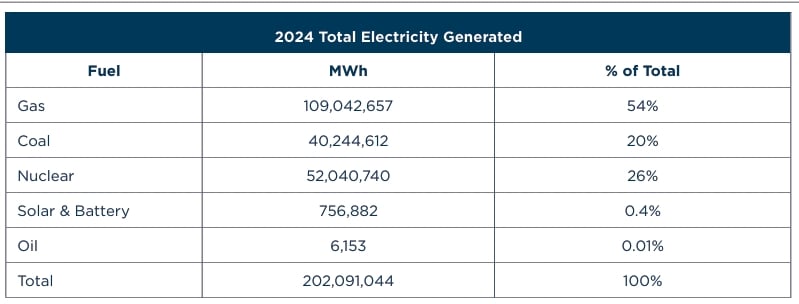
Vistra’s Scope 1 greenhouse gas emissions declined for the third consecutive year in 2024, primarily due to reduced coal generation. Scope 1 includes carbon dioxide, methane, and nitrous oxide, with carbon dioxide representing the largest share.
- The company targets a 60% reduction in Scope 1 and 2 emissions by 2030 compared to 2010 levels. It also aims to achieve net-zero emissions by 2050.
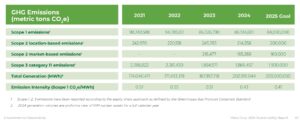
Corporate sustainability efforts extend beyond generation. The company’s headquarters operates on 100% Green-e Wind renewable energy certificates. Nuclear-based emissions-free energy certificates also support fleet electricity usage. Together, these certificates covered more than 30% of corporate electricity consumption in 2024.
Positioned for Long-Term Value Creation
Vistra enters 2026 with strong momentum. Long-term nuclear PPAs with Meta and Amazon, expanded gas capacity, disciplined hedging, and growing renewable assets provide earnings visibility.
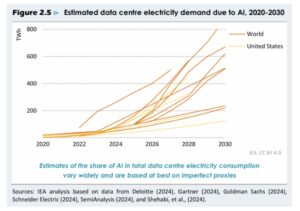
As electricity demand rises from AI, electrification, and digital infrastructure, companies with scale and reliability will benefit. Vistra’s integrated model of combining retail operations, nuclear baseload, flexible gas assets, and renewables positions it to capture that growth.
With projected EBITDA exceeding $7 billion in 2026 and potential upside from acquisitions, Vistra is not only adapting to the evolving energy market. It is actively shaping its future.