

In Cape Town, a carbon credit issuance from restored grasslands has quietly set a global precedent. The Grassland Restoration and Stewardship in South Africa (GRASS) project has issued 266,255 verified carbon units, becoming the first project worldwide to earn the Climate, Community and Biodiversity (CCB) label under Verra’s updated VM0042 methodology.
Developed by carbon project specialist TASC, the initiative focuses on degraded grasslands managed largely by communal livestock farmers. These landscapes, often overlooked by investors, now sit at the centre of a high-integrity carbon model that could shape how future African projects are designed and judged.
South Africa’s Grasslands Face a Quiet Crisis
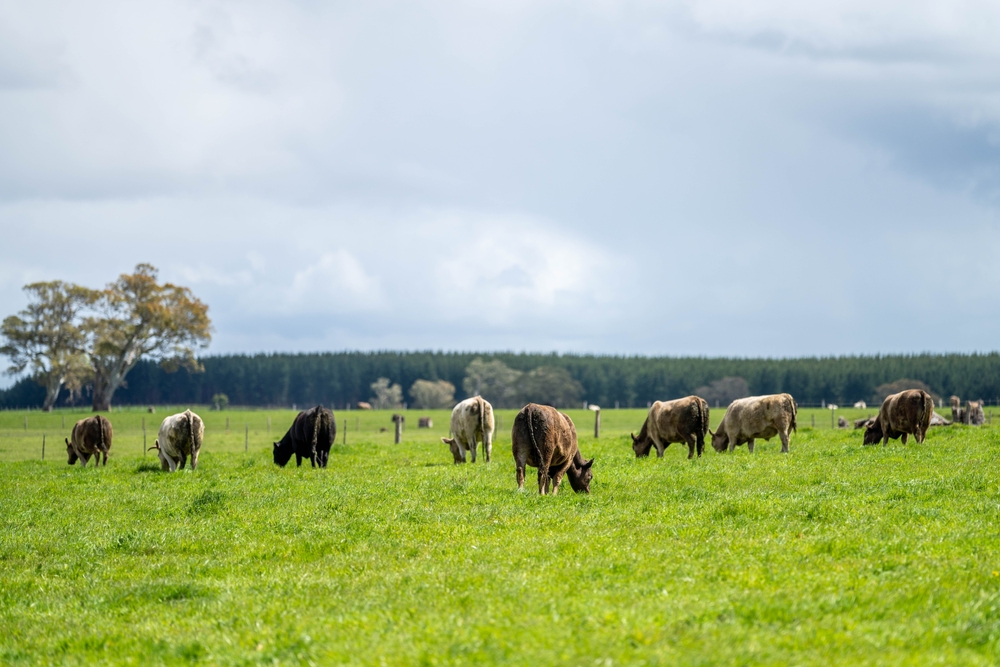
Grasslands cover vast areas of South Africa. Around 34 million hectares support livestock farming, forming one of the country’s most important rural economies. Yet decades of overgrazing, unmanaged fires, and weak institutional support have taken a heavy toll. Roughly a third of these grasslands are now severely degraded.
Climate change has intensified the pressure. Droughts are more frequent. Rainfall is less predictable. Soil health has declined. Productivity has suffered. Communal farmers, who collectively own about half of South Africa’s livestock, remain marginalised in formal markets. Despite their scale, they supply only around 9 percent of national meat output.
This gap reflects structural barriers rather than a lack of land or labour. Limited access to training, veterinary services, finance, and consistent routes to market has locked many farmers out of value chains. GRASS was designed to work within these realities, not around them.
How the GRASS Project Works
GRASS is built around improved grassland and livestock management. The project applies regenerative practices such as adaptive grazing, better fire management, and active monitoring of soil and vegetation. These changes help rebuild grass cover, increase soil carbon, and improve the resilience of rangelands.
The project operates as a group model. Multiple Project Activity Instances, or PAIs, can join under a single framework. The first PAI focuses on communal livestock farming systems, where land tenure is complex and collective decision-making is essential. More recently, TASC expanded the project to include private, commercial farmers.
Significantly, GRASS was the first project registered globally under Verra’s VM0042 methodology, which is specifically designed for improved agricultural land management. This methodology requires detailed soil carbon measurement and includes safeguards to prevent emissions leakage. It reflects the latest thinking on how to quantify carbon outcomes from land-use change credibly.
A Landmark VCU Issuance Under Stricter Rules
During its first monitoring period from 2021 to 2023, GRASS generated 266,255 verified carbon units across more than 95,000 hectares of communal rangeland. The area overlaps with nine key biodiversity zones, including parts of the Maputaland-Pondoland-Albany hotspot.
What makes this issuance special is the CCB label. It confirms that the project delivers measurable climate benefits while also supporting communities and biodiversity. Under the updated VM0042 rules, GRASS is the first project to earn this combined certification.
For buyers, this matters. They want credits that are real, long-lasting, and socially responsible. GRASS meets these standards through strong monitoring and transparent governance.
Community Livelihoods at the Centre
During the first monitoring period, about 4,000 communal farmers joined GRASS and helped manage the land that generated the initial credits. Nearly 300 people also gained work in ecological monitoring, grazing support, and fire management, which matters in areas with few formal jobs.
Carbon revenues flow through a community trust, ensuring income reaches local communities instead of being captured by developers. While carbon payments alone are not transformative, they help cover the costs of improved land management.
Market access has driven much of the project’s early impact. Through a partnership with Meat Naturally Africa, farmers received training and gained access to mobile auctions and abattoirs. These linkages generated about ZAR56.4 million (roughly $3.35 million) in additional revenue from livestock and wool sales, helping households stabilize income amid rising climate risk.
Employment, Skills, and Local Resilience
As GRASS expanded, it created around 900 jobs across communal rangelands, with nearly one-third held by women. Roles include ecological rangers, grazing coordinators, and data collectors.
The project builds technical skills locally, offering training in fire management and invasive species control. This helps protect ecosystems and reduces the need for outside contractors.
GRASS also works through existing communal governance structures. By strengthening local decision-making and ensuring transparent benefit sharing, it lowers the risk of conflict—an issue that often affects land-based carbon projects in Africa.
TASC is Scaling Grassland Restoration Without Losing Integrity
Today, GRASS spans about 950,000 hectares of communal and private rangeland, placing it among the largest grassland restoration initiatives globally. The communal component alone covers more than 600,000 hectares and is expected to expand to one million hectares over time.
TASC plans to scale the project to two million hectares by 2030. At that level, GRASS could sequester or avoid nearly two million tonnes of carbon dioxide equivalent each year. Over its 100-year commitment period, the project targets the mitigation of around 14 million tonnes within its first 30 years.
These figures are modest compared to national emissions. However, they highlight the cumulative potential of land-use interventions when applied consistently and at scale. They also show that community-managed landscapes can meet some of the world’s most demanding carbon standards.
What This Means for African Carbon Markets
Many African countries see carbon markets as a source of climate finance. Yet progress has been uneven. Concerns over land rights, benefit sharing, and long-term stewardship have slowed investment. Some projects have promised more than they delivered, eroding trust.
The South African grasslands example offers a different path. It shows that community-led projects can achieve high-integrity certification while delivering measurable economic returns locally. It also demonstrates that rigorous methodologies and social safeguards need not limit scale.
As scrutiny of voluntary carbon markets intensifies, examples like GRASS may shape future expectations. Buyers, regulators, and communities alike are shifting their focus from promises to outcomes. Projects that cannot show real climate, social, and biodiversity benefits may struggle to find support.
In that context, GRASS stands out. Not as a silver bullet, but as proof that carbon finance, when designed carefully, can restore ecosystems, strengthen rural livelihoods, and deliver credible climate mitigation at the same time.