

The World Bank has settled a US$200 million Clean Cooking Outcome Bond to support clean cooking in Ghana. This bond was priced in early December 2025 and is set to mature in March 2032. It aims to make cleaner cooking accessible to more than one million people in Ghana.
The funding will help distribute hundreds of thousands of improved cookstoves. These stoves reduce the need for wood and charcoal fuel. This bond is part of an emerging class of “outcome-linked” financial products. It ties investor returns partly to measurable development outcomes.
In this case, the outcomes are better health, fewer emissions, and greater access to modern cooking systems. The deal attracted over ten global investors, which shows strong demand for sustainable finance.
How the Clean Cooking Outcome Bond Works
The Clean Cooking Outcome Bond is fully principal-protected, which is issued by the World Bank’s International Bank for Reconstruction and Development (IBRD). It is structured with a fixed return and a variable component linked to the success of the Ghana clean cooking project.
It can mobilize about $30.5 million of private capital. Under the bond terms, money that usually goes to investors is instead “frontloaded” to support clean cooking projects in Ghana.
Standard Chartered Bank provides this frontloaded amount through a hedge transaction. These funds are then used to distribute cookstoves through UpEnergy, a renewable energy project developer. At a glance, the initiative has the following attributes.
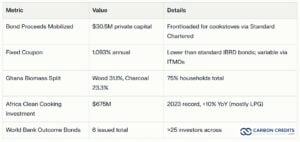
Investors can also earn additional returns based on carbon credits generated by the use of cleaner cookstoves. Experts expect these credits to qualify as Internationally Transferred Mitigation Outcomes (ITMOs) under Article 6 of the Paris Agreement. Countries can trade or count ITMOs, which are verified emissions reductions, toward their national climate goals.
The variable return tied to carbon credits makes this bond different from regular World Bank bonds of similar maturity. Investors accept a lower fixed return in exchange for potential earnings from the carbon credit component. This structure aligns financial incentives with measurable environmental outputs.
Kris Atkinson, Fixed Income Portfolio Manager at Fidelity International, remarked:
“We are delighted to support the World Bank’s new Clean Cooking Outcome Bond through our sustainable fixed income fund range, including our flagship Climate Transition and Social Bond strategies. This innovative, outcome-linked structure aligns with our commitment to mobilising capital towards impactful sustainable solutions, helping expand access to cleaner cooking technologies for households in Ghana while contributing to meaningful emissions reductions.”
What $200 Million Delivers on the Ground in Ghana
The bond will raise funds to help distribute electric cookstoves and better charcoal cookstoves throughout Ghana. From 2025 to 2028, the country will roll out about 415,000 cleaner cooking devices.
The project is planned to make clean cooking accessible to about 1.3 million people. It will replace inefficient traditional cooking methods with modern solutions.
The distribution includes:
- Electric cookstoves for homes with grid access.
- Improved biomass cookstoves for homes without reliable electricity.
Traditional cooking methods — often using fuelwood and charcoal — are still widespread in Ghana. Around 75% of Ghanaians, or about 26 million people, continue to rely on solid biomass fuels for daily cooking. Wood accounts for roughly 31% of household cooking fuel use, and charcoal for about 23%.
Household air pollution from traditional stoves contributes to serious health problems. In Ghana, researchers link air pollution to an estimated 28,000 premature deaths each year, mainly among women and children.
Cleaner cookstoves can significantly lower smoke and toxic emissions in homes. This helps lower health risks for families.
Why Clean Cooking Matters: Health, Climate, and Livelihoods
Access to clean cooking technologies remains low in many parts of the world. More than 2 billion people globally still use traditional biomass fuels like wood and charcoal for cooking. This creates health, gender, and environmental challenges, especially in Sub-Saharan Africa.
In Ghana, only about 23% of households cook with clean fuels or technologies. Most still use polluting methods. Access varies widely in urban and rural areas, with rural households far less likely to use clean cooking fuels. Household air pollution is a major contributor to respiratory illnesses and other diseases.
The lack of modern cookstoves also affects women and girls disproportionately. They often spend significant time collecting firewood or charcoal, which reduces the time available for education and paid work. Cleaner cookstoves can help reduce these burdens and improve the quality of life.
Cleaner cooking also has climate benefits. Traditional biomass cooking contributes to deforestation and greenhouse gas emissions.
Ghana can reduce its reliance on fuelwood by using more electric and high-efficiency stoves. This change will help lower emissions and lessen deforestation pressures. The carbon credits generated through the project show how local environmental improvements can align with global climate efforts.
Why Global Investors Backed This Bond
The Clean Cooking Outcome Bond attracted a broad group of investors from around the world. Participation came from North America, Europe, and regions including Africa, Asia, and the Pacific. This geographic mix reflects growing global interest in innovative, sustainable finance products.
Notable investors included major firms like Mackenzie Investments, Nuveen, and Rathbones. Others were RBC BlueBay Asset Management, Skandia, Velliv, Fidelity, and Legal & General. ZEP-RE stood out as the first African investor in a World Bank outcome bond.
Investors highlighted the strength of the bond’s verification process and its comprehensive impact reporting. Many people pointed to the bond’s mix of principal protection and clear results as the main reasons to participate.
The transaction also showed how Article 6 of the Paris Agreement applies to private finance. This helps achieve large-scale climate mitigation outcomes.
The World Bank has now issued six outcome bonds to date, with more than 25 investors participating across those instruments. This growing track record shows a rising interest in outcome-linked financing. This is especially true in areas that provide both social and environmental benefits.
Clean Cooking Meets Carbon Markets
Investment in clean cooking has been rising as awareness of health, environmental, and social impacts grows. In Africa, clean cooking investment reached around US$675 million in 2023, the highest recorded to date. This represented roughly 10% year-on-year growth. LPG infrastructure and related equipment made up the majority of these investments.
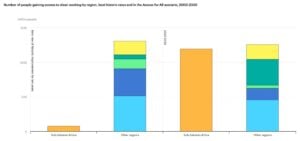
Progress toward universal access to clean cooking remains uneven. Each year, around 13 million people in sub-Saharan Africa gain access to clean cooking solutions. This rise comes from better policies and new technologies. However, this pace must increase to meet global targets for access by 2030.
A Blueprint for Scaling Clean Cooking Finance
The World Bank’s US$200 million Clean Cooking Outcome Bond illustrates how new financial tools can support sustainable development. This bond connects investor returns to clear climate and social outcomes. So, it draws private capital to areas that traditional financing often misses.
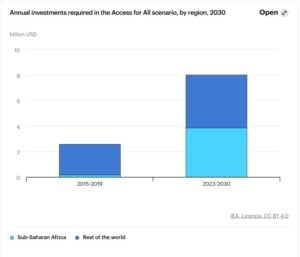
The project in Ghana could serve as a model for similar outcome-linked investments elsewhere. If successful, it might help fill the US$8 billion funding gap. This gap is needed for universal access to clean cooking by 2030. This target is set by the Clean Cooking Alliance and other global partners.
The bond’s success highlights how sustainable finance and carbon credit innovations can deliver measurable change, connecting investor capital with real-world solutions to problems that affect millions of lives.