

Disseminated on behalf of Alaska Energy Metals Corporation.
With the U.S. aiming for energy independence Alaska’s mineral-rich deposits could play a crucial role in reducing reliance on imports. In this rise-in-demand scenario, Canadian mining company Alaska Energy Metals (AEM) sees a solution to explore Alaska’s underground deposits of nickel.
Greg Beischer, President, CEO, and Director of AEM, expressed optimism, saying,
“We should be working harder to increase our domestic resources and secure a domestic supply chain.”
Let’s deep dive into the progress the company is making under Mr. Beischer’s determined leadership and the ambitious plans it has to boost the U.S. nickel supply.
Why Nickel and Other Critical Minerals Are Essential
The U.S. Department of Energy has identified 18 minerals as critical to energy technology and nickel is one of them having paramount importance.
While nickel’s commercial use spans stainless steel production and jet and turbine components, its growing role in EV batteries has elevated its demand. This makes nickel one of the most sought-after materials in the clean energy transition.
Despite its importance, the United States currently lacks a domestic source for nickel production, which represents a significant vulnerability in the supply chain. Thus, establishing domestic nickel production could boost supply chain resilience and support the nation’s transition to a more sustainable economy.
AEM’s Endeavor: Building a Sustainable Nickel Supply Chain
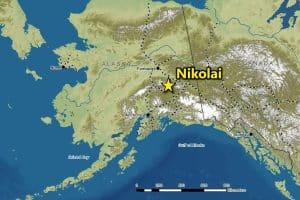
AEM’s flagship endeavor, the Nikolai deposit, is a sprawling 23,000-acre site in Alaska’s southern foothills. This deposit holds not only nickel but also copper, cobalt, platinum, and palladium—all minerals deemed critical by the U.S. Department of Energy.
Mr. Beischer emphasized that Nikolai’s deposits containing multiple metals are essential for boosting the domestic supply chain.
New Resource Estimates and Project Progress
Since AEM began exploring the Nikolai deposit, their findings have surpassed initial expectations. Mr. Beischer noted,
“As a result of the drilling we did in summer 2023, along with the historical information for the project that we had purchased, we were able to calculate a mineral resource estimate that was really quite substantial—in fact, bigger than we had really imagined would be possible.”
- The company’s revised estimates indicate a resource size of 3.9 billion pounds in indicated nickel and 4.2 billion pounds in inferred resources.
These findings mark a significant increase from AEM’s initial projections of around 3 billion pounds.
However, he clarified that the revised estimate does not guarantee the full recovery of these metals. Initial testing has begun, but results show that only about 50 to 55 percent of the metal may actually be recovered.
The company revealed that the 2024 drilling season, which began in July, and covered approximately 4,000 meters is consistent with last year’s scope. However, recent market conditions for nickel held back the project’s expansion.
Mr. Beischer highlighted,
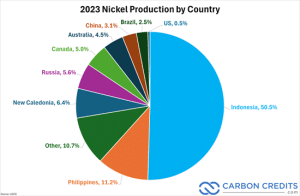
“The flooding of nickel into the market from Indonesia and Chinese-backed operations has depressed nickel prices.”
So, we can see that this supply surge from China and Indonesia has directly impacted nickel prices which in turn affected AEM’s share value and limited the financing options.
He further explained that as a consequence the company has been unable to expand its drilling program as initially anticipated. However, the project is progressing steadily despite the challenges.
The nickel miner remains committed to its goals, gathering data for essential baseline environmental studies. Most significantly, the company is optimistic about achieving the key project milestones. Additionally, it aims to complete a preliminary economic assessment by the end of 2025 and is also considering a pre-feasibility study if all goes in favor.
Securing Funds for Faster Growth
The Nikolai project is crucial for AEM and has immense nickel potential in the future. This is why the company is exploring funding opportunities which also includes applying for a Department of Defense (DOD) grant that could help expedite planning and exploration.
As the project is still in its early development, it aspires to build external partnerships and engage major investors. Mr. Beischer further explained,
“There are no local big investors or any notable company or major funder. It’s a little early. Typically, you’re going to want to see a bit more advancement, like you’ve done at least a preliminary economic assessment before they’d be putting in bigger dollars. Ultimately, we want a strategic partner that can help with the heavier financial interest but also bring expertise that we might not have in-house.”
Mr. Beischer strongly believes that it makes much sense to have the Nikolai Project located on U.S. soil, where the environmental standards are among the highest in the world.
Last but not least, his commitment goes beyond mineral extraction. From a broader perspective, Alaska Energy Metals seeks to fortify U.S. self-sufficiency in critical minerals while contributing to a cleaner, low-carbon future.
Disclosure: Owners, members, directors, and employees of carboncredits.com have/may have stock or option positions in any of the companies mentioned: None.
Carboncredits.com receives compensation for this publication and has a business relationship with any company whose stock(s) is/are mentioned in this article.
Additional disclosure: This communication serves the sole purpose of adding value to the research process and is for information only. Please do your own due diligence. Every investment in securities mentioned in publications of carboncredits.com involves risks that could lead to a total loss of the invested capital.