

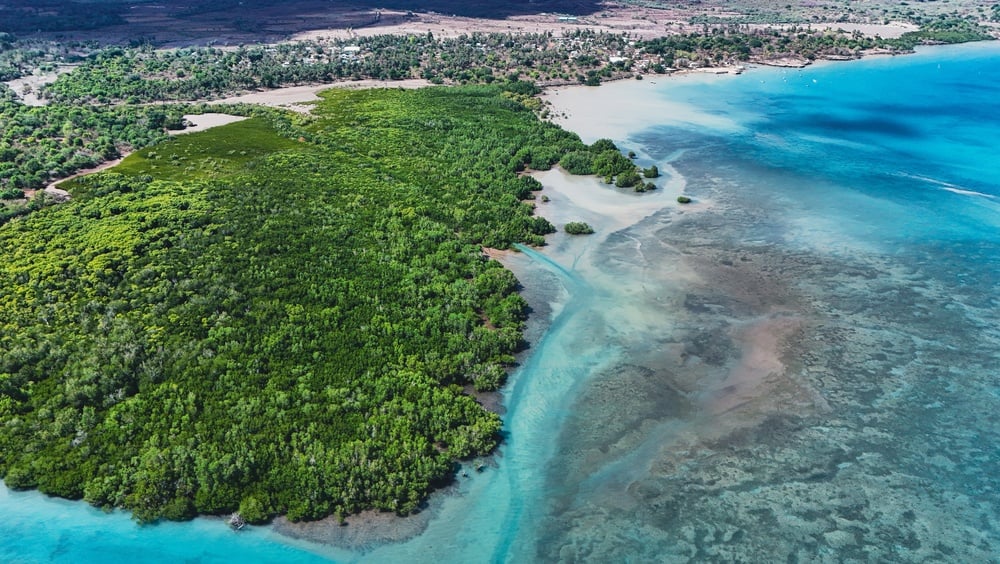
As governments and companies strive to meet climate goals, blue carbon credits are gaining traction. These credits come from coastal ecosystems like mangroves, seagrasses, and salt marshes. They are quickly becoming a key part of the global carbon market.
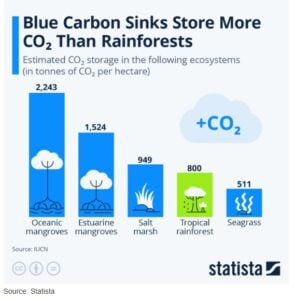
These ecosystems cover less than 2% of the ocean’s surface but account for nearly half of marine carbon burial. They capture carbon, protect coastlines, and support biodiversity. This makes them crucial for climate efforts.
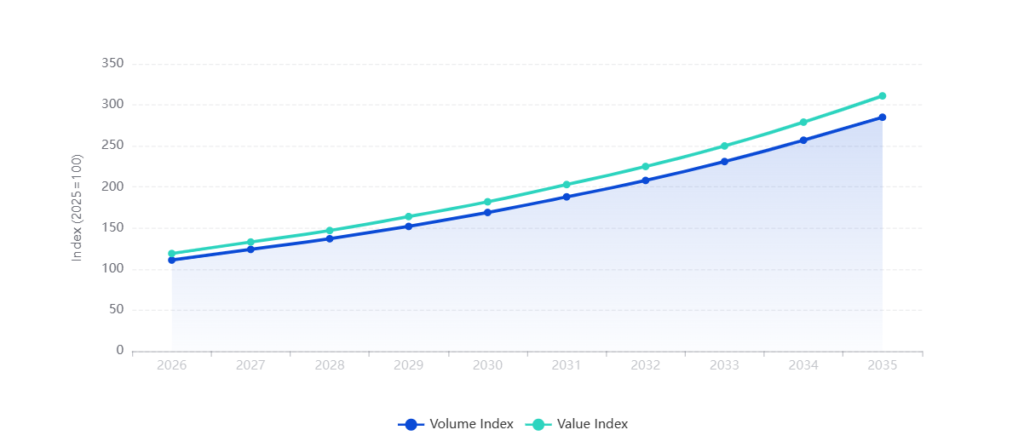
Market forecasts from IndexBox indicate that the global blue carbon market is expected to grow. It will have a compound annual growth rate (CAGR) of 11% from 2026 to 2035. Starting from a 2025 index value of 100, the market could reach about 285 by 2035.
Market forecast of the global blue carbon market
- In contrast, Grand View Research gives a bolder estimate. They project the market will grow from $3.1 million in 2026 to $14.8 million by 2033. That’s a CAGR of 25%.
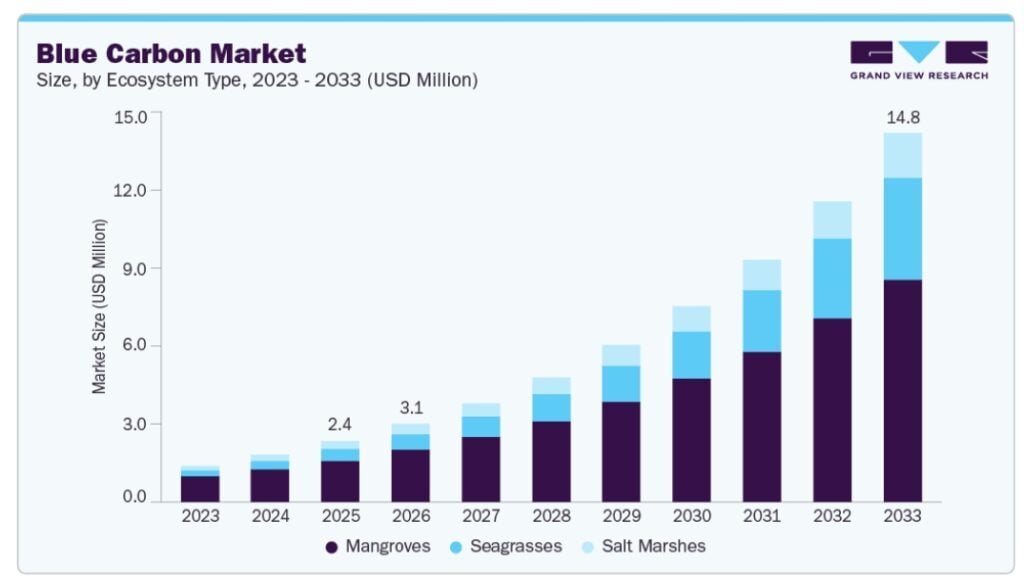
This growth shows a rising demand for high-quality carbon credits. It also highlights a greater awareness of nature-based climate solutions.
Why Blue Carbon Is Becoming So Valuable
Blue carbon ecosystems provide multiple benefits beyond carbon storage.
Mangrove forests protect coastal communities from storms and flooding. Seagrass meadows support marine life and fisheries. Salt marshes improve water quality and store carbon for long periods.
These benefits make blue carbon credits attractive in the voluntary carbon market. Companies in aviation, technology, finance, and shipping are buying these credits to support their net-zero goals. Buyers now seek measurable benefits in biodiversity, community support, and resilience.
This shift has created a supply-demand imbalance. The demand for verified blue carbon credits exceeds supply, keeping prices high.
Mangroves Lead the Market While Seagrasses Gain Momentum
- Currently, mangrove projects dominate the blue carbon market. Estimates suggest that mangroves accounted for about 68% of market revenue in 2025.
- Their strong position comes from their excellent carbon storage and proven restoration techniques.
Large-scale mangrove restoration projects are expanding in Indonesia, the Philippines, Malaysia, Brazil, Colombia, Kenya, and Tanzania. These regions provide great chances for restoration at lower project costs.
Seagrasses are emerging as a fast-growing segment. Scientists recognize seagrass meadows as powerful carbon sinks. With better measurement technologies, investment in seagrass restoration is expected to rise in the next decade.
As a result, market growth is diversifying across different coastal ecosystems.
Voluntary Carbon Markets Remain the Main Growth Engine
The voluntary carbon market (VCM) is the largest source of demand for blue carbon credits. IndexBox estimates show that voluntary markets represent about 45% of the total market value. Companies use these credits to meet climate commitments and offset emissions.
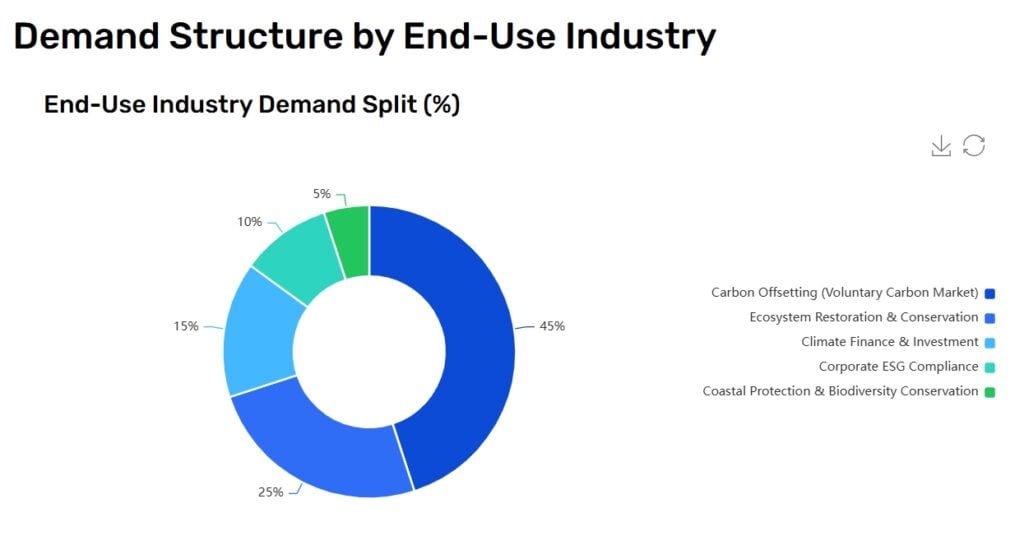
Buyers are becoming more selective. High-integrity credits that provide verified environmental and social benefits are gaining attention. This trend has led to the rise of carbon credit rating agencies like Sylvera and BeZero, which assess project quality.
Forward purchase agreements are also becoming common. In these agreements, companies commit to buying future credits, helping project developers fund restoration efforts.
As a result, voluntary carbon markets are evolving into a sophisticated climate finance system.
Asia-Pacific Dominates Global Supply
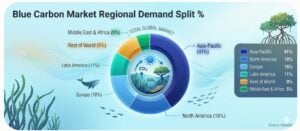
Asia-Pacific leads the global blue carbon market, accounting for about 39% of the market value in 2025. Some estimates suggest its broader market influence could be as high as 45%.
The region has extensive mangrove ecosystems, especially in Indonesia, Malaysia, and the Philippines. Government restoration programs and international funding have sped up project development.
Demand in the region is growing, too. Companies in Japan, Australia, and Singapore are increasingly purchasing blue carbon credits to meet sustainability goals.
- North America is also a key demand center, making up about 20% of the market. Corporate buyers in the U.S. and Canada drive credit purchases, while restoration projects expand along the Gulf Coast and Pacific Northwest.
- Europe holds about 18% of the market share. This is due to strong ESG regulations and corporate climate commitments. At the same time, Latin America and Africa are emerging as key supply regions. Their coastal ecosystems and increasing restoration efforts drive this growth.
Policy Support Could Unlock the Next Growth Phase
Government policies may drive significant growth in the coming decade.
Most blue carbon credits are currently traded in voluntary markets. However, policymakers are exploring ways to include blue carbon in compliance systems. Future linkages with international mechanisms like CORSIA could boost demand.
The market outlook shows gradual integration. However, regulatory support is getting better. Countries are adding blue carbon ecosystems to their Nationally Determined Contributions (NDCs) under the Paris Agreement. New standards under the Verified Carbon Standard (VCS) and Plan Vivo are creating clearer methods.
The Integrity Council for the Voluntary Carbon Market (ICVCM) is also enhancing quality standards through its Core Carbon Principles. These efforts aim to improve transparency and increase buyer trust.
Challenges Still Limit Market Expansion
Despite promising growth, several challenges hinder market development.
Project developers face high initial costs for restoration, monitoring, and long-term management. Securing permits and resolving land ownership issues can also delay projects.
Measurement, reporting, and verification (MRV) remain complicated, especially for new ecosystem types and remote areas.
Ecosystem degradation, coastal development, and climate risks can affect long-term carbon storage. Many developing regions struggle with a lack of technical expertise and funding, which may slow project expansion despite growing demand.
Thus, supply shortages are expected to continue, supporting higher credit prices.
Technology and Finance Are Creating New Opportunities
Emerging trends could speed up market growth. Advances in satellite monitoring, remote sensing, and digital MRV systems are making carbon measurement more precise and affordable. Greater transparency can boost investor confidence and lower project risks.
Blended finance models are also attracting more participants, including governments and private investors. Public-private partnerships are funding large-scale restoration projects and easing financial barriers for developers.
- Carbon pricing systems are adding momentum to the market. Global carbon pricing generated over $100 billion in revenue in 2024, signaling strong demand for carbon reduction and removal solutions.
These trends are likely to create new revenue streams and expand investment opportunities across the blue carbon value chain.
Blue Carbon Market Offers a Critical Climate Solution for the Decade Ahead
The blue carbon market lies at the crossroads of climate action, biodiversity conservation, and sustainable development.
Corporate demand is rising, climate policies are supportive, and technology is advancing. These factors drive future growth. Challenges still exist in project development and ecosystem protection, but the long-term outlook is bright.
As companies aim for net-zero goals and governments tighten climate policies, blue carbon projects may provide a key source of reliable carbon credits in the next decade. These projects also offer more than just carbon removal. Restoring mangroves, seagrasses, and salt marshes protects coastlines, supports communities, preserves biodiversity, and boosts resilience against climate change.