

Amazon is taking a bold step toward the next frontier of clean energy. In Washington state, the company is helping to build one of the United States’ first small modular reactor (SMR) facilities. This innovative nuclear energy project could redefine how big tech powers artificial intelligence (AI), cloud computing, and data centers.
The upcoming Cascade Advanced Energy Facility will be one of the first commercial SMR sites in the U.S. Developed by Energy Northwest and X-energy, this project represents a major milestone in the shift toward reliable, carbon-free energy for a rapidly digitizing world.
Bob Schuetz, CEO of Energy Northwest, said,
“Today marks a pivotal step forward in bringing this transformative project to life. We are proud to be at the forefront of deploying advanced nuclear technology in the region—driving next-generation solutions that strengthen energy security and position the Pacific Northwest as a clean energy leader.”
Cascade: The Nuclear Powerhouse Behind Amazon’s Digital Future
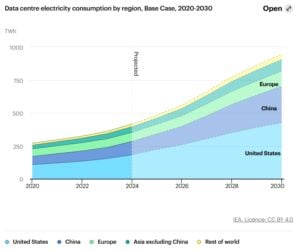
Amazon’s data centers are the digital backbone of modern life—running AI models, streaming services, and e-commerce systems that demand massive amounts of electricity. As power needs grow, traditional renewable sources like solar and wind alone can’t always meet 24/7 demand. That’s where nuclear energy steps in.
- The Cascade facility, located near Richland, Washington, will produce up to 960 megawatts (MW) of clean electricity using X-energy’s Xe-100 advanced reactor design.
The project will start with four SMRs generating 320 MW, with expansion plans for up to 12 units. Construction is expected to begin before 2030, with operations commencing in the early 2030s.
Kara Hurst, Chief Sustainability Officer, Amazon, commented:
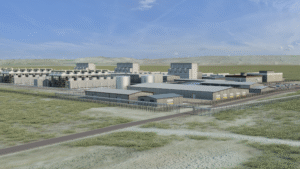
“Seeing these renderings is truly inspiring, and a reminder that innovation and sustainability go hand in hand. This project isn’t just about new technology; it’s about creating a reliable source of carbon-free energy that will support our growing digital world. I’m excited about the potential of SMRs and the positive impact they will have on both the environment and local communities.”
Here’s a snapshot of the project site:
SMRs: A Smaller, Safer, and Scalable Future
SMRs represent the next evolution in nuclear energy. They’re designed to be smaller, safer, and faster to deploy than conventional reactors. The modular layout allows facilities like Cascade to scale as demand grows—making it a perfect match for AI-powered data centers that require continuous, high-capacity electricity.
Xe-100 Advanced Reactor Features
Each Xe-100 reactor will use a High-Temperature Gas-cooled Reactor (HTGR) and advanced fuel, improving safety and efficiency. The design minimizes the risk of overheating and eliminates the need for large water-cooling systems, which are standard in older nuclear plants.
Key advantages include:
- 80 MW per reactor module with a 60-year design life.
- Modular construction allows components to be built off-site and transported via rail or road.
- Continuous online refueling, reducing downtime, and increasing efficiency.
- Walk-away safe design with passive safety systems that eliminate the risk of overheating.
- Fuel that cannot melt, further enhancing safety.
Unlike traditional gigawatt-scale reactors that occupy vast tracts of land, Cascade’s compact design will fit on a few city blocks. Each SMR is modular, which means parts can be factory-built and assembled on-site, reducing costs and construction time.
The environmental advantage is clear: SMRs provide round-the-clock, carbon-free electricity without the intermittency challenges of solar or wind. This makes them a critical piece of the clean energy puzzle for tech-driven economies.
According to J. Clay Sell, CEO of X-energy, said
“The support of Amazon has enabled us to accelerate progress on our technology, grow our team, and position the Cascade Advanced Energy Facility at the forefront of energy innovation.”
Jobs, Training, and Local Benefits
Once the Cascade project is complete, the facility will create over 1,000 construction jobs and more than 100 permanent positions in nuclear operations, engineering, and technical maintenance.
To build a skilled local workforce, Columbia Basin College in Pasco, Washington, is developing an Energy Learning Center with a sophisticated Xe-100 control room simulator. Think of it as a flight simulator for nuclear operators.
The press release also revealed that the simulator will train future plant operators, engineers, and technicians in collaboration with Washington State University Tri-Cities and is set to open in late 2025.
This initiative, funded by the U.S. Department of Energy (DOE), provides students with hands-on experience in advanced nuclear technology—bridging the gap between classroom learning and real-world careers.
Amazon’s Growing Nuclear Portfolio
Amazon’s investment in Cascade is part of a broader strategy to diversify its clean energy sources. The company has already invested billions of dollars in carbon-free technologies, including nuclear power, through its Climate Pledge Fund.
This fund supports companies developing scalable solutions to decarbonize energy systems. Amazon’s capital investment in X-energy is expected to help bring over 5 gigawatts (GW) of new nuclear capacity to the U.S. grid by 2039—enough to power 3.8 million homes.
- In another move, Amazon signed agreements with South Korea’s Doosan Enerbility and Korea Hydro & Nuclear Power Co. to accelerate SMR deployment in the U.S. These partnerships are part of Amazon’s long-term strategy to integrate advanced nuclear into its clean energy mix.
- The company also teamed up with Talen Energy in Pennsylvania to develop a data center next to an existing nuclear plant, further securing access to reliable carbon-free power for its expanding cloud infrastructure.
Clean Energy Beyond Renewables
Amazon is the world’s largest corporate purchaser of renewable energy, with over 600 clean energy projects operating globally. It had already reached 100% renewable electricity worldwide—seven years ahead of its 2030 goal.
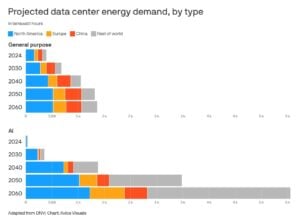
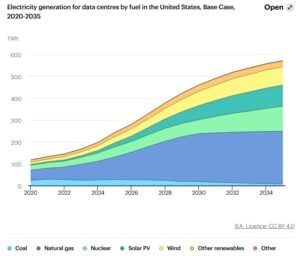
According to a DNV report, AI-focused data centers could require 10 times more power over the next five years. Meeting that demand will require a mix of renewables, nuclear, and other carbon-free technologies.
Amazon’s approach is clear: continue expanding renewable energy while also investing in stable, long-duration power sources like SMRs that can provide consistent baseload power. Nuclear energy complements renewables by filling the gaps when solar and wind output fluctuate.
Building the Energy Infrastructure of Tomorrow
The International Energy Agency (IEA) reported that global energy demand grew 2.2% in 2024, outpacing the decade’s average. Industrial activity now drives nearly 40% of global electricity use, and the rise of digital services and AI compounds this demand.
Amazon’s nuclear investments aim to meet this target. The Cascade project will not only add clean power to the regional grid but also strengthen the U.S. energy infrastructure and reduce reliance on fossil fuels.
Beyond decarbonization, these efforts create economic opportunities for local communities through job creation, tax revenue, and the establishment of a clean energy supply chain in the Pacific Northwest.
Thus, from renewables to nuclear, Amazon’s energy strategy is redefining what it means for technology companies to lead in climate action. As the Cascade facility takes shape, it could become a model for how advanced nuclear energy powers the next phase of the global clean energy transition—fueling both innovation and sustainability, one reactor at a time.