


Energy giant Shell reported around 1.1 billion metric tons of carbon dioxide equivalent (CO₂e) emissions in 2025. Most of these emissions come from the use of the fuels the company sells, known as Scope 3 emissions.
Scope 3 emissions occur when customers burn oil, gas, and other fuels produced by energy companies. For Shell, these emissions dominate its carbon footprint.
The company’s operational emissions are much smaller. Shell recently reported about 50 million tons of Scope 1 emissions from its operations. It also noted around 8 million tons of Scope 2 emissions from purchased electricity.
Together, these numbers show the scale of emissions linked to global fossil fuel use. In comparison, the United Kingdom’s total emissions were about 480 million tons in 2024, less than half of Shell’s overall carbon footprint. This comparison highlights how emissions linked to energy supply chains can exceed those of entire countries.
Why Scope 3 Emissions Dominate Oil and Gas
Most emissions linked to oil and gas companies come from the fuels consumers burn. This explains why Scope 3 emissions are the largest part of Shell’s carbon footprint.
- Shell’s reporting shows Scope 3 emissions of over 1 billion tons of CO₂ equivalent, far higher than emissions from its direct operations. As seen below, the oil major’s GHG emissions have been declining since 2018.
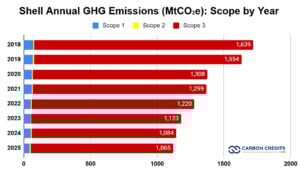
Scope 1 and Scope 2 emissions come from Shell’s operations and purchased energy, based on the company’s sustainability reports. Scope 3 emissions represent the use of fuels sold by Shell. Scope 3 accounts for the vast majority, around 95% of the company’s carbon footprint.
About 78% of these emissions occur downstream, mainly when customers use gasoline, diesel, or natural gas. The rest come from upstream activities such as equipment manufacturing and fuel transport.
This pattern is common across the oil and gas industry. Energy companies produce fuels, but most emissions occur when the fuels are burned.
Because of this structure, reducing emissions in the energy sector requires changes across the whole system. These include cleaner fuels, new technologies, and changes in how energy is used.
Shell’s Net-Zero Targets and Climate Strategy
Shell says it aims to become a net-zero emissions energy company by 2050. To move toward this goal, the company has set several climate targets.
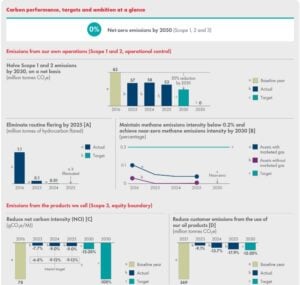
- One key target is to cut emissions from its operations (Scope 1 and 2) by 50% by 2030 compared with 2016 levels.
The oil giant has already made some progress on this goal. By 2024, the company had reduced operational emissions by about 30% compared with 2016.
Another metric Shell uses is Net Carbon Intensity (NCI). This measures emissions per unit of energy sold. In recent reporting, Shell’s NCI stood at 71 grams of CO₂ equivalent per megajoule, unchanged from the previous year.
The company plans to reduce this measure to net zero by 2050 as part of its transition strategy. However, intensity targets measure emissions relative to energy production. This means total emissions can remain stable if energy demand continues to grow.
Shell’s Offset Strategy: Retiring Millions with Certified Credits
In 2025, Shell retired 5.8 million carbon credits. Of these, 5.5 million were tied to its Net Carbon Intensity (NCI) efforts. This included 2.0 million linked to energy product sales. The company emphasizes careful sourcing and screening of credits.

Of the total retired, 59% were certified by Verra’s Verified Carbon Standard (VCS), 22% by Gold Standard, 10% by the ACR program, and 9% via Climate Action Reserve.
Rising Energy Demand Keeps Fossil Fuels in Play
Global energy demand continues to rise. This affects emissions across the energy sector. According to the International Energy Agency, energy-related carbon dioxide emissions grew in many regions due to rising industrial activity and energy demand.
- Emissions from natural gas increased by 2.5% in 2024, while coal emissions rose almost 1% in recent global energy data, per the IEA report.
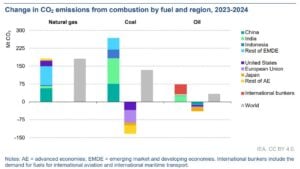
Oil emissions also increased slightly as countries continued to rely on fossil fuels to meet economic growth and energy access needs. This demand helps explain why oil and gas companies still play a large role in global energy supply.
At the same time, the energy transition is accelerating. Governments and companies are investing in renewable power, electric vehicles, and cleaner fuels. These trends are reshaping the global energy system.
LNG and Carbon Capture in Shell’s Transition Plan
Shell continues to expand its liquefied natural gas business. The company expects global LNG demand to grow about 60% by 2040, driven by economic growth and industrial energy needs.
Natural gas produces fewer emissions than coal when burned. Because of this, some countries view LNG as a transitional fuel during the shift to cleaner energy systems.
Shell is also investing in carbon capture and storage (CCS). One major project is the Northern Lights carbon storage project in Norway, developed with industry partners. The facility aims to store at least 5 million tons of CO₂ per year once expanded.
Carbon capture technology can help reduce emissions from industries that are difficult to electrify, such as heavy manufacturing and shipping. However, CCS projects remain limited in number compared with the scale of global emissions.
The Enormous Scale of the Global Energy Transition
The world’s energy system is changing quickly. But the scale of fossil fuel use remains large.
Energy companies like Shell supply fuels used across transportation, power generation, and heavy industry. This explains why emissions linked to these companies are so high.
At the same time, new technologies are reshaping the energy landscape. Renewable power, electric vehicles, hydrogen fuels, and carbon capture are expanding rapidly.
Shell itself notes that new technologies could cut the carbon intensity of the global energy system by half by 2050 if current trends continue. Still, hitting global climate targets will require faster progress.
What Shell’s Emissions Reveal About the Energy System
Shell’s reported 1.1 billion tons of CO₂ emissions in 2025 show the scale of the global energy challenge. The majority of these emissions come not from company operations, but from the fuels used by millions of consumers and industries worldwide.
Reducing emissions across this system will require major changes in energy production, infrastructure, and technology. Oil and gas companies remain central players in this transition. Their investments, technologies, and energy supply decisions will influence how quickly the global economy moves toward lower-carbon energy.
The next decades will determine whether the energy system can meet rising demand while also reducing emissions at the scale required to reach global climate goals.