

The Republic of Rwanda is advancing its nuclear energy plans. It signed an agreement with Holtec International to use the SMR-300 small modular reactor. This deal shows Rwanda’s aim to lead in Africa’s nuclear technology and boost energy security while fostering economic growth.
The agreement was signed at the Nuclear Energy Innovation Summit for Africa (NEISA) 2026. Officials from Rwanda, the U.S., and global nuclear organizations were present. Rafael Marin from Holtec Europe and Dr. Fidele Ndahayo, CEO of the Rwanda Atomic Energy Board, signed the deal.
The signing also included a civil nuclear cooperation memo between the U.S. and Rwanda. Key officials like Renee Sonderman from the U.S. State Department and Dr. Usta Kayitesi, Rwanda’s Minister of State for Foreign Affairs, attended.
Under Paul Kagame’s leadership, NEISA 2026 focused on how nuclear power can help African nations meet rising electricity needs while cutting emissions. Major groups like the International Atomic Energy Agency and the United Nations Economic Commission for Africa supported the summit.
- RELATED: Live Uranium Prices Today
Why Rwanda Is Turning to Small Modular Reactors
Rwanda’s electricity demand is expected to increase sharply. By 2050, it could rise nearly sevenfold compared to 2023. This growth stems from expanding industries, urbanization, and more people gaining access to power.
Currently, Rwanda relies heavily on fossil fuels for electricity. Hydropower is the main low-carbon source, while solar and wind contribute only a small share.
These trends push Rwanda to consider nuclear energy for the long term. Small modular reactors (SMRs) can provide reliable, carbon-free electricity with less infrastructure than traditional plants.
Holtec’s SMR-300 is designed for countries with growing electricity needs and developing power grids. It uses pressurized water reactor technology and has passive safety systems for minimal human intervention. Holtec calls it “walk-away safe,” meaning it can shut down safely during emergencies without operator action.
What Makes the SMR-300 Different
The SMR-300 has several advanced features focused on safety and efficiency. One major advantage is its small footprint; it needs only about 38 acres to generate over 600 megawatts of electricity.
The reactor can use water- or air-cooling systems, making it adaptable to different climates and water conditions. This flexibility is crucial for African countries with varied water availability.
Other key features include:
- An advanced Reactor Coolant System (RCS) using a Once-Through Steam Generator (OTSG) with an integral pressurizer for better efficiency.
- A two-loop pressurized water reactor with vertically mounted coolant pumps and one steam generator for superheated steam at full power.
Advantages of the SMR-300
Holtec designed the SMR-300 for long life and lower maintenance. Engineers aimed to cut down on corrosion, erosion, vibration damage, and wear for better reliability.
This reactor can help stabilize electricity grids, vital in developing economies where demand fluctuates. Unlike renewables, nuclear plants provide a steady baseload of electricity.
Holtec Expands Its Global Nuclear Ambitions
For Holtec, the Rwanda agreement is part of its global growth strategy.
The company is also deploying its first SMR-300 at the Palisades Nuclear Plant in the U.S. This project could be among the first operational small modular reactors in the country.
Holtec President Dr. Richard M. Springman announced that the company will support Rwanda with a complete nuclear development model. This model covers reactor technology, engineering, construction, spent fuel management, operational support, and future decommissioning.
Holtec is working with Hyundai Engineering & Construction on engineering and construction for the SMR-300 program.
Africa’s Power Mix Still Depends Heavily on Fossil Fuels
Africa’s electricity sector still relies mostly on fossil fuels, even as countries seek cleaner energy.
The International Atomic Energy Agency reports:
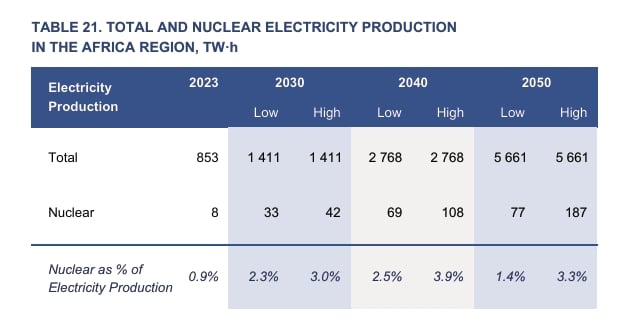
- Nuclear power provided about 2% to 3% of Africa’s electricity from 1990 to 2010, dropping to below 1% in 2023.
- Fossil fuels accounted for about 75% of Africa’s electricity production in 2023.
- Natural gas use has grown steadily, while coal’s share has decreased.
- Hydropower was Africa’s largest low-carbon electricity source in 2023, contributing around 18%.
- Wind and solar energy are expanding, but made up only about 5% of electricity generation in 2023.
Electricity Demand in Africa Could Rise 7x by 2050
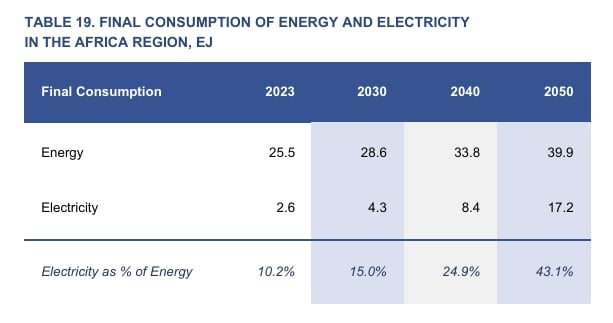
Africa’s final energy consumption could rise by nearly 60% by 2050 compared to 2023. Electricity demand is expected to grow even faster due to population increases, industrial expansion, and improved access to power.
The IAEA predicts that Africa’s electricity generation capacity may grow nearly sevenfold by 2050. This rapid growth will require countries to build reliable and affordable electricity systems quickly.
Can Nuclear Power Help Africa Meet Its Soaring Energy Demand?
Countries like Rwanda are looking into small modular reactors for their energy futures. Unlike some renewables that depend on weather, nuclear power can provide stable, carbon-free electricity 24/7.
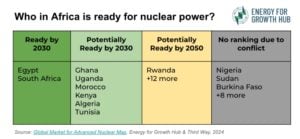
Projections indicate that Africa’s nuclear capacity could increase by 2050. Though nuclear energy is a smaller part of the energy mix, many governments see it as a way to enhance energy security, support industrial growth, and reduce emissions.
Rwanda’s partnership with Holtec International reflects a broader energy transition in Africa. Countries are seeking reliable, cleaner power sources to meet future demand.