


China has taken a major step toward improving climate transparency for businesses. The Chinese government released a new national corporate climate reporting standard titled Corporate Sustainable Disclosure Standard No. 1 – Climate (Trial). The standard was issued by the Ministry of Finance along with the central bank and several other regulators. It aims to help companies disclose climate-related risks, opportunities, and impacts in a clear and consistent way.
This new standard represents one of the most important changes in China’s environmental, social, and governance (ESG) reporting system. It shifts corporate climate disclosure from informal, voluntary practices to a clear framework. This allows for easier comparison between companies and countries.
Inside China’s New Climate (Trial) Reporting Standard
The Climate (Trial) Standard gives rules for Chinese companies on reporting climate-related data. It is called a “trial” standard because it is being introduced in phases before it becomes fully mandatory. It initially applies to more than 5,000 listed companies. Full mandatory compliance is expected by 2028, according to the Ministry of Finance guidance.
The standard follows the International Financial Reporting Standards (IFRS) S2. This framework is the global guide for climate disclosure, created by the International Sustainability Standards Board (ISSB). By doing this, China is aligning its rules with global reporting practices.
Under the standard, companies must provide information on:
- Governance: How the company’s leadership oversees climate risks and strategies.
- Strategy: How climate change affects its business plans.
- Risk and Opportunity Management: How the company identifies and manages climate risks and opportunities.
- Metrics and Targets: What measurements and goals the company uses to track climate performance.
Beyond the IFRS S2 includes four pillars, it also requires Scopes 1-3 greenhouse gas emissions, internal carbon pricing, and climate-related capital expenditures. These rules go beyond the global standard and show China’s unique approach.
The reporting framework organizes climate information. This makes the data clearer and easier for investors, lenders, and the public to compare.
Why Beijing Is Tightening Climate Transparency
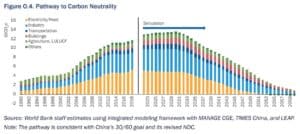
China is the world’s largest greenhouse gas emitter. It has pledged to reach peak carbon emissions and to achieve carbon neutrality by 2060. In effect, the government aims to help companies better measure and report their environmental impact. This will support its climate goals.

Corporate climate disclosures help investors and regulators understand risks linked to climate change. They also guide capital toward cleaner and low-carbon investments. A clear reporting standard can reduce greenwashing, where companies exaggerate or misstate their environmental actions.
In recent years, many Chinese firms have reported climate data on a voluntary basis. However, these disclosures have varied widely in detail and quality.
Authorities plan a phased approach to implementation. At first, the standard will apply mainly to large listed companies and key sectors. Later, it may become mandatory for all major enterprises.
Key Features of the Standard
China’s climate reporting standard contains several key features that align with global best practices.
- It follows the four pillars used in international climate reporting: governance, strategy, risk management, and metrics.
- It encourages disclosures on climate risks and opportunities linked to business strategy.
- It supports decision-useful information for investors, lenders, and regulators.
- It is structured to eventually provide comparable climate data across firms.
The standard is more detailed than some earlier ESG guidelines. In some cases, it goes beyond the level of detail required by international frameworks. This reflects China’s intent to tailor global standards to local conditions.
Industry-specific guidance will be for sectors such as steel, cement, power, fossil fuels, and automobiles. This will help companies in high-emission industries report more precise climate data.
How It Fits With Other Chinese ESG Rules
China has been building a broader ESG reporting system since 2024. In late 2024, the Basic Standards for Corporate Sustainability Disclosure came out. They provide guidance for ESG reporting. The new climate standard builds on that foundation.
In addition, China’s main stock exchanges in Shanghai, Shenzhen, and Beijing require listed companies to publish sustainability reports with climate information. Many firms are now preparing for the first real reporting cycle under these exchange rules in 2026.
Together, national standards and exchange requirements move China toward a more uniform reporting regime. Over time, climate disclosure could shift from voluntary to mandatory for a broader range of companies.
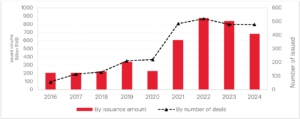
The framework also boosts China’s rapid growth in green finance. Industry projections suggest sustainable bond issuance to reach $1.2 trillion annually by 2025.
The framework also helps China meet its dual-carbon goals: peaking emissions before 2030 and reaching neutrality by 2060.
What Companies and Investors Need to Prepare For
Chinese companies must strengthen their internal systems to collect climate data when they adopt the climate reporting standard. Firms will need to track emissions, set targets, and disclose climate strategies clearly.
Many companies have already begun reporting climate information, but the quality varies. In 2024, research revealed that most firms reported Scope 1 and Scope 2 emissions. However, only a few shared data on Scope 3 emissions tied to their value chains. This signals a need for stronger and more complete reporting.
- Specifically, a 2024 survey of top Chinese firms found that 84% reported Scope 1 and 2 emissions, but only 22% provided Scope 3 data tied to their value chains.
The new standard aims to raise the overall level of disclosure and build trust in climate data.
Investors, both domestic and foreign, are following these changes closely. Reliable climate data helps investors assess financial risks. This includes risks from policy changes, climate hazards, and market shifts. Regulators and investors see improved transparency as foundational to sustainable finance.
Stronger reporting can open up more green financing opportunities over time. This includes options like green bonds and sustainability-linked loans. As stakeholders see better data quality, their confidence will grow.
- READ MORE: China’s First-Ever Sovereign Green Bond Hits Global Market: Will It Power Its Net Zero Ambitions?
What Comes Next for China’s Corporate Reporting?
The release of this standard signals China’s intention to modernize its corporate reporting landscape. Over time, standards could expand beyond the trial phase and become a required part of corporate disclosure. Authorities are expected to issue implementation guidance and set timelines for mandatory compliance.
As China aligns its disclosure framework with global norms, its reporting standards could impact climate reporting in other emerging markets. This could help integrate Chinese companies more fully into global sustainable finance systems.
The standard is voluntary for now, but its phased rollout shows a move toward clearer and enforceable climate reporting. This change shows China’s aim to support green development. It also helps markets grasp climate risks and opportunities better. Over time, businesses are likely to strengthen their climate data systems, and investors may benefit from clearer and more reliable information.