


Meta is expanding its efforts to address supply-chain emissions by backing a new source of recycled plastic in the U.S.
The technology giant has signed a multi-year agreement with circular plastics startup MacroCycle Technologies to purchase environmental attribute certificates (EACs) linked to recycled polyethylene terephthalate (rPET) from MacroCycle’s first commercial plant in the Southeastern U.S.
The agreement gives MacroCycle long-term demand for its recycled PET and could help the startup secure financing for plant construction. The facility is expected to produce 5,000 tonnes of recycled PET annually.
For Meta, the deal provides another route to address emissions associated with plastics in its supply chain. For MacroCycle, it brings a major corporate buyer into the project as the company moves from developing its technology to commercial-scale production.
The agreement also arrives as the global plastics industry faces a major recycling gap.
Plastic Production Is Growing Faster Than Recycling
The need for additional recycling capacity is significant.
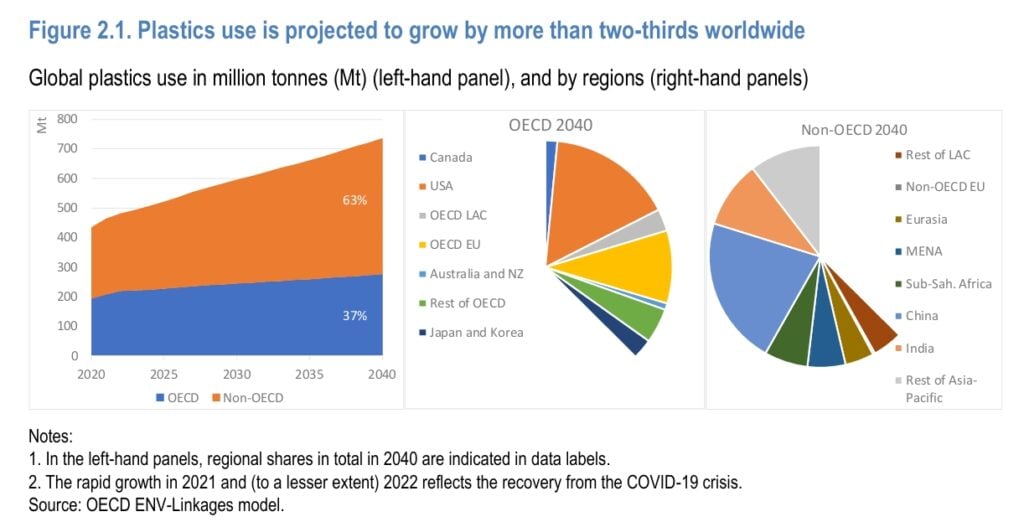
The OECD projects that global plastics production and use will increase from 435 million tonnes in 2020 to 736 million tonnes by 2040 under its baseline scenario. Meanwhile, recycled plastics would account for only about 6% of total plastics use by 2040.
That gap creates pressure on companies to find more ways to keep plastic in circulation.
PET is one of the more established recycling streams, but the U.S. market still faces challenges around collection, processing capacity, and demand.
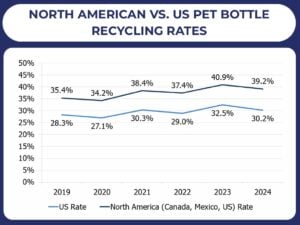
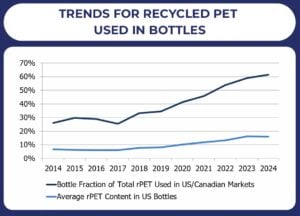
The latest data from the National Association for PET Container Resources (NAPCOR) show that the U.S. PET bottle recycling rate fell to 30.2% in 2024 from 32.5% in 2023. However, the North American PET bottle collection rate reached 39.2%.
At the same time, recycled PET imports reached a record level in 2024, accounting for 23% of total rPET supply in the U.S. and Canada. Domestic sales of rPET also declined 3% from 2023.
So, while the industry is recovering more PET, the market still needs reliable domestic capacity and buyers for recycled material.
Meta Targets Supply-Chain Emissions With Lower-Carbon Materials
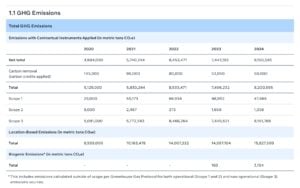
Meta reported a greenhouse gas footprint of about 8.2 million metric tonnes of CO₂ equivalent, with Scope 3 emissions accounting for 99% of the total. The company says most emissions are tied to suppliers, making its supply chain a key area for emissions reductions.
That gives lower-carbon materials a growing role in Meta’s climate strategy.
The company already prioritizes post-consumer recycled plastics and recycled metals, including copper, aluminum and steel, in data center IT hardware such as server racks. It is also exploring lower-carbon materials for packaging and transportation.
Now, Meta is applying a similar approach to recycled PET.
Devon Lake, Head of Net Zero Strategy at Meta, said:
“Reaching net zero means advancing lower-carbon solutions across our supply chain and in the materials we use. We have been working to address emissions across our supply chain on materials like cement and steel, and our early procurement of materials from these sectors helped pave the way for the maturing markets we see now. We hope this transaction with MacroCycle will have a similar outcome in the plastics market.”
The EAC agreement is therefore part of a broader effort to create demand for lower-carbon materials. At the same time, it gives MacroCycle a long-term commercial commitment that can support developing new recycling capacity.
MacroCycle Targets Hard-to-Recycle PET Waste
MacroCycle Technologies is targeting that opportunity with a different approach to recycling.
Founded in 2023 out of MIT and headquartered in Cambridge, Massachusetts, the startup has raised more than $10 million. Its early supporters include Breakthrough Energy, Clean Energy Ventures, and Volta Circle.
Unlocking SolvoGenesis
The company uses its proprietary SolvoGenesis™ platform, a solvent-based process designed to dissolve and purify PET while keeping the polymer chain intact.
That differs from conventional mechanical recycling, which can struggle with mixed, blended, or contaminated waste streams.
MacroCycle says its process can turn difficult PET waste into high-purity, virgin-quality recycled PET that can replace fossil-fuel-based material in applications such as packaging and textiles.
Stwart Pena Feliz, Co-Founder & CEO of MacroCycle Technologies, emphasized,
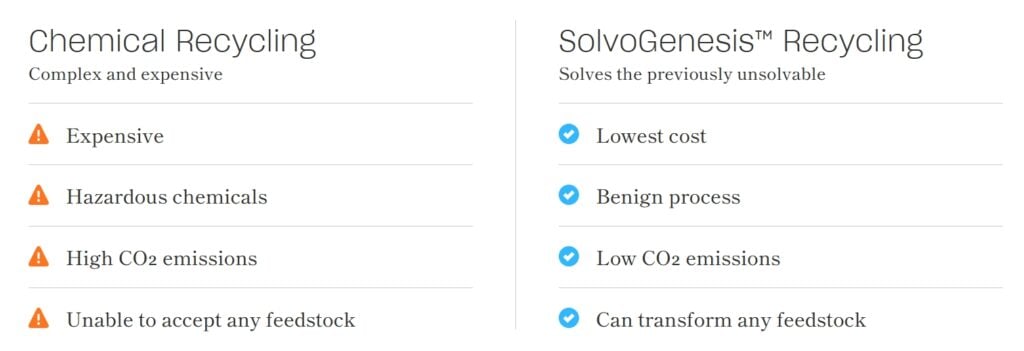
“Most recycling forces a trade-off: mechanical processes are cheap but degrade the material with every cycle and struggle with complex waste streams. Chemical processes that break PET all the way down to its monomers are energy-hungry and expensive.”
“SolvoGenesis™ sidesteps the tradeoff. We dissolve and purify PET while keeping the polymer chain intact, which is why we can take the mixed, blended, and contaminated waste that other processes reject and still come out with virgin-quality material at a fraction of the energy. The feedstock that is difficult for others to use is the feedstock we are built for.”
The company is now preparing to scale that technology commercially.
- SEE MORE: The Power of Plastic Credits: How Verra’s Waste Reduction Program Can End Global Plastic Pollution
Meta’s EAC Deal Helps Create Demand
This is where the agreement becomes important for MacroCycle.
The company will generate third-party verified EACs from recycled PET produced at its first commercial plant. Meta will purchase those certificates over a multi-year period.
For an early-stage manufacturer, securing a long-term buyer can make it easier to finance new production capacity.
MacroCycle says Meta’s agreement provides the long-term product demand needed to help finance construction of its first American PET recycling and production plant.
The facility is expected to produce 5,000 tonnes of recycled PET each year. It will also create jobs through construction and ongoing operations while diverting PET and polyester waste from landfills and incinerators.
The structure also reflects a broader trend in clean manufacturing. Companies can use advance procurement and long-term purchasing agreements to support emerging technologies before they reach large commercial scale.
Meta has used similar procurement strategies in other lower-carbon materials markets, including cement and steel. The company hopes its partnership with MacroCycle can help create a similar market-development effect for plastics.
U.S. rPET Supply Creates Another Opportunity
The deal also comes as the U.S. recycled PET market faces a supply imbalance.
MacroCycle says the U.S. imports more than 40% of its virgin PET and more than 20% of its recycled PET. At the same time, domestic rPET capacity is shrinking.
NAPCOR’s data reinforces the importance of domestic capacity. Although U.S. PET bottle recycling remains above its previous decade average, rPET imports reached a record 23% of total supply in 2024.
That creates an opportunity for producers that can turn domestic plastic waste into recycled material for U.S. customers.
MacroCycle’s planned plant could help address both sides of the equation. It would divert PET and polyester waste from disposal while adding U.S.-based recycled PET production.
However, the first facility will still represent a relatively small share of the broader market.
MacroCycle Plans Larger Plants
MacroCycle sees the first 5,000-tonne facility as a starting point rather than an endpoint.
The company is working to secure additional buyers for its recycled PET. Future plants could produce as much as 50,000 metric tonnes of material annually, according to co-founder and CEO Stwart Peña Feliz.
That would give subsequent facilities a much larger role in the recycled PET market.
Meanwhile, for Meta, the agreement adds recycled plastic to its broader effort to reduce emissions across its value chain. With Scope 3 emissions making up nearly all of its reported GHG footprint, supplier-related emissions remain a major focus of that strategy.
The MacroCycle agreement will not solve the plastics industry’s recycling gap on its own. But it illustrates how corporate demand can help emerging recycling companies move toward commercial production.
All in all, as global plastic use continues to grow while recycled content remains limited, long-term procurement agreements could become an important source of demand for new recycling infrastructure.