

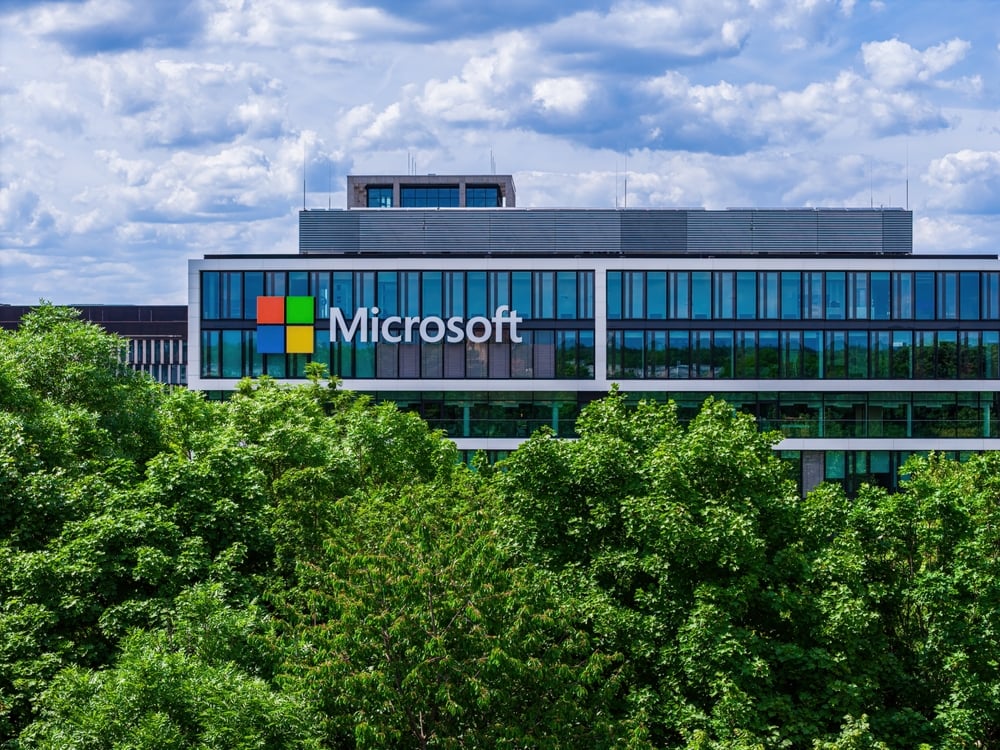
Microsoft has achieved a major sustainability milestone by matching 100% of its global electricity use with renewable energy. The target, set in 2020, was part of the company’s wider climate goals and originally slated for completion by 2025.
The company bought enough clean power to meet all its electricity needs. This covers the total use at its data centers, offices, campuses, and facilities around the world for the year.
It is one of the largest corporate clean energy achievements ever recorded. The milestone shows how major energy buyers can boost renewable infrastructure and cut emissions.
Microsoft’s Chief Sustainability Officer, Melanie Nakagawa, said:
“This is an important step on our path to carbon negativity. Electricity is a major source of emissions for Microsoft – and for many organizations. Microsoft’s experience building our clean energy portfolio has served as an important catalyst in driving commercial demand for infrastructure and innovation across the power sector.”
The Scale of Microsoft’s Renewable Energy Portfolio
Microsoft’s renewable matching does not mean every kilowatt-hour it uses comes directly from clean sources every hour of the day. Instead, the company matched its total annual electricity use with clean energy it helped finance.
The tech giant’s renewable energy portfolio is extensive and global in scale. Since 2013, when the company signed its first 110 MW power purchase agreement in Texas, it has grown its clean energy commitments. As of 2025, Microsoft has contracted about 40 gigawatts (GW) of new renewable energy supply across 26 countries.
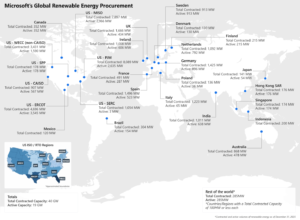
Of this total, roughly 19 GW is already online and delivering electricity to the grid. The remaining 21 GW are expected to become operational during the next five years.
- To help put this scale into context, 40 GW of renewable capacity is roughly enough electricity to power 10 million U.S. homes.
The big tech company quickly grew its renewable energy contracts. It went from about 1.8 gigawatts in 2020 to 40 gigawatts by 2025, showing an increase of around 2,100% in just five years. This sharp rise reflects the company’s accelerated clean energy procurement strategy.
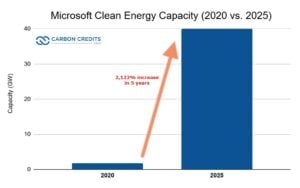
The scale of growth shows how quickly large technology firms are securing long-term clean power contracts to support expanding data center and AI operations while reducing emissions.
Microsoft’s clean energy contracts include solar, wind, hydro, and other renewables. These projects are built under long-term agreements called power purchase agreements (PPAs). These PPAs usually last 10 to 15 years, which gives renewable energy developers steady revenue. It also helps them fund new clean energy plants.
How Renewable Matching Works
Matching 100% of electricity use with renewables means Microsoft buys as much renewable energy as it uses each year.
The company achieves this mainly through long-term PPAs, which finance new generation capacity. PPAs occur when Microsoft contracts with renewable energy developers to buy power at a set price over many years.
Microsoft buys renewable energy in key U.S. markets like PJM Interconnection, MISO, and ERCOT. It also invests in renewable capacity in Europe, the Asia Pacific, and Latin America.
Renewables from grid programs and clean tariffs count toward the matching goal. This is true when they have long-term contracts, not short-term “spot” credits.
This approach helps ensure that Microsoft’s demand supports new renewable capacity, not just transfers ownership of existing clean power. Long-term contracts allow developers to build new projects.
SEE MORE on Microsoft:
- Microsoft (MSFT) Signs Solar Deal with Zelestra to Power Data Centers in Spain, Supporting Community Projects
- Microsoft Leads on Climate: $800M CIF Drives Clean Tech and AI Energy Deals with ADNOC, Masdar, and XRG
Powering the Path to Carbon Negative by 2030
Matching 100% of electricity use with renewable energy is a central step in Microsoft’s broader climate strategy. In 2020, Microsoft announced a “moonshot” goal to become carbon negative by 2030. This means removing more carbon than it emits.
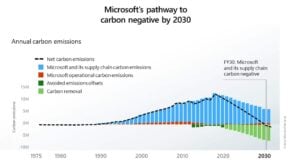
The renewable matching effort also helps reduce Scope 2 emissions, which are those associated with purchased electricity. Microsoft estimates it has cut its Scope 2 CO₂ emissions by around 25 million metric tons since starting its clean energy journey.
Microsoft’s renewable electricity commitment is part of a larger climate plan. This plan includes investing in carbon removal, improving efficiency, and exploring new technologies.
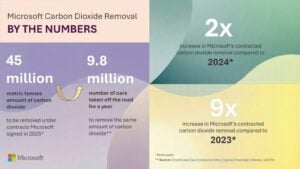
The tech giant created a Climate Innovation Fund. It has invested hundreds of millions in energy systems, storage, and grid innovation.
The company closely tracks Scope 2 progress. It also tracks how fast artificial intelligence (AI) and cloud computing grow. This growth impacts total energy demand and emissions.
From Texas to India: A Global Procurement Strategy
Microsoft’s renewable energy contracts span many countries and energy markets.
In the United States, Microsoft has focused on major grid regions like PJM Interconnection (about 8,089 MW contracted), MISO (7,897 MW), and ERCOT (4,696 MW).
In Europe, the UK leads with about 1,666 MW of renewable capacity contracted, followed by Spain (1,496 MW) and Germany (1,425 MW).
Renewable capacity is also growing in the Asia Pacific. India leads with 1,011 MW, while Australia follows with 868 MW. This geographic diversity spreads investment. It also boosts renewable capacity in markets at different stages of energy transition.
Microsoft is exploring new procurement models and agreements. They are tailoring solutions for local markets and regulations.
Big Tech’s Expanding Role in Grid Decarbonization
Microsoft’s renewable energy milestone reflects a wider shift in corporate clean energy demand. Bloomberg New Energy Finance reports that over 200 global companies have bought almost 200 GW of clean energy since 2008. Microsoft’s efforts are part of this broader trend.
Big tech companies like Google, Amazon, and Meta have pledged to use renewable energy for their data centers and operations. These companies typically use PPAs to finance new wind and solar projects around the world.
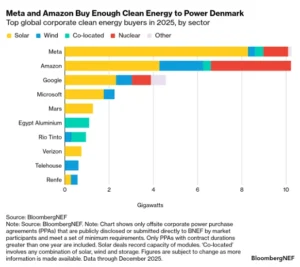
The renewable energy demand from major corporations helps mobilize capital, lower financing costs, and accelerate the deployment of clean infrastructure.
This market signal can boost investor confidence. It also encourages utilities to adopt cleaner generation plans. These plans align with long-term decarbonization goals.
Analysts say that matching yearly renewable energy use with clean electricity doesn’t mean all power use is emissions-free at every moment. Balancing electricity supply with demand each hour, known as 24/7 carbon-free electricity, is a tough task.
Microsoft’s milestone is a big win for corporate climate action. This is true even with the challenges faced.
Beyond Annual Matching: The 24/7 Clean Power Challenge
Microsoft says it will continue to conduct renewable energy contracting to support future growth and climate goals.
Through 2030, the company plans to maintain 100% annual renewable matching and expand into emerging markets. This includes looking into more carbon-free sources like nuclear power. It also covers grid-enabling technologies to meet clean energy needs anytime.
The company is also scaling partnerships to extend its clean energy footprint. It has several contracts with global energy partners that each provide more than 1 GW of capacity.
As energy demand from cloud and AI services continues to grow, Microsoft’s renewable portfolio and innovation efforts will be central to balancing electrification with climate commitments.