


Microsoft (NASDAQ: MSFT) and the Idaho National Laboratory (INL) have joined forces to make the nuclear licensing process faster and more efficient using Azure cloud and AI technology.
Backed by funding from the U.S. Department of Energy (DOE) Office of Nuclear Energy, through the National Reactor Innovation Center, this project aims to cut through the red tape that often delays the development of nuclear power.
INL and Microsoft have collaborated earlier as well. In 2023, INL and Idaho State University (ISU) nuclear engineering students developed the world’s first nuclear reactor digital twin — a virtual replica of ISU’s AGN-201 reactor — using Microsoft’s Azure cloud computing platform.
Heidi Kobylski, vice president for Federal Civilian Agencies, Microsoft, said,
“Artificial intelligence technologies can enable a new frontier of innovation and advancement by automating routine processes, accelerating development and freeing scientists and researchers to focus on the real complex challenges affecting our society. We are honored to collaborate with INL to help address the complicated process of nuclear licensing to potentially help speed the approval of nuclear reactors necessary to support our increasing energy demands.”
How Can Microsoft’s Azure AI Simplify INL’s Nuclear Licensing Documents?
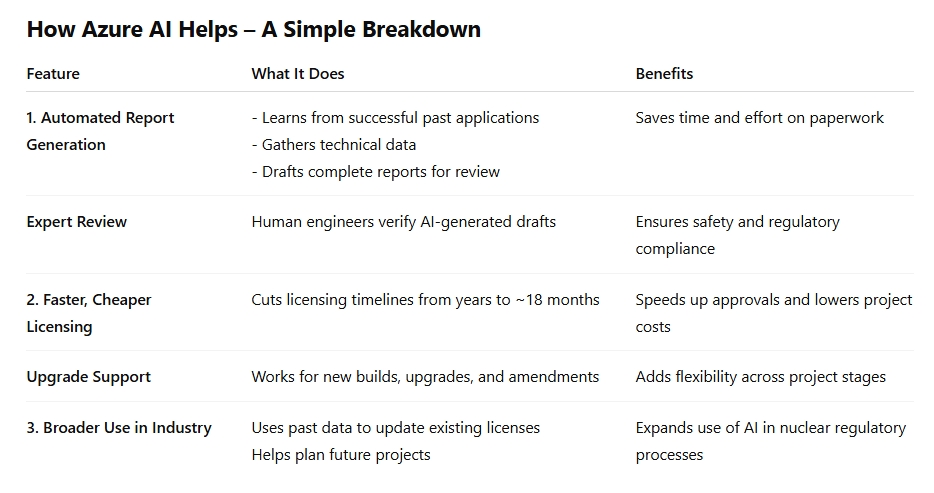
INL is using a Microsoft-developed solution powered by Azure AI to generate engineering and safety analysis reports. These reports are required when applying for construction permits or operating licenses for nuclear power plants.
Normally, assembling these reports takes a lot of time and money. This is because developers have to gather safety data and technical details from various sources, then compile them into massive documents.
However, the Azure AI tool is changing that by significantly speeding up the process. It automatically generates the paperwork required for approvals from the U.S. Nuclear Regulatory Commission (NRC) and the Department of Energy (DOE), saving both time and resources.
Jess Gehin, associate laboratory director for Nuclear Science and Technology at Idaho National Laboratory, highlighted,
“This is a big deal for the nuclear licensing process. Introducing AI technologies will enhance efficiency and accelerate the deployment of advanced nuclear technologies.”
Additionally, Chris Ritter, division director of Scientific Computing and AI at INL, noted,
“AI holds significant potential to accelerate the process to design, license, and deploy new nuclear energy for the nation’s increasing energy needs. INL looks forward to early research to evaluate the applicability of generative AI in the nuclear licensing space.”
Blending AI Speed with Human Oversight
Moving on, this AI solution focuses on assembling the necessary reports using existing engineering and safety information instead of analyzing the data itself. Once the AI creates the draft documents, human experts step in to thoroughly review and verify every detail, ensuring accuracy, completeness, and regulatory compliance.
Moreover, the tool can help with many types of nuclear projects. It supports licensing for new light water reactors, upgrades to current plants, and even advanced reactor designs that use different fuels and cooling systems.
It’s also useful for nuclear test facilities approved by the NRC or DOE. Since advanced reactors often don’t follow standard designs, they need custom paperwork. This makes the AI tool especially helpful for developers trying to handle complex licensing steps quickly and correctly.
Trump’s Support for Faster Nuclear Approvals
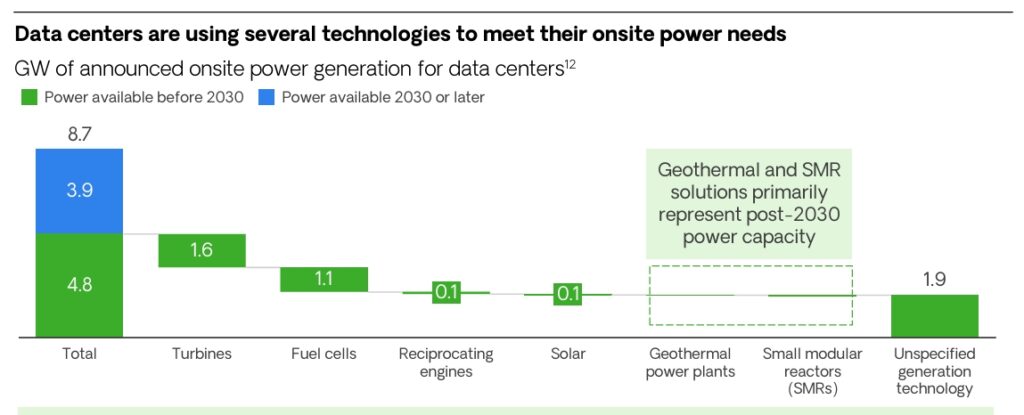
This AI effort aligns with recent U.S. policy shifts. In May, President Donald Trump signed executive orders aimed at accelerating the licensing process for new nuclear power plants. The goal is to shrink what’s typically a multi-year approval cycle down to just 18 months, as demand for electricity, especially from AI data centers, continues to rise.
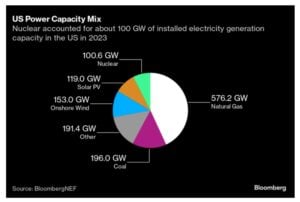
According to the Nuclear Energy Institute (NEI), the United States has 94 nuclear reactors that provide power to tens of millions of homes and serve as vital anchors for local communities.
The DOE is also encouraging private companies to submit proposals to build and operate advanced test reactors under the Atomic Energy Act. Their goal is to have at least three advanced reactors operational by July 4, 2026.
Notably, INL has received federal approval under the Defense Production Act, giving it priority access to materials and services to build two key facilities, namely the DOME and LOTUS
These test beds will support microreactors—compact nuclear units that produce 1 to 50 megawatts of reliable, zero-emission energy. They’re ideal for powering military bases, remote sites, and off-grid communities.
How AI Is Revolutionizing Nuclear Energy
As the world moves toward net zero, nuclear energy is gaining renewed focus as a clean, reliable power source. And AI is driving this transformation. Apart from s
Smarter, Safer, and More Efficient
From predictive maintenance to fusion research, it’s making nuclear power smarter, safer, and more efficient.
Notably, the U.S. Department of Energy already uses AI for reactor monitoring and maintenance. Also, fusion projects at MIT, ITER, and private firms use AI to manage complex plasma behavior, predict disruptions, and optimize reactor designs.
Boosting SMR Development
AI speeds up the development of advanced reactors, such as Small Modular Reactors (SMRs), by simulating performance and optimizing fuel efficiency. Companies like NuScale and TerraPower utilize AI to develop safer and more affordable nuclear solutions.
Safer Waste Management
Another important use of AI-powered robots and computer vision is in nuclear decommissioning. They handle hazardous waste and dismantle old plants, keeping humans safe from harm. Facilities like Sellafield in the UK are already benefiting from these innovations.
From this, we can well perceive how AI is proving to be a game-changer in the nuclear sector. From simplifying paperwork to accelerating approvals and cutting costs, tools like Azure AI are helping the U.S. lead the way in nuclear innovation. And INL is tapping on the right technology at the right time.
All in all, this success could make Microsoft a leader in AI for critical infrastructure and open up chances to bring AI to other heavily regulated industries.