

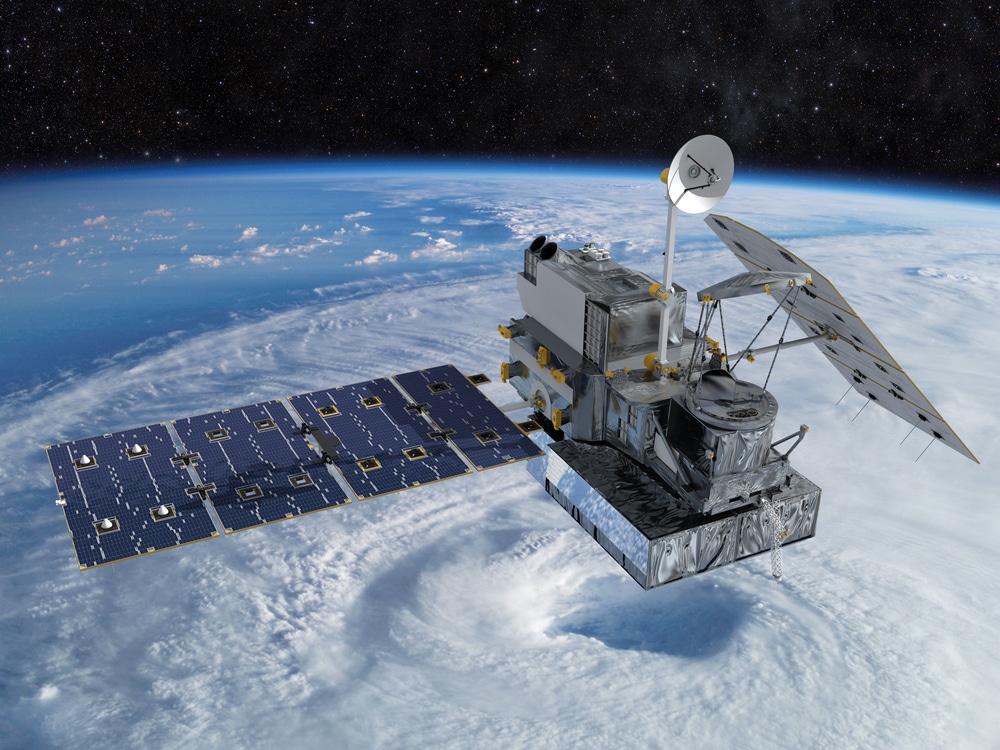
A recent study shows that space-based carbon observations by NASA can help track carbon emissions at the source.
Two major NASA space missions, OCO-2 and OCO-3, allowed researchers to detect and track changes in CO2 emissions from a single facility by using Europe’s largest coal-fired power plant.
Quantifying Carbon in Space
In the study, analysts use the space-based measurements produced by NASA’s Orbiting Carbon Observatory or OCO missions, 2 and 3.
They calculate the CO2 emitted by the world’s 5th largest coal-fired power plant – Bełchatów Power Station in Poland. They then analyzed the plant’s CO2 emissions using OCO’s 2 and 3 mapping observations between 2017 and 2022.
The image below shows the mapping results.
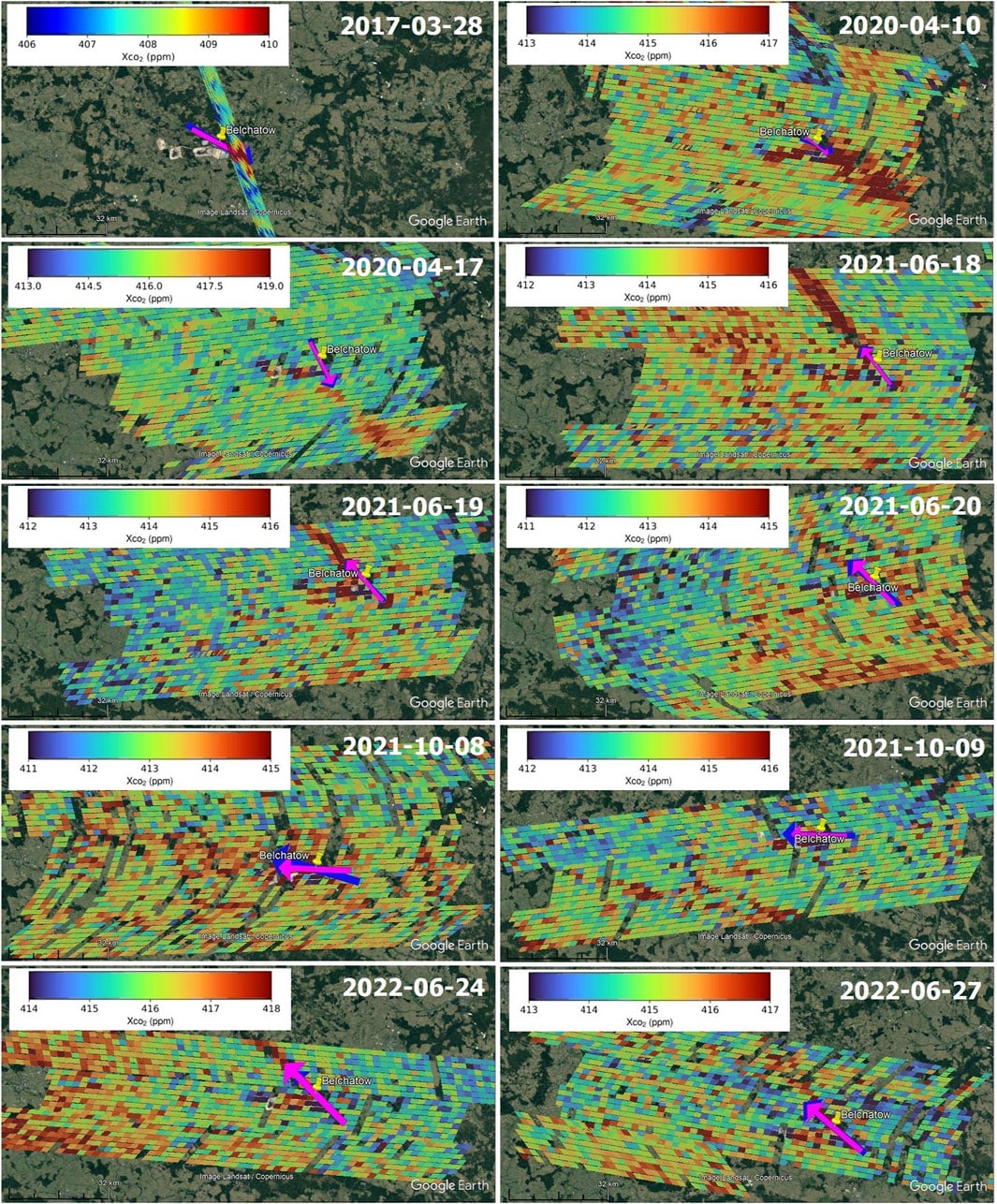
The researchers discovered that changes in CO2 levels during that period were consistent with changes in electricity generation. They also detected that plant shutdowns cut its overall emissions.
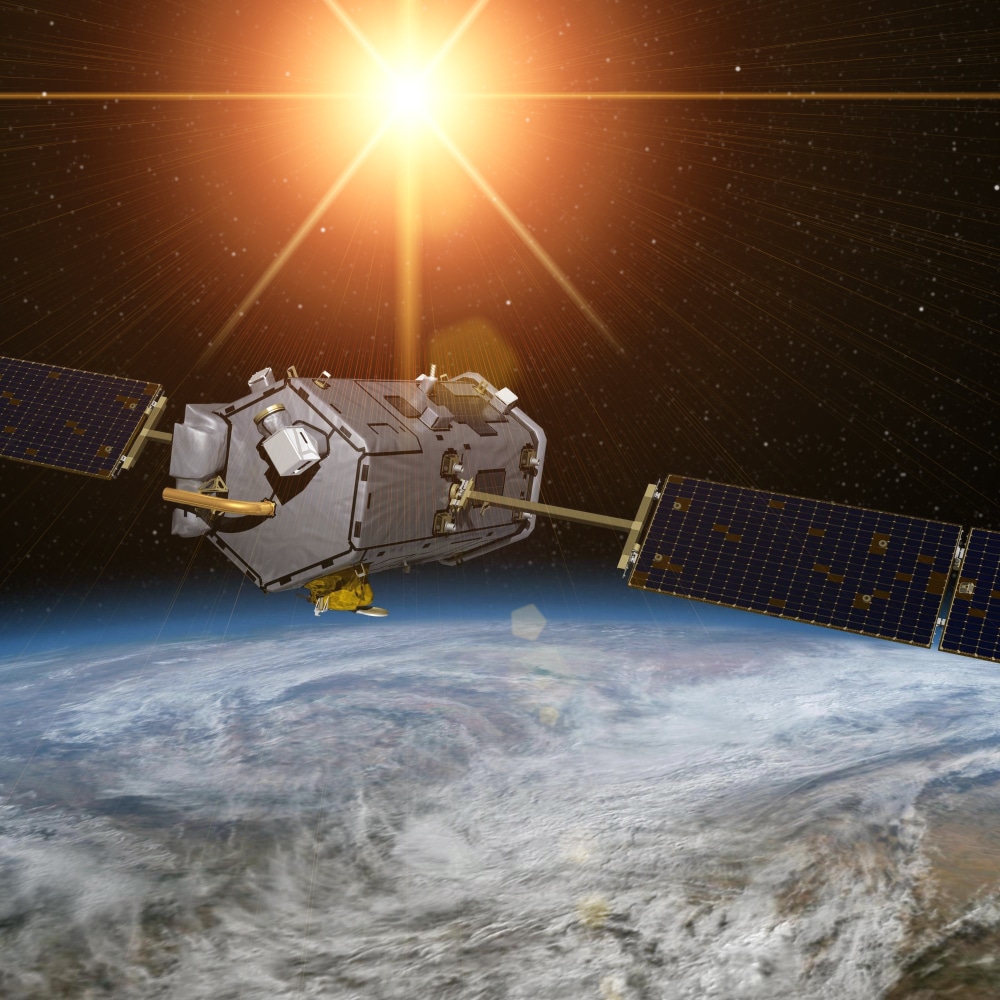
The next image illustrates the OCO-2 satellite launched in 2014. It maps carbon footprint, both natural and man-made, as it orbits the Earth on various scales from regions to continents. Light-analyzing spectrometers in the spacecraft detect CO2’s signature hundreds of miles below it.
The scientists, thus, concluded that space-based observations are useful in tracking carbon emissions at the source.
A succeeding satellite, OCO-3, was created from the spare parts of OCO-2 mission. OCO-3 hung on the underside of the International Space Station since 2019.

The space instrument can make several sweeping carbon observations as the spacecraft passes over an area. In return, scientists can use those observations to make detailed mini-maps of an area of interest at a local scale.
These findings were a surprise for the researchers as neither OCO instrument was meant to detect CO2 footprint from individual facilities like Bełchatów.
Abhishek Chatterjee, project scientist for the OCO-3 mission at NASA’s Jet Propulsion Laboratory (JPL) in Southern California noted:
“As a community we are refining the tools and techniques to be able to extract more information from the data than what we had originally planned. We are learning that we can actually understand a lot more about anthropogenic emissions than what we had previously expected.”
Tracking Carbon at the Source
Large emitters such as power plants are responsible for emitting about 50% of global CO2 footprint from fossil fuels.
- In the U.S., CO2 emissions of the electric power sector in 2021 were 1,551 million metric tons. Or that’s about 32% of total U.S. energy-related CO2 emissions of 4,903 million metric tons. 909 million metric tons (59%) are from coal.
In the case of Bełchatów, it emits more CO2 per megawatt than other plants. That’s because it is a brown coal or lignite-fired plant. The government plans to close the power plant in 2036.
Most carbon emissions measurements are using estimates only or data available at the land surface. They represent calculations from fossil fuel consumptions and their expected emissions.
Hence, in general, they don’t represent the actual atmospheric CO2 measurements.
Ray Nassar, the study’s lead author and researcher at Environment and Climate Change Canada said the “finer details about exactly when and where emissions occur are often not available.” He further added that:
“Providing a more detailed picture of carbon dioxide emissions could help to track the effectiveness of policies to reduce emissions. Our approach with OCO-2 and OCO-3 can be applied to more power plants or modified for carbon dioxide emissions from cities or countries.”
With the help of OCO-3 mapping mode observations, the data generated can be used more specifically in tracking carbon emissions at the point source in the future.
NASA said that this kind of space mission operation will extend for more years, 5 to 6 years. OCO-3 will work alongside another GHG observer aboard NASA’s space station. JPL manages OCO-2 and OCO-3 projects for NASA.
Making carbon measurements at the right time and at the right scale is critical. Space-based carbon observations hold huge promise in future efforts to monitor and provide information to help reduce CO2 emissions.
Despite some limitations, this emerging Monitoring Verification and Support (MVS) system can play a key role in supporting carbon emission reductions to mitigate climate change and achieve goals set out in the Paris Agreement.