

Silver has always been valued as a precious metal. For centuries, people have used it in jewelry, coins, and as a store of wealth. Today, however, silver is playing a much bigger role. It has become one of the world’s most important industrial metals, helping power the technologies behind the clean energy transition and the digital economy.
As governments and businesses invest in cleaner energy systems and advanced technologies, many analysts believe silver will remain one of the most strategically important metals of the coming decade.
Let’s take a closer look at how silver prices are performing this year and what the outlook could be in the years ahead.
Silver Prices Stay Near Record Highs
Silver has been one of the strongest-performing commodities over the past two years.
The metal surged throughout 2025, gaining more than 130% as investors responded to tightening supplies and rising industrial demand. Although prices corrected after reaching record highs earlier in 2026, the market remains well supported.
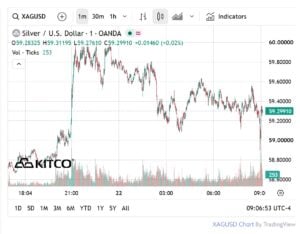
- As of late July, silver is trading around $57 to $59 per ounce, far above its historical average.
Several factors continue to support higher prices.
The biggest driver is strong industrial demand, particularly from the solar industry, electronics manufacturers, and the growing EV sector. At the same time, the silver market has recorded multiple years of supply deficits, reducing available inventories.
Investment demand has also remained healthy. During periods of inflation, geopolitical uncertainty, or financial market volatility, investors often buy precious metals to protect their portfolios. Silver benefits from this trend while also enjoying demand from manufacturers, giving it a unique advantage over many other commodities.
Expectations that major central banks could lower interest rates later this year have provided additional support, as precious metals often perform well in lower-rate environments.
Forecasts Point to Continued Strength
Market analysts remain optimistic about silver’s outlook.
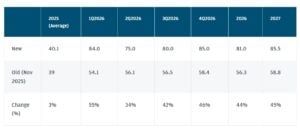
J.P. Morgan Global Research expects silver prices to remain elevated throughout 2026, forecasting an average price of around $81 per ounce. The bank believes industrial consumption will continue growing faster than global mine production, keeping the market relatively tight.
Other analysts share a similar view. They point to the rapid expansion of renewable energy, AI infrastructure, and electrification as long-term demand drivers that are unlikely to slow in the coming years.
However, silver is still influenced by the broader economy.
If global manufacturing weakens or interest rates remain high for longer than expected, industrial demand could temporarily soften. Even so, the long-term outlook remains positive because the transition toward cleaner energy and digital infrastructure continues to accelerate worldwide.
- READ MORE: Silver in 2026 and Beyond: Rising Prices, Solar Substitution, and a Market Still in Deficit
The Silver Market Is Still Running Short
One of the biggest stories in the silver market is the ongoing supply deficit.
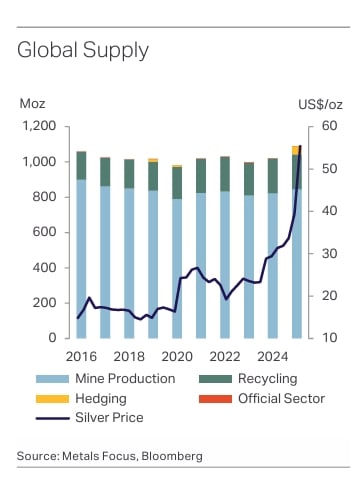
According to the Silver Institute’s World Silver Survey 2026, global silver demand continues to exceed available supply, marking the fifth consecutive year of market deficits.
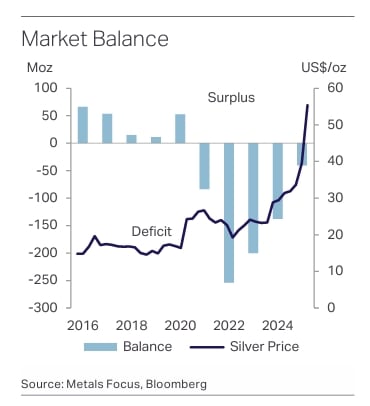
Mine production has improved in some regions, but it is still not enough to meet growing consumption.
Global silver mines produced about 846.6 million ounces, while recycling contributed another 197.6 million ounces, the highest level in 13 years.
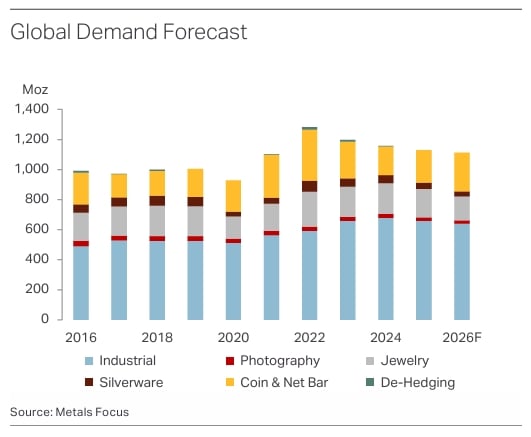
- Even with stronger recycling, total demand reached approximately 1.13 billion ounces, leaving another annual shortfall.
Although this year’s deficit is smaller than previous years, it continues to reduce above-ground inventories. Lower stock levels make the market more sensitive to disruptions and can increase price volatility when demand rises unexpectedly.
Why Supply Growth Remains Limited
Unlike copper or iron ore, silver production cannot easily increase when prices rise.
Nearly 75% of global silver output comes as a by-product of mining for copper, lead, zinc, and gold. This means miners usually make production decisions based on those primary metals rather than silver itself.
As a result, higher silver prices do not automatically translate into more production.
The mining industry also faces several structural challenges. Developing a new mine often takes more than a decade because of exploration, permitting, environmental approvals, financing, and construction. Meanwhile, many existing mines are processing lower-grade ore, making production more expensive and less efficient.
These limitations suggest that supply growth will likely remain slow even if demand continues to rise.
Gold Led Early, but Silver Finished Strong
The relationship between gold and silver shifted several times during the year.
Early in 2026, investors favored gold as geopolitical tensions, concerns about U.S. tariffs, and uncertainty surrounding global economic growth boosted demand for safe-haven assets.
- Silver, which depends more heavily on industrial activity, initially lagged. The gold-to-silver ratio climbed above 100, indicating that gold significantly outperformed silver.
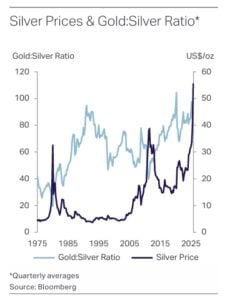
That trend reversed during the second half of the year.
Strong physical buying, tighter inventories, and rising prices for industrial metals—particularly copper—helped silver outperform gold. Investors began shifting into silver, narrowing the gold-to-silver ratio to levels not seen in more than a decade.
The market also experienced a temporary liquidity squeeze as physical demand surged and inventories moved between major trading hubs. Although conditions later eased, analysts say the era of abundant silver inventories appears to be ending.
With lower stockpiles, future price movements could become larger and more frequent than investors have become accustomed to.
Clean Energy Is Reshaping Silver Demand
Silver’s most important growth story is its expanding role in the clean energy transition.
The metal has the highest electrical conductivity of any element, making it extremely difficult to replace in applications that require efficient electricity transfer.
Solar panels are the largest source of industrial silver demand.
Every photovoltaic panel uses silver to collect and conduct electricity generated from sunlight. Manufacturers have reduced the amount of silver required per panel over the years, but the rapid growth in global solar installations means total demand continues to increase.
Silver is also becoming increasingly important in electric vehicles.
Compared with conventional vehicles, EVs require more silver because they contain advanced electronics, battery management systems, charging components, sensors, and high-performance electrical connections.
Beyond transportation, silver is widely used in smart electricity grids, wind power systems, telecommunications equipment, consumer electronics, and industrial automation.
AI Is Creating a New Source of Demand
Artificial intelligence is emerging as another major growth driver for silver.
The rapid construction of AI data centers requires enormous amounts of advanced computing equipment, semiconductors, networking hardware, and power management systems. Silver’s excellent electrical and thermal conductivity makes it a key material in many of these components.
As technology companies continue investing billions of dollars in AI infrastructure, demand for silver is expected to grow alongside the expansion of renewable energy and electric transportation.
This diversification makes the silver market less dependent on any single industry.
2030: Could Supply Become Even Tighter?
Some researchers believe today’s supply shortages may only be the beginning.
A study published in ScienceDirect estimates that by 2030, global silver production may meet only 62% to 70% of total demand if current trends continue.
The research also suggests the solar industry alone could consume up to 41% of global silver production, highlighting how rapidly renewable energy is reshaping the market.
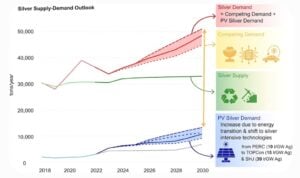
If these projections prove accurate, competition for available silver could become significantly stronger during the next decade.
Silver’s Role in Net Zero Will Keep Growing
The International Energy Agency (IEA) expects demand for energy-transition minerals to continue increasing through 2040 as countries expand renewable electricity, battery storage, electric vehicles, and transmission networks.
Silver is well positioned to benefit from this transformation.
Its unmatched conductivity, durability, and reliability make it one of the few materials that can efficiently support both clean energy technologies and the digital infrastructure needed for future economic growth.
Outlook: Silver Is Becoming a Strategic Resource
Silver is no longer just a precious metal or an investment asset.
It has become a strategic resource that sits at the intersection of clean energy, advanced manufacturing, and digital technology. While investors still buy silver as a hedge against uncertainty, manufacturers increasingly rely on it to build solar panels, electric vehicles, AI systems, and modern electricity networks.
At the same time, mine supply remains constrained, inventories continue to tighten, and new production cannot be developed quickly enough to match rising demand.
These trends suggest the silver market could remain undersupplied for years to come.
Although short-term price swings are inevitable, the long-term outlook remains supported by powerful structural trends. As countries pursue net-zero emissions, strengthen energy security, and invest in next-generation technologies, silver is expected to play an even greater role in the global economy.
Once known mainly for its beauty and value, silver is now becoming one of the metals powering the world’s low-carbon future.