

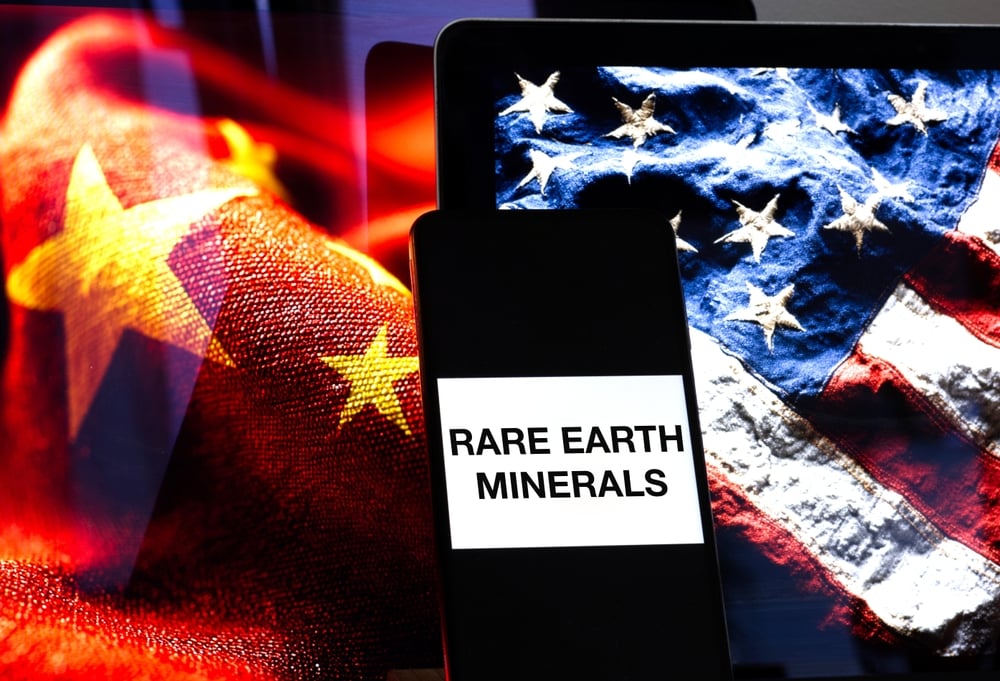
The United States is investing to strengthen its rare earth supply chain and reduce dependence on China for essential minerals. The Department of War’s Office of Strategic Capital (OSC) has pledged a conditional $500 million in debt financing to Phoenix Tailings. This funding will help build the Freedom Facility.
This investment is part of a larger $1 billion initiative to revitalize America’s rare earth processing industry.
Once operational in 2028, the Freedom Facility will produce both light and heavy rare earth metals. These metals are vital for electric vehicles (EVs), batteries, wind turbines, defense equipment, semiconductors, and consumer electronics.
This announcement comes as governments worldwide seek critical minerals for clean energy and national security.
Closing the ‘Mine-to-Magnet’ Supply Chain Gap
Rare earth elements consist of 17 minerals known for their unique properties. They are essential for many products, including smartphones, electric motors, and renewable energy technologies.
Though the U.S. has rare earth mines, it relies heavily on foreign companies to refine these materials into usable metals. This midstream processing stage is a key supply chain weakness.
To address this, the OSC offers long-term financing for projects that strengthen critical technology supply chains. By supporting Phoenix Tailings, OSC aims to enhance domestic processing and reduce foreign reliance.
David A. Lorch, Director of the OSC, emphasized that boosting domestic processing is a top priority. He noted that the Freedom Facility will help close a significant gap in the U.S. rare earth supply chain, improving the overall “mine-to-magnet” ecosystem.
China Still Controls Much of the Global Supply Chain
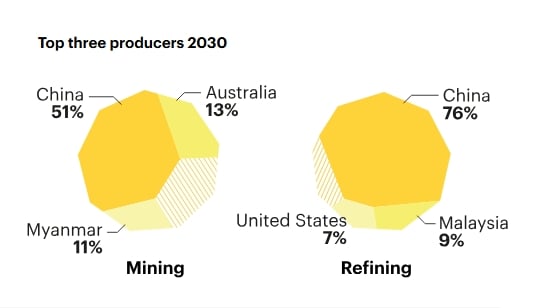
Despite the U.S. ramping up domestic mining, China still dominates the global rare earth industry, especially in refining and processing.
- According to the U.S. Geological Survey (USGS), the U.S. produced about 45,000 metric tons of rare earth oxide (REO) concentrates in 2024, valued at roughly $260 million.
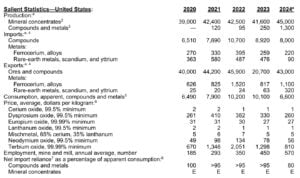
Most of this output came from the Mountain Pass mine in California, where bastnaesite ore is mined. Additional mixed rare earth compounds came from the western U.S., while monazite concentrates were stockpiled in the southeast.
Despite domestic production, the U.S. imports a large share of its processed rare earth materials. The estimated value of U.S. imports of rare earth compounds and metals was $170 million in 2024, down 11% from $186 million in 2023. USGS data shows that:
- China supplied about 70% of U.S. rare earth compounds and metal imports from 2020 to 2023.
- Other sources included Malaysia (13%), Japan (6%), Estonia (5%), and the remaining 6% from other countries.
Much of the material from Malaysia, Japan, and Estonia was originally processed from concentrates sourced in China or Australia.
Comparison of Rare Earth Production and Reserves by Country
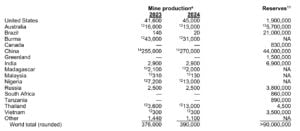
Globally, rare earth mine production rose to about 390,000 metric tons of REO in 2024, mainly due to increased output in China, Nigeria, and Thailand. These figures show why Washington is fast-tracking investments across the rare earth supply chain, not just in mining.
ALSO CHECK:
- MP Materials (MP Stock): The Rare Earth Magnet Powering America’s Clean Energy and Climate Goals
- USA Rare Earth (USAR) Stock Jumps 15% on $2.8B Brazil Rare Earth Acquisition, Giving Massive Boost to Western Supply Chains
Freedom Facility: Connecting Mines, Recyclers, and Manufacturers
Mining is only the first step in producing rare earth materials. After extraction, minerals must be separated into individual rare earth oxides before they can be converted into high-purity metals and alloys.
This refining process mostly takes place overseas, causing a major bottleneck in the U.S. supply chain.
Phoenix Tailings’ Freedom Facility aims to solve this by adding large-scale domestic separation and metallization capacity.
The company states that the facility will process various feedstocks, including rare earth concentrates, recycled materials, mining byproducts, and other secondary sources. Using diverse feedstocks will increase supply chain flexibility and reduce reliance on imports.
Anthony Balladon, Co-Founder and Chief Commercial Officer of Phoenix Tailings, noted that the project will support every aspect of the domestic rare earth ecosystem.
According to Balladon, the Freedom Facility will create a reliable market for mines and recyclers, while giving manufacturers direct access to the rare earth metals they need. Instead of shipping materials overseas for refining, producers will process and sell them within the U.S.
Phoenix Tailings: Turning Waste into Critical Metals
The start-up focuses on recovering valuable metals from mining waste, recycled materials, and other overlooked resources.
Its platform combines advanced chemistry, electrochemistry, industrial hardware, and digital automation to produce rare earth metals more efficiently than traditional methods.
- The process begins by collecting feedstocks from mining tailings, recycled products, and mineral concentrates.
- Then, the critical metals are extracted. Their proprietary technology then separates light and heavy rare earth oxides.
- The final stage converts these oxides into high-purity metals and alloys used in batteries, defense systems, clean energy technologies, electric vehicles, advanced manufacturing, and electronics.
The company claims its technology reduces waste and minimizes many environmental and worker safety challenges linked to traditional rare earth refining.
Building a More Secure Critical Minerals Supply Chain
Phoenix Tailings states that the Freedom Facility will use U.S.-controlled technology and intellectual property. This will lessen reliance on foreign processing technologies.
The project is more than just a new processing plant. It’s part of a larger plan to rebuild America’s critical minerals industry. This will strengthen the supply chain for advanced manufacturing. Demand for rare earth metals will rise quickly as countries invest in electric vehicles, renewable energy, artificial intelligence, robotics, and new defense systems.
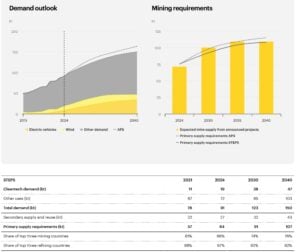
The U.S. aims to increase its refining and metallization capacity. This move will allow it to gain more value from its mineral resources. It will also lower geopolitical risks tied to overseas supply chains.
If construction stays on track, the Freedom Facility could be a key rare earth processing hub, boosting America’s industrial edge and supporting long-term energy and national security goals.