

Artificial intelligence is no longer a niche technology story. By 2026, it will become a defining force for energy systems, emissions pathways, and long-term climate strategy. BlackRock’s 2026 Global Outlook makes this clear: AI is now deeply tied to sustainability outcomes.
The rapid expansion of AI infrastructure is changing how electricity is produced, where capital flows, and how climate risks are managed. At the same time, AI offers tools that could improve efficiency and reduce emissions across the global economy. The challenge is timing and scale. AI’s energy demand is rising fast, while clean energy systems are still catching up.
How these two trends intersect will shape the climate impact of digital growth.
AI’s Power Appetite Is Growing Fast
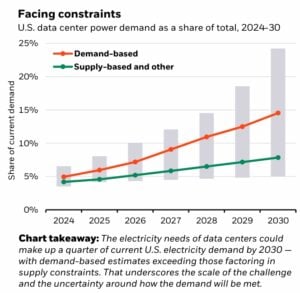
AI systems require massive computing power. Large language models, real-time data processing, and advanced analytics all depend on data centers that operate around the clock. As these systems scale, electricity demand rises sharply.
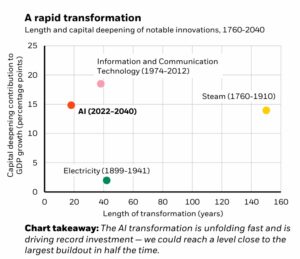
BlackRock expects AI-driven investment to become a structural source of power demand by 2026. This demand will not be temporary. It will be embedded into the global energy system for years to come.
And the climate risk is straightforward. If data centers rely on fossil-fuel-heavy grids, emissions rise. If they run on clean power, AI can grow without pushing emissions higher. This makes energy sourcing one of the most important climate decisions in the AI economy.
Clean Power Becomes Core Infrastructure: Will Capital Allocation Shape Climate Outcomes?
AI is changing the role of clean energy across the global economy. Renewable power is no longer just a climate solution. It is becoming essential infrastructure for digital growth.
As AI systems scale, data centers require a stable, reliable, and continuous electricity supply. Solar, wind, nuclear, and energy storage offer long-term supply with lower carbon exposure. Because of this, companies are increasingly locking in long-term clean power agreements. These contracts help cut both price volatility and emissions risk.
From an investment perspective, this shift is already reshaping capital flows. AI-driven growth is accelerating investment in clean energy assets that are directly linked to digital infrastructure. Clean power is no longer treated as a sustainability add-on. Instead, it is emerging as a core business requirement.
More importantly, this trend highlights a deeper issue. Where capital flows will determine whether AI supports or undermines climate goals. Investment in clean generation, grid expansion, energy storage, and low-carbon baseload power will become increasingly critical as digital demand rises.
BlackRock’s report underscores the growing role of long-term capital in shaping sustainable outcomes. Climate-aligned finance can help steer AI growth toward cleaner and more resilient systems. However, this only works if investments follow clear standards and credible emissions reporting.
Without transparency, sustainability claims lose credibility. And without credibility, the link between AI growth and climate progress begins to weaken.
The Carbon Cost Comes First
While AI may support long-term efficiency, its early climate impact is not positive. Building AI infrastructure requires heavy upfront investment in data centers, servers, transmission lines, and advanced chips. These rely on steel, cement, and energy-intensive manufacturing.
Emissions rise during the construction phase. BlackRock highlights this imbalance clearly. Capital spending happens now, while productivity and efficiency gains arrive later.
This timing gap matters for climate strategy. Without efforts to cut emissions during construction, AI risks locking in higher near-term emissions even if long-term benefits follow.
AI’s Role in Cutting Emissions
Despite these risks, AI also offers powerful tools to support decarbonization. AI systems can improve grid management, predict renewable output more accurately, and reduce energy waste across industries.
In transport, AI can cut fuel use through smarter routing and logistics. In manufacturing, it can optimize processes and lower energy intensity. Across supply chains, it can reduce waste and improve resource efficiency.
The climate benefit depends on scale. Small efficiency gains applied across large systems can deliver meaningful emissions reductions. BlackRock sees productivity growth as a key pathway for lowering emissions intensity over time.
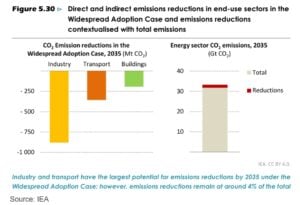
- In the IEA’s “Widespread Adoption” case, AI-enabled solutions could cut up to 1.4 gigatonnes (Gt) of CO₂ emissions per year by 2035—about 5x more than data center emissions in that same year.
The Energy Transition Faces Pressure
AI and the energy transition are now tightly linked. One cannot advance without the other.
The report also warns that power grids, transmission networks, and permitting systems remain major constraints. If these systems fail to expand fast enough, AI demand could strain the electricity supply and slow decarbonization.
This risk is already visible in regions where data center growth outpaces grid upgrades. Without faster investment in clean generation and infrastructure, AI could compete with other sectors for limited low-carbon power.
Rethinking Diversification: Is Climate Risk Concentrated in AI Investments?
AI is changing how investors think about risk. Many assets now depend on the same digital and energy infrastructure, which makes them more vulnerable to climate events. Heatwaves, water shortages, or grid failures can disrupt multiple sectors at once, creating concentration risk that traditional diversification may not fully address.
BlackRock’s outlook highlights the need for investors to look beyond labels and focus on real-world dependencies and climate exposure. In an AI-driven economy, resilience is becoming just as important as returns, as the stability of digital and energy systems directly influences financial performance.
Private Markets as a Climate Accelerator
Much of the infrastructure required to support AI and sustainability sits outside public markets. Grid upgrades, energy storage, and efficiency improvements often rely on private capital, which can move faster and take on longer-term investment horizons.
This makes private markets well-suited to fund climate-critical infrastructure linked to AI growth. At the same time, strong governance is essential to ensure these investments meet emissions targets and genuinely support sustainable outcomes. Without oversight, the promise of private capital may fail to deliver real climate impact.
Redefining Growth in 2026: Can AI Deliver Sustainable Value?
Markets alone cannot resolve the tension between AI growth and climate goals. Government policy plays a decisive role in shaping outcomes. Faster permitting, modernized grids, and support for low-carbon power can remove bottlenecks and ensure digital expansion aligns with sustainability targets.
Thus, AI is redefining what sustainable growth means. It is no longer just about increasing economic output; it is about boosting efficiency, improving resilience, and reducing emissions intensity.
By 2026, AI will no longer be climate-neutral. Its environmental impact will depend on the energy systems behind it and the investment choices made today. BlackRock’s message is clear: AI can either exacerbate climate risks or help manage them. The difference lies in how quickly clean energy scales and how decisively sustainability is integrated into digital growth.
In the AI era, climate strategy is no longer optional. The alignment between policy, capital, and technology will determine whether AI strengthens or undermines the energy transition.