

A new coalition of major global companies has launched an effort to fix how the world measures and reports carbon emissions. The group, called Carbon Measures, includes BlackRock’s Global Infrastructure Partners (GIP), ExxonMobil, and Banco Santander. They aim to build a clear and dependable global system. It will track carbon emissions in various industries and supply chains.
The coalition wants to solve the long-standing issue of “double counting.” This happens when several organizations claim the same emissions or reductions. It will also create new standards for measuring carbon intensity at the product level, from electricity and steel to cement and fuels.
The Need for Better Carbon Accounting
Carbon accounting measures greenhouse gas emissions. It’s essential for corporate climate action. Yet, many experts say current systems are weak and inconsistent.
Recent studies show that most corporate carbon data lacks accuracy. Less than 16% of carbon credits show real emission cuts, based on multiple independent reviews. Other reports show that over half of companies misreport or underreport their Scope 3 emissions. These emissions come from suppliers, customers, and logistics.
Even with growing corporate climate pledges, global emissions hit a record 37.4 billion metric tons in 2024, up 1.1% from the previous year. The gap between reported progress and real emissions continues to widen. This makes reliable data more important than ever.
Carbon Measures wants to address this problem by using verified data and financial-style rules. If it works, the coalition might change how companies, investors, and regulators see carbon performance.
How Carbon Measures Works
The coalition plans to design a ledger-based accounting system modeled on financial reporting. Each emission entry will be tracked and verified to prevent overlap or duplication. The approach takes ideas from finance. It uses consistent documentation, audits, and clear transparency standards.
Amy Brachio, the CEO and former global sustainability head at EY, says the new system will make carbon data clear, comparable, and precise. Her leadership brings over 30 years of experience in corporate sustainability and accounting systems. She said:
“For decades, precise and comparable data has been something of a holy grail in emissions tracking. Carbon Measures wants to build a system that unleashes competition, investment, and faster emissions reduction.”
The organization will start by developing standards for carbon intensity in major industrial sectors, such as:
-
Electricity and energy generation
-
Steel and cement production
-
Chemicals and fuels
These sectors are major greenhouse gas emitters. They account for nearly 70% of global industrial emissions. Consistent metrics could greatly impact the world’s decarbonization goals.
Industry Leaders Join Forces: Who’s Backing the Plan
Carbon Measures has attracted companies from across energy, finance, and manufacturing. Founding members are ADNOC, Air Liquide, BASF, Bayer, Honeywell, Linde, Mitsubishi Heavy Industries, NextEra Energy, Nucor, and Vale.
ExxonMobil CEO Darren Woods said that better data will help the industry manage emissions more effectively, saying:
“If you can’t measure it, you can’t manage it. A standard carbon accounting system will create a foundation for fair competition and effective climate action.”
Banco Santander’s Executive Chair Ana Botín added that the framework aims to make carbon reporting globally comparable.
The group includes both financial institutions and industrial companies. This mix shows how broad the impact of carbon measurement has grown.
For investors, accurate emissions data is now part of assessing financial risk. Manufacturers may face market access issues. More countries are adding carbon border taxes and product labeling rules.
A Booming Market for Carbon Truth
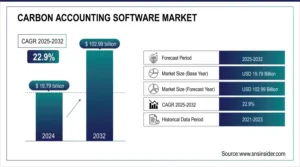
Carbon Measures launches at a time when both regulation and demand for transparency are rising. The carbon accounting software market is set to rise from $18 billion in 2024 to over $100 billion by 2032. This growth shows how companies feel the pressure to track and report accurately.
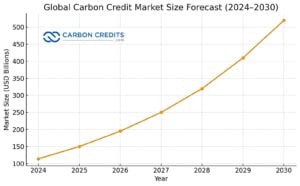
The compliance carbon credit market, which has government regulations, was valued at around $113 billion in 2024. It could grow to over $500 billion by 2030, based on industry estimates.
Despite these investments, inconsistencies in carbon tracking have limited real progress. Many offsets used by firms have failed verification tests. For example, research found that only about 11% of forestry offsets delivered the emission cuts they claimed. Such findings have weakened confidence in voluntary carbon markets.
Carbon Measures seeks to rebuild that trust. The group aims to help investors and regulators by blending financial accuracy with science-based metrics. This way, they can tell real emission reductions from exaggerated claims.
The Hard Road to a Global Carbon Standard
Building a global standard will not be easy. Carbon data is complex, and each company collects it differently. Many developing countries also lack the technology or infrastructure for detailed measurement.
To succeed, Carbon Measures must:
-
Align with existing frameworks like the Greenhouse Gas Protocol and the Science-Based Targets initiative.
-
Ensure independent verification to maintain data credibility.
-
Encourage participation from both the private and public sectors to avoid fragmented systems.
The group is expected to release its first set of draft standards in 2026, starting with the power and steel industries. Analysts say regulators will closely watch the coalition’s progress. They are preparing new climate disclosure laws.
Another challenge lies in data integration. Companies must track emissions throughout long global supply chains. These chains often include hundreds of smaller suppliers. This requires advanced digital tools, including blockchain systems and artificial intelligence. They ensure traceability from raw materials to finished products.
Toward Transparent and Comparable Carbon Data
If Carbon Measures succeeds, it could redefine how the world values carbon performance. Clear, verifiable data could direct trillions of dollars toward clean technologies and efficient production.
Reliable accounting helps companies avoid accusations of “greenwashing.” This means they won’t make false or exaggerated environmental claims. It may also enable regulators to design better carbon pricing systems, linking policy and data more effectively.
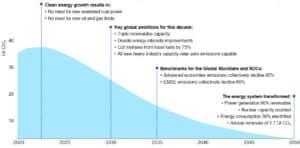
Experts believe this kind of market transparency could speed up the global energy transition. The International Energy Agency says we need over $4 trillion each year for clean energy to hit net zero by 2050. Accurate carbon data can help guide where that money goes.
As global supply chains decarbonize, accurate tracking will become a competitive advantage. Investors and consumers increasingly prefer companies that can show measurable and verified progress.
Carbon Measures, backed by some of the world’s largest firms, signals that carbon accounting is moving from theory to execution. It shows that data — not just pledges — will define the next phase of corporate climate action.