

The Biden administration has been promoting carbon capture and storage (CCS) technologies to reduce carbon emissions, and a big part of this effort is the Department of Energy’s plan to provide $500 million in grants for companies building carbon transport infrastructure.
The Department issued a notice of intent to fund the construction of new carbon capture facilities with money coming from the Bipartisan Infrastructure Law. It aims to announce this massive funding support in the 4th quarter.
The Pipeline Leading to Net Zero
The United States, under the Biden-Harris government, has set a 2050 net zero emissions goal. Achieving it needs massive efforts “to capture CO2 emissions from industrial operations and power generation and to remove CO2 directly from the atmosphere,” says the Energy Department.
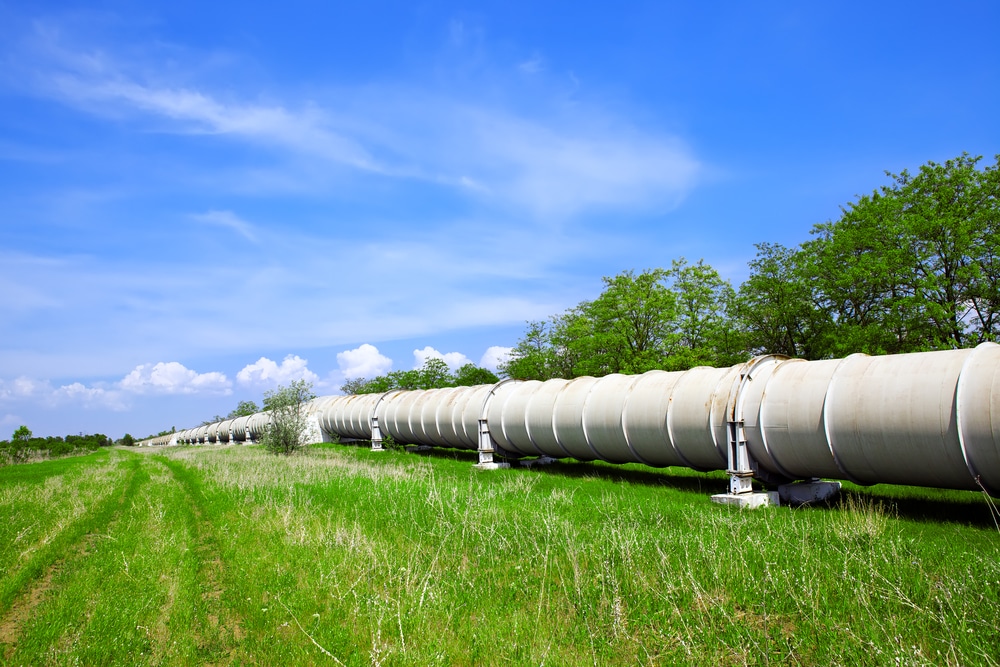
A key to support the rapid development of CCS is a safe and effective system of CO2 pipelines that will transport the captured gas to its designated storage. It can either be underground in rock formations or in facilities that convert CO2 into valuable products.
Startups have been using captured carbon in making products such as fashion bags and fuels.
Cementing its support for the CCS, the DOE will provide $500 million in subsidy through its Future Growth Grants. Under the program, the Energy Department will give a CCS developer a payment or a share of the cost difference needed to boost its project’s capacity.
The subsidy is a fraction of the total $2.1 billion allocated to support the DOE’s carbon transportation infrastructure funding program. The funding covers a 4-year support from 2022 to 2026.
The Future Growth Grants
The goal of the DOE’s Future Growth Grants is to promote carbon transport developers to construct the infrastructure. They won’t be necessary initially but they would eventually be required as direct air capture and other storage facilities operate.
The Department further noted that these upfront investments for “oversizing” transport capacity is for accommodating potential future carbon supplies.
The additional capacity from the grant may prevent future development of carbon transport networks that would be redundant. Building this infrastructure today as carbon capture projects like DAC are being scaled up would be timely. The pipelines and networks can start synchronically once DAC plants start to operate and hence, the future growth grants.
Carbon dioxide removal or CDR is crucial to meeting the 2050 net zero goals. The Energy Department estimated that between 400 million and 1.8 billion metric tons of CO2 annual removal is necessary.
So far, the country’s existing CO2 transport infrastructure can remove only 60 million Mt each year. But as more projects starts, that capacity will increase to 250 million Mt/year by 2034 and 450 million by 2040.
Though current pipelines and other CO2 transport infrastructure aren’t eligible for the subsidy, repurposing them to create new capacity is qualified.
A major qualification for the funding is that the infrastructure must be: “physically connected by way of pipeline, rail, road, and/or body of water”.
Once the funding program is announced, qualified projects should be finished within 5 years as authorized by the Department. Funding applicants must show that their projects would be useful or can be used for twenty years.
Promoting Carbon Capture in Billions
The DOE’s $500m funding program is part of the current government’s efforts to support and advance emerging CCS technologies. These engineered carbon removal technologies are seen relevant in decarbonizing the power sector and the heavy industries.
The Energy Department’s most recent funding support for CDR and CCS projects was revealed earlier this month.
The agency announced that it will provide $1.2 billion in grants to 2 large DAC projects on the Gulf Coast, one is run by Climeworks and Heirloom and the other is to be developed by Oxy, subsidiary of Occidental Petroleum, and Carbon Engineering. This investment is the first of 4 DAC hubs that the department will support through its $3.5 billion subsidy program.
The DOE also announced that it has invested over $13 million in 23 projects to support R&D for CCS. Earlier this year, the Department also rolled out over $2.5 billion to fund 2 carbon capture initiatives.
The US government’s commitment to CCS is reinforced with the DOE’s $500M grant plan, aimed to develop carbon transport infrastructure. With this substantial funding and focus on carbon removal technologies, the country is taking major strides toward achieving its ambitious net zero emissions goal.