

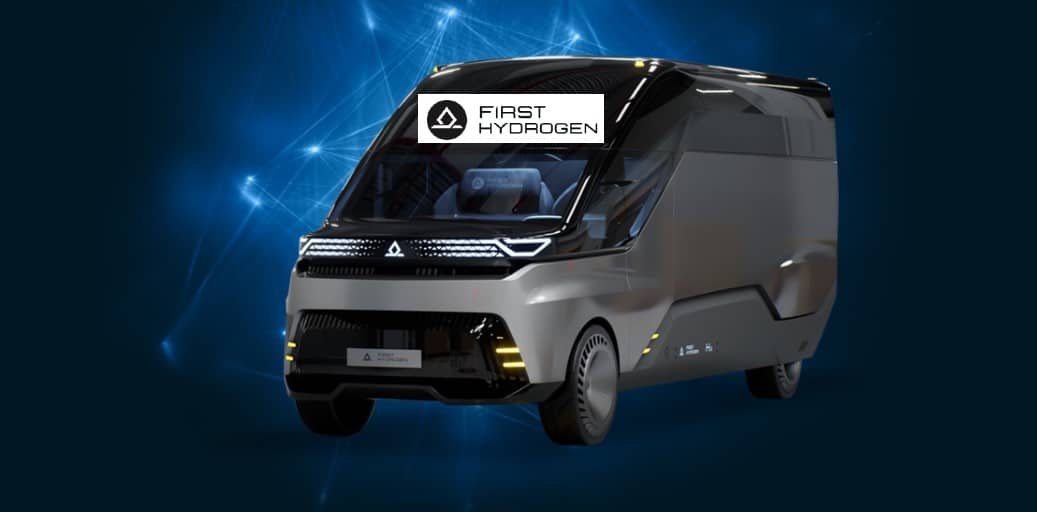
First Hydrogen Corp. (TSXV: FHYD) announced that fleet management company Rivus has released its report “First Hydrogen LCV Trial”, the first independent analysis of First Hydrogen’s hydrogen-fuel-cell-powered vehicle (FCEV) versus similar battery electric (BEV) and diesel vehicles used over the same duty cycles.
First Hydrogen is a Vancouver and London UK-based company focusing on zero-emission vehicles (ZEVs) and green hydrogen production. It is the first company to demonstrate a FCEV for the light commercial vehicle market on British roads. It has designed and built FCEV LCV in partnerships with AVL Powertrain and Ballard Power Systems Inc.
The LCV has a range of 630+ kilometers and is being trialed with an initial 16 fleet operators in the UK.
Over 100 Stops A Day
Rivus’ report provides an objective first impression of its experience with First Hydrogen’s FCEV. the UK-based fleet management provider concluded in the report that:
“…overall, the vehicle performed very well during testing, appearing much more robust than BEV in terms of how vehicle efficiency was affected by different load factors.”
A copy of the report is available on First Hydrogen’s website.
The hydrogen company has been working with significant fleets such as the Aggregated Hydrogen Freight Consortium (AHFC). After accomplishing successful trials, First Hydrogen’s FCEV gained interest from delivery businesses.
The hydrogen vehicles were built to take on longer distances but they also come with hybrid engines (fuel cell and battery) for shorter journeys.
For journeys with plenty of starts and stops, regenerative braking recharges the vehicle’s battery. This is important for delivery vehicles wherein drivers need to have lots of drop-offs and pick-ups. With First Hydrogen’s FCEV, they can make more than 100 stops a day.
Refueling the vehicle is also much faster, which is only 5 minutes compared to a similar EV, (5 hours). This minimizes vehicle down-time while extending daily duty cycles and thus, offers greater operational flexibility.
First Hydrogen’s FCEV Beats Expectations
Study shows that parcel delivery vehicle market size will be over $210 billion by 2032. This projection can further go up as e-commerce continues to rise rapidly, fueling the growth of the delivery market.
Moreover, with over 9 million online sellers across the globe selling products via the internet, parcel delivery will definitely increase. This is expected to result in more drivers on the road to cater to the growing parcels for delivery daily. It means more vehicles will also be needed, leading to more emissions.
But with hydrogen-powered fleets, parcel delivery service providers can effectively deal with the associated carbon emissions. First Hydrogen’s FCEV, with its 5-minute refueling and >100 stops, offers a promising solution, as reported by Rivus.
Earlier last month, SSE, one of the UK’s largest energy infrastructure firms, also tested the vehicles. They are the first to road test First Hydrogen’s hydrogen-powered vehicles. SSE trial results also showed that actual road performance beats pre-trial expectations, suggesting that heavier payloads and driving at higher speeds don’t significantly reduce the range or impact vehicle performance.
First Hydrogen has launched its specialized vehicle design phase which will develop its fleet of proprietary ZEVs while also developing refueling capability working with FEV.
Disclosure: Owners, members, directors, and employees of carboncredits.com have/may have stock or option positions in any of the companies mentioned: FHYD.
Carboncredits.com receives compensation for this publication and has a business relationship with any company whose stock(s) is/are mentioned in this article.
Additional disclosure: This communication serves the sole purpose of adding value to the research process and is for information only. Please do your own due diligence. Every investment in securities mentioned in publications of carboncredits.com involves risks that could lead to a total loss of the invested capital.