

The Canadian Parliament is introducing a new drastic, and highly controversial move against false fossil fuel advertising.
With more and more countries implementing stricter greenhouse gas emissions controls, such as banning future sales of gas-powered vehicles, it could soon no longer matter what pro-fossil fuel supporters advocate for.
The fight against climate change and emissions reductions is being taken up by regulatory bodies and organizations with the power to enforce these new laws and take action against those who break them.
But it didn’t always used to be this way. In fact, big oil fought for a very long time to conceal, downplay, and outright deny the evidence of the impact that fossil fuels were having on our planet.
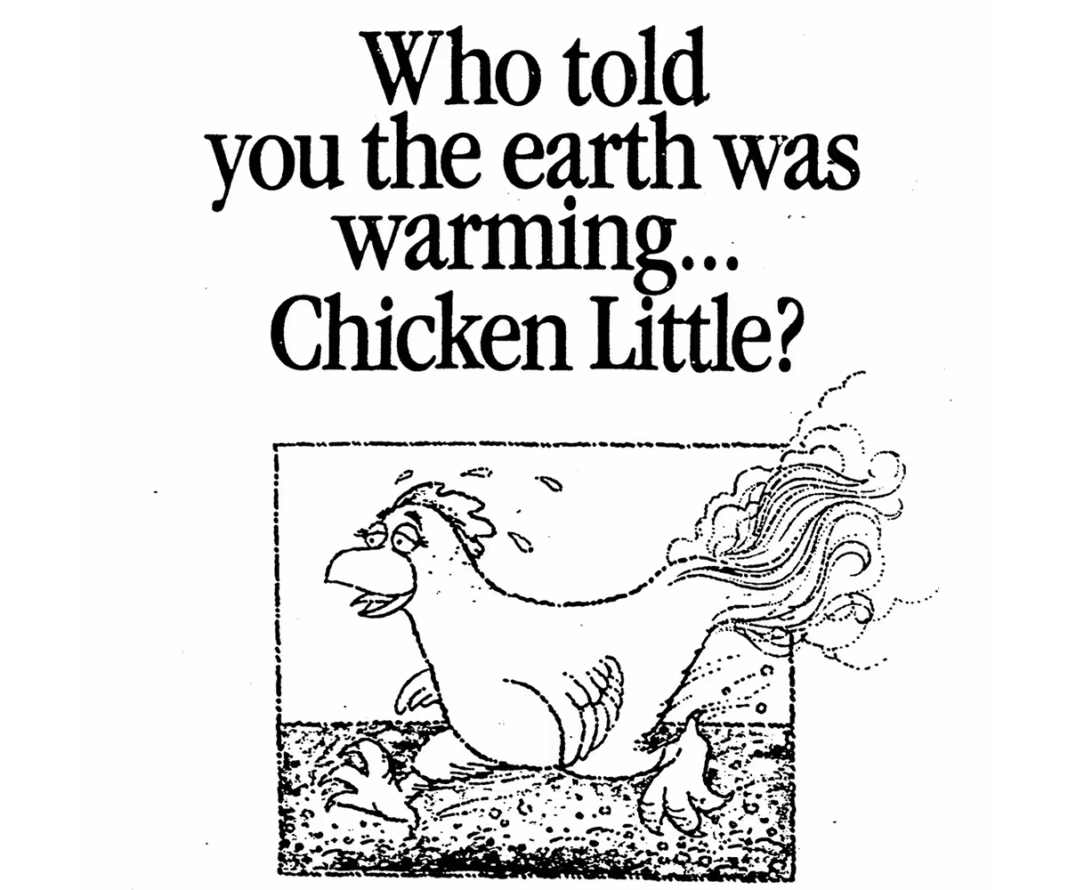
Take the picture above, for instance. This newspaper ad ran all the way back in 1991 and was paid for by an organization named “Informed Citizens for the Environment”.
Despite the name, this organization was created by a coalition of the National Coal Association, the Western Fuels Association (another coal supplier), and the Edison Electrical Institute (an association that includes all publicly traded U.S. electric companies).
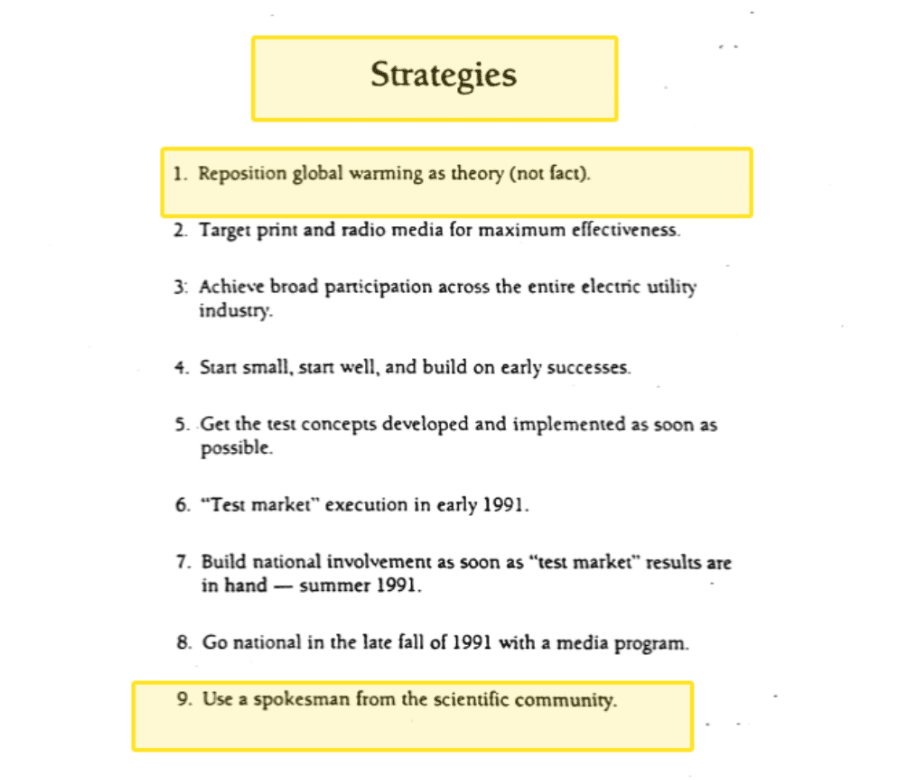
- Also known as the “Information Council for the Environment” or ICE, this group had one simple goal: to “reposition global warming as theory (not fact).”
And that’s not just an assumption either. That’s taken verbatim from one of their own internal documents, seen below:
This was only the start of what would become a lengthy and drawn-out fight over an inconvenient truth… all for the sake of oil money.
Putting the Gas in Gaslighting
One of the most prominent examples of big oil’s attempt to keep climate change under wraps comes from oil supermajor ExxonMobil.
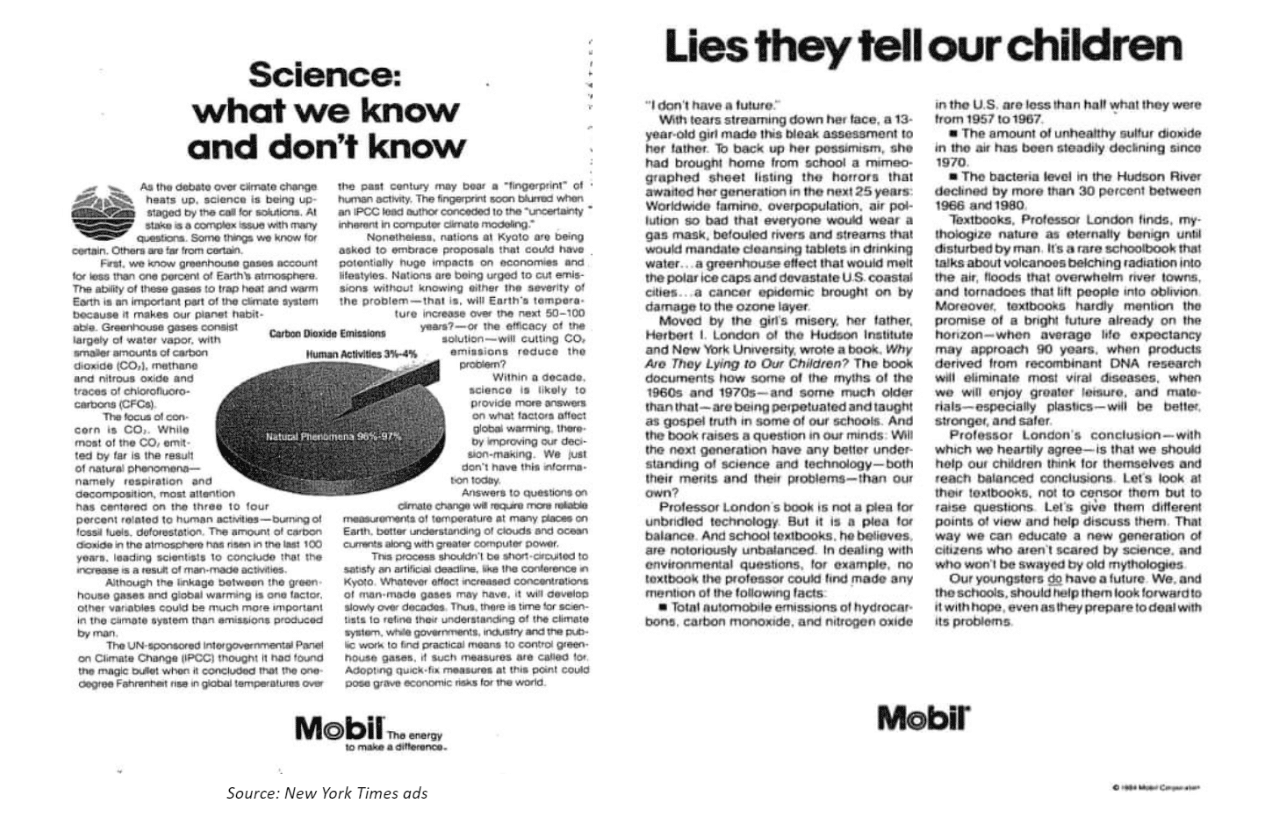
Mobil led a campaign in the mid-90s prior to their merger with Exxon, spending money on an aggressive ad campaign that produced over 50 ads in the ‘90s and 2000s that all questioned the scientific validity of climate change.
 Of course, it wasn’t just Exxon and Mobil. One major group lobbying for climate change denial was the Global Climate Coalition (GCC for short).
With members comprised of Phillips, Exxon (later ExxonMobil), the American Petroleum Institute, National Coal Association, Edison Electric Institute, and more, the GCC was one of the loudest voices at the table when it came to climate change, actively lobbying key government officials as well as running vicious ad campaigns and smear attack against climate scientists.
The defeat of former President Clinton’s early 1993 carbon energy tax proposal, part of his plan to reduce U.S. greenhouse gas emissions, is largely attributed to lobbying by the GCC.
Later on, GCC efforts to have the U.S. withdraw from the Kyoto Protocol under President Bush Jr. were successful, with the decision having said to be “… in part based on input from [the GCC]”, according to White House briefing notes.
While the GCC would later disband in 2001 following the United States’ withdrawal from the Kyoto Protocol, big oil’s efforts to detract and downplay climate change would continue well past the turn of the millennium. Their strategy gradually shifted from outright denial, to doubt, to shifting the blame, and finally to greenwashing.
Better Late than Never: The Government Steps In
Remember what was said earlier about how the fight against climate change is now being taken up by regulatory bodies with the power to enforce laws?
Well, it may be a few decades late and much of the damage may already be done, but at least one government is finally taking action: the Canadian one.
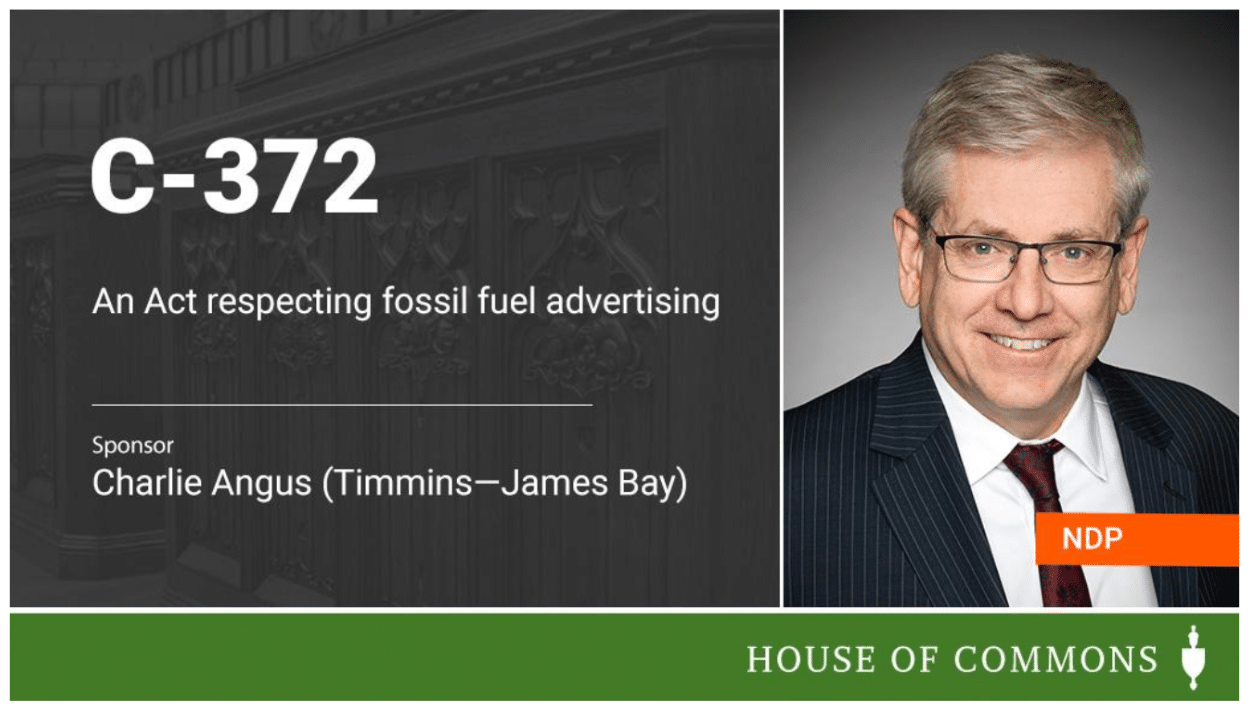
In bill C-372 brought to Canada’s House of Commons on February 5th, known as the Fossil Fuel Advertising Act, the government is looking to make it illegal to falsely promote the burning of fossil fuels as a benefit to the public – much as the Canadian parliament did back in 1989 with tobacco.
Those of you reading this who aren’t Canadian may not be aware, but thanks to the efforts of the Canadian government, there are very strict laws regarding tobacco advertising and packaging in Canada.
Take a look at some of these:
 Is it enough to keep away the kids who really want to try smoking? Probably not. But peeling away the glamourization and “cool” factor of tobacco and speaking plainly about its health impacts can go a long way towards keeping it out of the hands of the young and impressionable.
In the same way, the Fossil Fuel Advertising Act has a similar aim, which was directly referenced by MP Charlie Angus who developed the bill.
“To claim that there are clean fossil fuels is like saying there are safe cigarettes. We know that is simply not true.”
– Charlie Angus
In the terms of the language of the Bill:
- It is prohibited for a person to promote a fossil fuel or the production of a fossil fuel in a manner that is false, misleading or deceptive with respect to or that is likely to create an erroneous impression about the characteristics, health or environmental effects or health or environmental hazards of the fossil fuel, its production or the emissions that result from its production or use.
In simpler terms: no more lying about the health and environmental impacts of fossil fuels.
Failure to do so could result in a fine of up to $1.5 million dollars and potentially even a two-year jail term.
Though this bill hasn’t passed yet and won’t come up for vote until later this fall at the earliest, it’s a strong (if overdue) move from the Canadian government that will hopefully spur other countries to take similar courses of action.
In the meantime, you can check out the bill for yourself here – it’s a short read.