

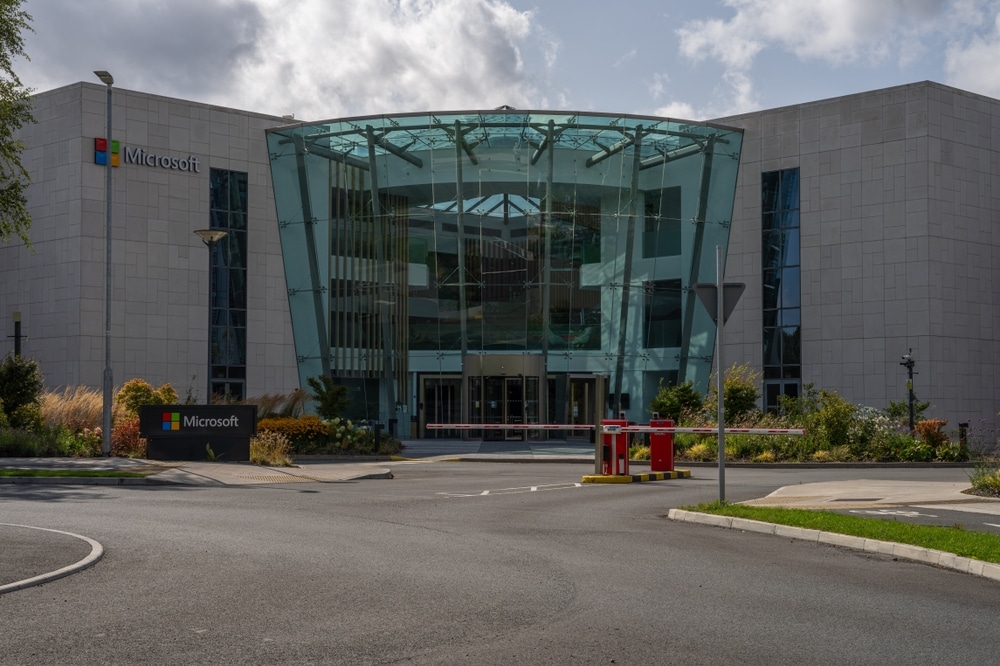
Green hydrogen is emerging as a key player in the clean energy transition. With this thought, Microsoft and Irish energy company ESB have joined forces to launch a groundbreaking pilot project that could reshape the way data centers are powered. To decarbonize its operations, the tech giant will use green hydrogen (H2) fuel cells to generate clean electricity at its Dublin campus.
Microsoft Switches to Green Hydrogen to Tackle Scope 3 Emissions
Microsoft’s move to adopt green hydrogen aligns with its broader sustainability goals. In 2020, the tech giant committed to becoming carbon-negative, water-positive, and zero-waste by 2030. This latest project not only supports that vision but also demonstrates how hydrogen technology can play a critical role in decarbonizing sectors like data centers, which are significant energy consumers.
Lavinia Morris, General Manager, of Microsoft’s EMEA Data Centre Operations, remarked,
“This pilot project is another important step in our journey to transition to carbon-free electricity supply for our data centers, buildings, and campuses around the world. As we look to advance a more sustainable future, we hope to build on the success of this pilot project and continue to find innovative ways to decarbonize our operations.”
However, recent reports reveal that Microsoft’s Scope 3 emissions in 2023 were 30% higher than in 2020. The rise in emissions is largely driven by the expansion of data centers to meet the growing demand for AI computing power. Consequently, switching to blue hydrogen is one way to tackle the Scope 3 emissions.
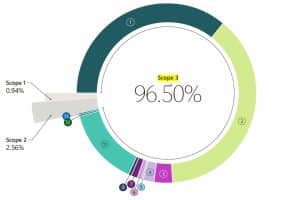
Source: Microsoft 2024 sustainability report
This pilot project also adheres to the ‘Principles for Sustainable Data Centre Development’ outlined by the Irish government. By ensuring efficient use of the electricity grid and promoting the use of renewable energy, Microsoft is contributing to the country’s sustainability goals.
- READ MORE: Fortescue Launches Innovative Green Metal Project in Australia, Fueled by Green Hydrogen!
ESB’s Innovative Hydrogen Fuel Cells: Zero Emissions, Maximum Impact
Hydrogen is emerging as a vital component of the clean energy transition. It’s especially valuable for sectors where renewable solutions like wind and solar are less practical. ESB’s hydrogen fuel cells can potentially replace diesel generators and offer a carbon-free alternative that can power critical infrastructure without any carbon emissions.
Microsoft’s press release explains that the pilot project will run for eight weeks. Significantly it is the first time that hydrogen fuel cells will be used to provide electricity to Microsoft’s data center in Europe. These zero-emission fuel cells, designed by ESB, will deliver up to 250 kW of power to Microsoft’s data center and administration building in Dublin.
The key feature of hydrogen fuel cells is their ability to convert stored green hydrogen into electricity. The only byproduct? Pure water. Unlike traditional diesel generators, these cells produce no carbon emissions or harmful air pollutants, such as sulfur dioxide (SO2), nitrogen oxides (NOx), or particulate matter. This makes them an ideal solution for reducing the environmental and health impacts often associated with backup power systems.
Eoin Doherty, Vice President, EMEA Regional Leader, Microsoft Cloud Operations + Innovation, said,
“The green hydrogen project we’re launching with ESB is a pioneering first for Microsoft in Europe, demonstrating how zero-emissions hydrogen can be harnessed to power our digital lives. If scaled successfully, it could provide new ways of advancing sustainability in our sector and beyond.”
Additionally, Jim Dollard, ESB Executive Director, Generation and Trading, commented,
“ESB believes green hydrogen will play an important role in the net zero energy system of the future. We’re delighted to be working with Microsoft on this innovative pilot project that will showcase the potential for green hydrogen as part of zero-emission electricity generation for data centers.”
Notably, the Dublin pilot is just the start of a broader shift to hydrogen power across Europe. ESB aims to expand hydrogen fuel cell projects in 2024 and 2025, showcasing its versatility in various energy applications.
Green hydrogen capacity targets and consumption potentials in selected countries in the EU in 2030
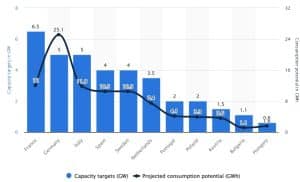
Source: Statista
Microsoft’s collaboration with ESB highlights the role hydrogen can play in reshaping energy production and consumption. With growing sectors like AI and cloud computing, the demand for cleaner power is more urgent than ever. By adopting hydrogen fuel cells, Microsoft is demonstrating how innovative solutions can help meet these challenges and reduce emissions.
Source: Microsoft announces pioneering green hydrogen pilot project with ESB
- FURTHER READING: Shell Powers Europe With A Mega 100MW Green Hydrogen Electrolyzer