

With 85 million electric vehicles (EVs) expected on the road by 2025, the demand for lithium is skyrocketing. However, traditional lithium extraction methods pose serious environmental risks. They deplete water supplies, contaminate ecosystems with chemicals, and rely heavily on energy-intensive mining processes that expand the carbon footprint.
ElectraLith, a Melbourne-based startup backed by Rio Tinto, is tackling these issues with its Direct Lithium Extraction (DLE) technology. This innovative process bypasses the need for water and chemicals, extracting lithium directly from brine solutions.
The lithium tech startup is set to conclude a funding round worth A$27.5 million (almost $18 million) next week to support its global growth initiatives. CEO Charlie McGill confirmed the plans, as reported by Reuters.
ElectraLith’s Game-Changing Lithium Technology
Traditional lithium production can take months and devastate water-stressed regions like Chile’s Atacama Desert. ElectraLith’s proprietary DLE-R technology completes the process in hours, drastically cutting production time and environmental costs.
ElectraLith DLE-R Technology
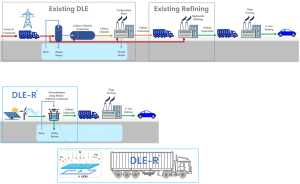
The tech’s advanced filtration membranes convert lithium into lithium hydroxide while reinjecting unused brine into aquifers, ensuring minimal environmental disruption.
According to McGill, this breakthrough is especially critical in areas where water scarcity makes conventional mining untenable. He specifically noted that:
“You can’t get a water permit [referring to water-stressed regions like the Colorado River basin]… So we show up and we are like, ‘We don’t need water.’”
Backed by Rio Tinto, venture capital firm IP Group, and Monash University, ElectraLith is preparing to scale its operations. The company’s upcoming funding round, which has been oversubscribed—is a testament to investor confidence despite a challenging market.
The funds will support the construction of ElectraLith’s first pilot plant at Rio Tinto’s Rincon operations in Argentina, set to be operational within a year. Two additional pilot plants are planned, as the company aims to produce lithium hydroxide at half the cost of competitors.
Transforming the $10 Billion Lithium Industry
Direct Lithium Extraction is expected to drive the lithium industry’s growth to over $10 billion in annual revenue within the next decade. ElectraLith’s energy-efficient process not only accelerates production but also positions the company as a leader in sustainable EV battery material supply.
By addressing the dual challenges of water scarcity and environmental impact, ElectraLith’s technology could redefine lithium production. As McGill emphasizes:
“This isn’t just a better method—it’s a necessary one for the future of EVs and the planet.”
With its revolutionary approach, ElectraLith is paving the way for a greener, more efficient future in lithium extraction and EV battery manufacturing.
Cutting Costs and Carbon, Not Corners: Lithium at Half the Price?
Lithium prices have been a driving force in the EV battery market, with significant fluctuations impacting producers and manufacturers.
After peaking at nearly $85,000 per metric ton in late 2022, prices have recently cooled, stabilizing around $26,000 per metric ton. While this decline offers some relief to EV makers, it has created challenges for lithium producers, especially those reliant on cost-intensive extraction methods.
High-cost concentrate operations, including Nemaska, Mt Cattlin, and North American Lithium (NAL), are at risk of losses unless spodumene prices rise above $800/ton.
To stay competitive, Sayona Mining and Piedmont Lithium, the two owners of NAL, announced a merger to streamline costs. This partnership, unlike the large-scale acquisition of Arcadium Lithium by Rio Tinto, focuses on cutting corporate overhead and operational inefficiencies.
However, challenges remain. Protectionist trade policies and the potential repeal of the US EV tax credit could dampen demand for Canadian lithium exports, adding further pressure to high-cost producers.
ElectraLith’s Direct Lithium Extraction technology offers a significant cost advantage. By producing lithium hydroxide at nearly half the cost of traditional methods, the company is poised to thrive even in volatile market conditions. This cost efficiency could help buffer against future price fluctuations, ensuring a steady supply of affordable lithium for EV battery production.
The cost of lithium is a critical factor for the industry, per Charlie McGill. However, their technology allows them to maintain competitiveness, even in challenging markets.
Lithium Prices: A Story of Volatility
The lithium market remains dynamic, with prices responding sharply to changes in supply and demand.
For instance, the lithium carbonate China price surged to reach 83,000 yuan/ton, a three-month high. This rally followed production curtailments at key Australian mines and stronger-than-expected battery and cathode demand in China.
Spodumene concentrate prices have stayed stable, averaging $820-$830/ton through mid-November. Meanwhile, China’s traction battery production in October demonstrated unusual resilience. It declined only slightly month-over-month compared to a bigger drop a year earlier.
Data suggests a recovery in battery and cathode output, further boosting demand for lithium.
A wave of supply cuts has also tightened the market. The latest cuts include halting operations at the Bald Hill and Altura mines and reducing 2025 production by 73,000 metric tons of lithium carbonate equivalent (LCE). Meanwhile, Australia’s Kathleen Valley mine has announced plans to delay and trim production.
The tightening supply coincides with lithium carbonate prices dropping, putting high-cost producers under pressure. Some companies are already planning to transition into care and maintenance by mid-2025, while others seek strategic mergers to cut costs.
Outlook for 2025 and Beyond
Lithium supply reductions are expected to shrink the market until 2027, driving a deeper deficit by 2028. Prices for 2028 are projected at $17,077 per tonne, per Goldman Sachs forecast.
Ultimately, lithium prices are expected to remain volatile as demand accelerates. Amid all this, ElectraLith’s revolutionary direct lithium extraction tech could help stabilize supply chains and drive the global energy transition forward.