

BlackRock, the world’s largest asset manager, recently made headlines by using its Global Infrastructure Partners (GIP) division to strike a deal with Italy’s energy giant Eni. Through this transaction, GIP agreed to acquire a 49.99% stake in Eni’s carbon capture, utilization, and storage (CCUS) business. The unit—called Eni CCUS Holding—is valued at around €1 billion, or roughly $1.2 billion.
The deal reflects growing global interest in climate technologies. It also shows how asset managers and oil majors are working together to scale next-generation clean energy solutions.
Carbon capture is increasingly seen as a critical part of reducing emissions from hard-to-abate industries such as cement, steel, and refining.
How Carbon Capture Works—and Why the World’s Betting on It
Carbon capture, utilization, and storage—known as CCUS or CCS—is a process that reduces carbon dioxide (CO₂) emissions from power plants, factories, and even directly from the atmosphere.
First, the CO₂ is captured at its source before it escapes into the air. Then, it is either transported and stored underground in rock formations or reused in other products like fuels, concrete, or chemicals. Sites used for storage include depleted oil and gas reservoirs or deep saline aquifers.
Globally, CCUS is gaining traction. According to the International Energy Agency, there are now over 40 commercial projects either operating or under development. By 2030, carbon capture facilities could remove more than 1 billion tonnes of CO₂ per year—up from about 50 million tonnes today.

Eni’s portfolio is part of this growing movement. The company’s CCUS assets include:
-
Hynet North West and Bacton Thames NetZero projects in the UK.
-
L10CCS in the Netherlands
-
The large-scale Ravenna site in Italy
Ravenna is Italy’s first CO₂ capture and storage project, which aims to scale from 25,000 tonnes annually to become a major carbon storage hub for Southern Europe by 2030. The company has the following CCS goals:
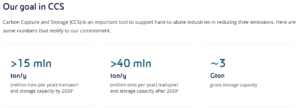
Together, the projects could capture and store up to 29 million tonnes of CO₂ per year by 2030—roughly equal to taking 6 million gas-powered cars off the road annually.
Why the World’s Largest Asset Manager Went All-In on CCUS
BlackRock’s investment in Eni’s carbon business came just months after it acquired GIP for $12.5 billion. GIP brought in about $100 billion in infrastructure assets covering energy, transport, and utilities. Now part of BlackRock, GIP is being positioned as a key player in building clean energy and decarbonization projects.
By buying into Eni’s CCUS unit, BlackRock signals its belief that carbon capture will play a major role in meeting global net-zero targets. It also shows that carbon management is no longer just a policy tool—it’s becoming a commercial opportunity for investors.
The deal gives BlackRock access to long-term, inflation-protected revenue linked to decarbonization goals. For Eni, the partnership brings in capital to expand its CCUS business faster while keeping control of day-to-day operations.
Eni’s Clean Energy Playbook: Spin It Off, Scale It Up
Eni has adopted a satellite business model to accelerate its clean energy transition. This means it creates separate business units for renewables, biofuels, and now CCUS, and brings in outside investors to help fund growth. By doing so, Eni can access capital while spreading the financial risk of entering new markets.
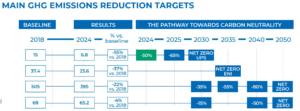
The CCUS spin-off fits into Eni’s broader sustainability plan. The company has committed to achieving net-zero emissions by 2050 across its operations and products.
Eni now manages more than 2 gigawatts of renewable energy via Plenitude. It is also expanding into solar and wind projects in Italy, North Africa, and Spain. It’s also increasing biofuel production using waste oils and agricultural residues.
By spinning off its CCUS unit, Eni can grow these solutions faster without sacrificing its core business in oil and gas.
Carbon Capture Gets Real: What This Deal Signals for the Market
The BlackRock-Eni deal has broad implications for both the energy industry and the carbon removal space.
CCUS Gains Credibility and Investment
Once considered too expensive and uncertain, CCUS is now entering the mainstream. Market forecasts expect the global CCUS industry to grow from $3.2 billion in 2023 to over $18 billion by 2032. In terms of capacity, CCS could reach up to 1,300 Mt per year by 2050.

The U.S. 45Q tax credit pays up to $85 per tonne of CO₂ captured, while the EU’s Innovation Fund provides billions in grants. With policies like these, CCUS projects have the support they need to grow.
Private Capital Joins the Fight
BlackRock’s move marks a shift in climate finance. Institutional investors are now targeting hard-to-abate sectors, not just wind and solar. GIP’s involvement shows that CCUS can offer stable, long-term returns tied to carbon prices or industrial contracts.
Energy Firms Adopt New Funding Models
Eni’s approach offers a model for other oil majors looking to decarbonize. By creating new business units and selling part of them, companies like Shell, TotalEnergies, or Chevron can fund clean energy projects while keeping their core assets intact. This lowers financial risk and attracts ESG-focused investors.
Supply Chain and Technology Development
Large-scale carbon capture projects need more than funding. They need CO₂ pipelines, storage infrastructure, capture equipment, and skilled labor. The BlackRock–Eni deal is expected to help build all of these. It will also support jobs and economic development in regions that depend on heavy industry.
Will This Billion-Euro Bet Spark a CCS Boom?
Several things will shape what comes next for CCS. The deal is expected to close by late summer 2025. After that, Eni and BlackRock will begin developing the CCUS pipeline further.
BlackRock’s billion-euro bet on Eni’s carbon capture business shows that CCUS is no longer a niche solution. It’s a growing part of global climate strategy—and a real investment opportunity.
For Eni, the deal unlocks growth while allowing it to lead in decarbonization. For BlackRock, it opens the door to long-term returns tied to climate impact.
The success of their partnership will depend on policy support, technology performance, and industry momentum. But if all goes well, this deal could inspire a new wave of investment into the infrastructure needed for a net-zero world.