

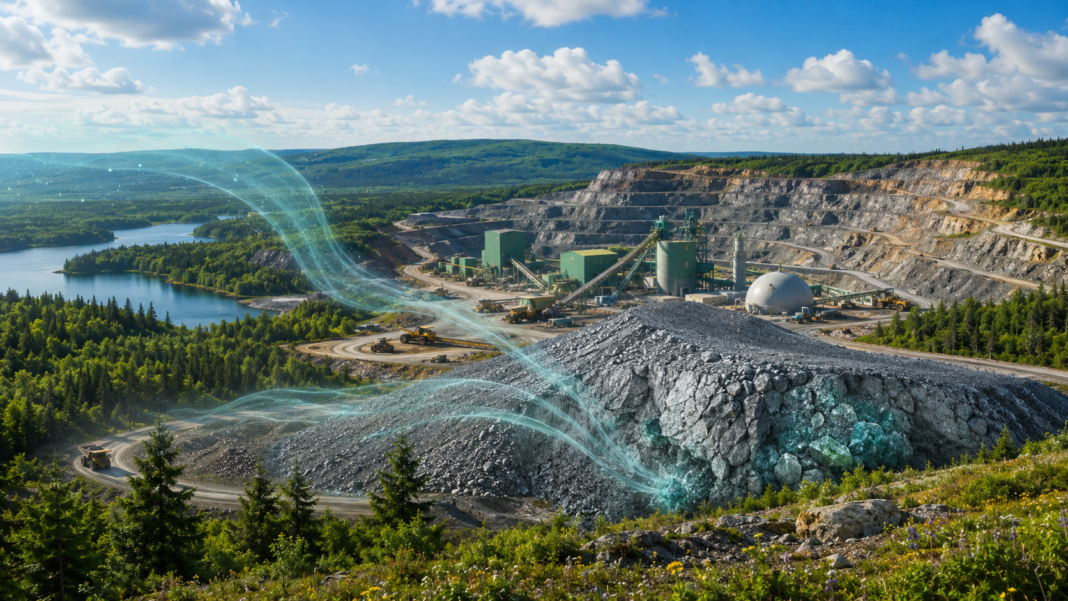
Canada has approved one of its biggest critical minerals projects. The federal government has given the green light to the Crawford Nickel Sulphide Project in Ontario. The mine is being developed by Canada Nickel Company and could become one of the world’s largest producers of nickel while also storing large amounts of carbon dioxide (CO₂).
The approval follows a federal impact assessment. It includes 371 legally binding conditions. These cover environmental protection, Indigenous participation, water quality, wildlife, and long-term monitoring.
The project is also expected to deliver major economic benefits. According to Canada Nickel, Crawford could create about 5,000 jobs during construction and around 1,300 permanent jobs once the mine begins operating.
The company estimates the project could contribute more than C$70 billion to Canada’s economy over its operating life. Construction could begin after the remaining provincial permits are secured.
Mining Nickel While Pulling Carbon From the Air
Crawford is different from most mining projects. Instead of only producing minerals, the mine is designed to remove carbon dioxide from the atmosphere.
Canada Nickel states that the project could achieve permanent storage of up to 1.5 million metric tons of CO₂ each year during operations through a process called mineral carbonation.
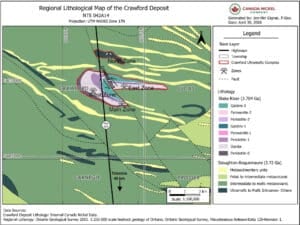
The mine contains large amounts of ultramafic rock, which naturally reacts with carbon dioxide. When exposed to air, these rocks slowly lock CO₂ into stable carbonate minerals. This keeps the carbon stored for thousands of years without needing underground injection or long-term monitoring.
The company plans to speed up this natural process using its proprietary In-Process Tailings (IPT) Carbonation technology. Instead of treating mine waste as a problem, Crawford will use it to capture carbon while producing nickel.
Canada Nickel claims this could make Crawford one of the first net-zero nickel mines. It might even become one of the few mining projects that can go carbon negative over time.
Canada Nickel CEO Mark Selby said:
“Today’s decision recognizes the strategic importance of responsibly developing Canada’s critical mineral resources in partnership with all levels of government and Indigenous Nations while maintaining rigorous environmental standards.”
Why Nickel Is Powering the Clean Energy Boom
The timing is significant. Nickel is one of the world’s most important critical minerals. It’s commonly found in stainless steel. However, demand is growing due to electric vehicles, battery storage, and clean energy technologies.
According to the International Energy Agency, demand for nickel could more than double by 2040 under countries’ current climate commitments. Under the agency’s Net Zero Emissions by 2050 plan, demand may rise more as battery production grows.
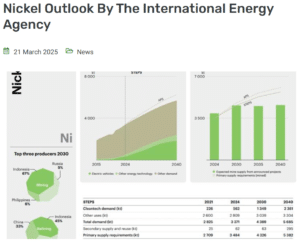
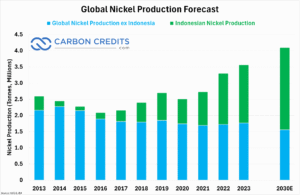
The United States Geological Survey estimates global nickel mine production reached about 3.7 million metric tons in 2025. Indonesia remained the world’s largest producer, supplying more than half of global output.
Canada ranked among the leading producers and continues to expand its role in supplying critical minerals to North America and Europe. Crawford could strengthen that position.
The project hosts one of the world’s largest nickel sulphide resources. Canada Nickel estimates measured and indicated resources of more than 3.7 billion tonnes, making it the second-largest nickel reserve globally. Unlike laterite deposits, sulphide ores are easier to process. They are also great for making battery-grade nickel.
If successful, Crawford would help supply the growing demand for low-carbon nickel while showing that mining and carbon storage can work together.
Critical Minerals Are Becoming a Climate Priority
Crawford comes at an important time for the global mining industry. Countries are racing to secure supplies of critical minerals needed for the clean energy transition. Nickel is one of the most important because it is used in electric vehicle batteries, renewable energy systems, and stainless steel.
The IEA warns that demand for critical minerals will continue to rise as countries expand clean energy. At the same time, many governments want these minerals to come from cleaner and more reliable sources.
Canada is well positioned to benefit. The Canadian government has identified nickel as a strategic mineral under its Critical Minerals Strategy. Crawford supports that goal by increasing domestic production while lowering emissions from mining.
- SEE MORE: Canada’s $4.7 Trillion Infrastructure Challenge: Can Faster Permits Unlock a Critical Minerals Boom?

The project also fits Canada’s broader climate target of cutting greenhouse gas emissions by 40% to 45% below 2005 levels by 2030 and reaching net-zero emissions by 2050.
Can the Mining Industry Become Carbon Negative?
Mining has long been linked to high emissions. Producing the metals needed for clean energy often requires large amounts of fuel and electricity.
New data from the International Council on Mining and Metals (ICMM) show that mining and metals together produced about 11% of global Scope 1 and 2 greenhouse gas emissions in 2024. Mining accounted for 3%, while metal processing contributed another 8%.
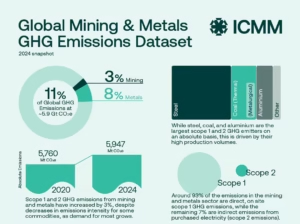
That has raised concerns about whether the energy transition simply shifts emissions from one industry to another.
Projects like Crawford could help change that. By combining nickel production with permanent carbon storage, the project aims to lower the carbon footprint of mining instead of adding to it. Canada Nickel also plans to produce the following through its planned NetZero Metals processing facility:
- NetZero Nickel™,
- NetZero Cobalt™, and
- NetZero Iron™.
The company says this could supply manufacturers looking for lower-carbon materials for batteries, vehicles, and steel. If successful, Crawford could become a model for future mines built on ultramafic rock deposits around the world.
A New Direction for Low-Carbon Mining
Crawford is more than another nickel mine. It shows how mining companies are beginning to combine critical mineral production with climate solutions. Instead of treating carbon as a by-product, the project plans to capture and permanently store it while producing the metals needed for the clean energy economy.
However, many challenges remain. The company still needs provincial approvals and must prove the carbon capture technology works at full commercial scale. It also needs to deliver the project on time and within budget.
Still, the opportunity is significant. As governments and manufacturers look for cleaner supplies of critical minerals, projects that produce metals while removing carbon could gain a competitive advantage.
For Canada Nickel, Crawford is a chance to build one of the world’s largest nickel mines. For the mining industry, it could show that the next generation of critical mineral projects can help support both the energy transition and global climate goals.