

Indonesia is moving closer to becoming one of the world’s leading suppliers of high-quality carbon credits. The government plans to create an Article 6 methodology panel and a national nesting framework. These two systems will help Indonesia prepare for international carbon trading under Article 6 of the Paris Agreement.
Article 6 allows countries to trade verified emissions reductions while making sure the same carbon reduction is not counted twice.
The new methodology panel will review how carbon projects measure emissions cuts. It will include scientists, researchers, and technical experts. The panel will check whether project methods follow both Indonesian rules and international standards.
At the same time, the government plans to complete the national nesting framework within 12 to 18 months. These changes come as more countries prepare to trade carbon credits across borders. Strong rules are now essential for attracting climate investment and building trust among buyers.
Indonesia Has One of the World’s Largest Carbon Assets
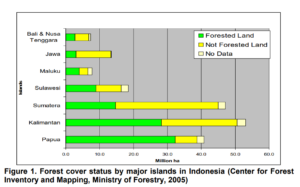
Indonesia starts with one major advantage—its forests. According to the Ministry of Forestry, the country has about 95.5 million hectares of forest. This gives Indonesia the third-largest tropical rainforest in the world, after Brazil and the Democratic Republic of the Congo.
Indonesia is also home to the largest mangrove forests on Earth. They cover about 3.44 million hectares, or around 20% of the world’s total mangrove area. Mangroves are powerful carbon sinks. They can store several times more carbon per hectare than many tropical forests. They also protect coastlines and support wildlife.
The country also has one of the world’s largest tropical peatland areas. Together, its forests, mangroves, and peatlands store billions of tonnes of carbon. Protecting these ecosystems is important for both Indonesia’s climate goals and global efforts to slow climate change.
Indonesia’s Forestry and Other Land Use (FOLU) Net Sink 2030 program aims for a net carbon sink of 140 million tonnes of CO₂ equivalent (MtCO₂e) by 2030. The plan includes reducing deforestation, restoring forests, protecting peatlands, restoring mangroves, and improving land management.
Why the New Framework Matters
Large forests alone are not enough to build a successful carbon market. Buyers also need to know that every carbon credit is real and counted only once. That is why the new nesting framework is important.
It will connect carbon projects with Indonesia’s national greenhouse gas inventory. If a forest project earns carbon credits, it will also record emissions reductions in the country’s climate accounts. This prevents double counting, which is one of the main rules under Article 6.
The framework will also help Indonesia approve carbon credits for international trading through Corresponding Adjustments. These adjustments are one of the key requirements for high-integrity Article 6 carbon markets.
Building on an Existing Carbon Market
Indonesia has already taken important steps to build its carbon market. The country launched IDXCarbon, its national carbon exchange, in September 2023. Companies also register carbon projects and report emissions through the government’s National Registry System (SRN-PPI).
The new methodology panel and nesting framework build on these systems.
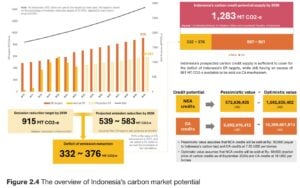
Together, they can strengthen Indonesia’s carbon market, boost investor confidence, and help the country become a top supplier of Article 6 carbon credits in the future. According to analysts, the country has the following carbon market potential.
Indonesia’s Carbon Market Is Growing Quickly
Indonesia is not starting from zero. Over the past few years, the country has built many of the key pieces needed for a national carbon market.
The IDXCarbon allows companies to buy and sell carbon credits and emissions allowances under government supervision. By July 2025, the exchange recorded over 1.6 million tonnes of CO₂ equivalent (tCO₂e) traded. The total transaction value reached about IDR 77 billion, which is roughly US$4.7 million. More than 100 organizations had joined the market as registered users.
The government is now taking the next step.
By introducing an Article 6 methodology panel and a national nesting framework, Indonesia is preparing its domestic market for international carbon trading. These new systems will help make sure carbon credits meet global standards. This way, they can be traded with other countries under the Paris Agreement.
A Bigger Opportunity for Forest Carbon Credits
Global Demand for Article 6 Credits Is Rising
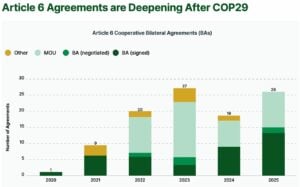
The timing of this move may be good. Countries are beginning to move from discussing Article 6 to putting it into practice. Governments are negotiating carbon trading agreements, while companies are looking for credits with stronger environmental integrity.
The International Emissions Trading Association (IETA) estimates that Article 6 could reduce the cost of meeting global climate targets by as much as $250 billion every year by 2030. The mechanism could also channel billions of dollars into developing countries that can supply high-quality emissions reductions.
Nature-based projects are expected to play an important role. Indonesia’s forests, mangroves, and peatlands give it one of the largest potential supplies of these credits. A clear methodology and a trusted nesting framework could make those credits more attractive to governments and corporate buyers.
A New Chapter for Indonesia’s Carbon Economy
Indonesia’s latest announcement is about new regulations, as well as about building trust. High-quality carbon markets depend on clear rules, transparent accounting, and confidence that every credit represents a real emissions reduction. The new methodology panel and nesting framework are designed to provide exactly that.
Much work remains before the system is fully operational, but the direction is clear.
If Indonesia successfully completes these reforms, it could become one of the world’s leading suppliers of Article 6 carbon credits. That would support forest conservation, attract more climate investment, and create new economic opportunities while helping countries and companies meet their net-zero goals.
For the global carbon market, Indonesia is no longer just protecting one of the world’s largest tropical forests. It is building the institutions needed to turn those forests into one of the world’s most important sources of high-integrity carbon credits.