


The UK has recognized India’s Carbon Credit Trading Scheme (CCTS) as a qualifying carbon pricing scheme under its upcoming Carbon Border Adjustment Mechanism (CBAM). The move could reduce the carbon cost faced by Indian exporters when the UK’s CBAM begins on January 1, 2027.
Under UK rules, qualifying carbon prices already paid on emissions embodied in imported goods may be taken into account when calculating the importer’s CBAM liability. This is designed to prevent the same emissions from being priced twice.
India’s CCTS now appears on the UK’s official list of qualifying overseas carbon pricing schemes. The list also includes the EU Emissions Trading System, China’s national ETS, Japan’s GX-ETS, Korea’s ETS, Singapore’s carbon tax and South Africa’s carbon tax.
The recognition is important for Indian companies selling carbon-intensive goods into the UK. However, it does not mean every Indian carbon credit will automatically reduce a CBAM bill. Importers must meet detailed UK rules on emissions data, carbon pricing and independent verification.
UK’s Carbon Border Tax Arrives in 2027
The UK CBAM will begin on January 1, 2027, covering imports of selected carbon-intensive products from the aluminium, cement, fertiliser, hydrogen, and iron and steel sectors.
The policy is designed to ensure that imported goods face a carbon cost broadly comparable with products made by UK manufacturers. One of its main goals is to reduce carbon leakage, where production moves to countries with weaker climate policies.
UK importers will generally need to register when they expect to import at least £50,000 of CBAM goods within the next 30 days. The threshold can also be assessed using imports during the previous 12 months. This means the system will mainly affect businesses with significant trade in covered products.
The UK government has also created a system for claiming Carbon Price Relief. This allows importers to reduce their CBAM liability where the relevant goods have already been subject to an eligible carbon price overseas.
India’s CCTS Can Reduce UK Carbon Costs
India’s inclusion on the UK’s qualifying list is important because its national carbon market is now moving into operation. Under the CCTS, India is developing a compliance mechanism for energy-intensive industries.
The government sets greenhouse gas emissions-intensity targets for covered businesses. Companies that perform better than their targets can receive Carbon Credit Certificates, while those that fall short may need certificates to meet their obligations.
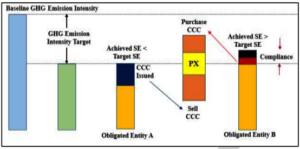
The scheme also includes an offset mechanism for eligible projects outside the obligated industrial sector. This framework covers activities that can generate emissions reductions or removals in areas such as energy, industry, agriculture, forestry, waste, transport and carbon capture, utilization and storage.
However, this distinction is critical for exporters. The UK’s CBAM relief is linked to qualifying carbon prices applied to the embodied emissions in imported goods. Simply purchasing a voluntary carbon credit does not automatically create a CBAM deduction.
The UK requires evidence showing that the relevant emissions were subject to a qualifying pricing scheme.
Carbon Data and Verification Will Make or Break Relief
The UK has placed strong emphasis on verification. To claim Carbon Price Relief, an importer must obtain a carbon pricing verification form from the relevant installation, factory, or supply chain.
The form must then be completed by an independent verifier that meets the UK’s requirements. Without the required documentation and verification, the importer cannot claim the relief. The amount of relief also depends on the actual carbon price and the emissions covered by that price.
Importers must calculate the effective carbon price and determine how much of the embodied emissions were subject to an eligible scheme. Any foreign currency relief must then be converted into pounds using UK-published exchange rates.
This makes accurate carbon accounting increasingly important for Indian exporters. Companies will need reliable data on how much CO2 they emit, how those emissions are measured and what carbon costs they have actually paid.
India Is Building a National Carbon Market
The UK’s decision comes as India moves from designing its carbon market toward implementation. India has established rules and procedures for its CCTS and is developing the systems needed to measure, report, and verify emissions and carbon projects.
The Bureau of Energy Efficiency (BEE) has also been working on the accreditation of independent carbon verification agencies. The agencies will play a key role in checking emissions and project claims under the Indian market.
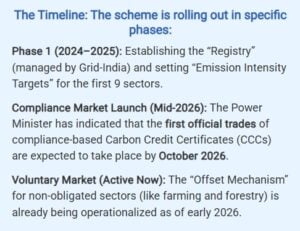
The CCTS is part of India’s wider shift away from its earlier Perform, Achieve and Trade approach toward a national carbon market.
The timing is significant. India is developing its domestic carbon pricing system at almost the same time the UK is preparing to impose a carbon cost on certain imports. That creates a direct connection between domestic climate policy and international trade.
SEE MORE: India’s Carbon Market Portal Goes Live as Carbon Credit Trading Nears
Metals Could Face the Biggest Impact
The recognition could be particularly important for India’s steel and aluminium industries. Both sectors are covered by India’s carbon market framework and the UK CBAM. That gives producers in these industries a potential way to reduce their UK border carbon liability where qualifying domestic carbon prices have been paid, and the UK requirements are met.
The issue is becoming more important as trade between the two countries expands.
The UK-India Comprehensive Economic and Trade Agreement entered into force on July 15, 2026. UK government data shows that total trade between the two countries was worth about £48 billion in 2025.
The agreement provides tariff reductions across a wide range of products, with 99% of Indian goods entering the UK eventually benefiting from zero or reduced tariffs. But lower tariffs do not remove carbon-related costs.
For carbon-intensive products, exporters will have to consider both traditional trade costs and the new cost of embedded emissions under CBAM. Recognizing India’s carbon pricing system could help limit that additional burden.
Carbon Data Is Becoming Part of the Export Toolkit
The wider significance of the UK’s decision goes beyond the immediate tax benefit. Carbon information is increasingly becoming part of international trade. Exporters of covered products will need to understand:
- the emissions generated during production,
- how those emissions were calculated, and
- whether a qualifying carbon price was paid.
The UK CBAM framework effectively turns this information into part of the import process.
For Indian manufacturers, that could encourage better emissions monitoring and reporting. It could also push companies to invest in cleaner production methods, because lower emissions can translate into lower carbon costs at the border.
This could create a growing competitive advantage for producers that can demonstrate lower emissions and strong carbon-accounting systems.
UK and EU Carbon Borders Point to a New Trade Era
The UK is not alone in linking carbon pricing with international trade. The European Union’s CBAM also allows a carbon price paid in the country of production to be taken into account when determining the border charge, provided it meets the EU’s rules.
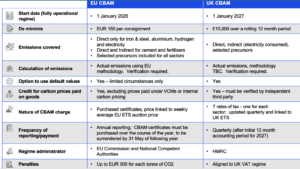
The UK has adopted a similar principle while creating its own calculation and verification framework. This suggests a wider trend: national carbon markets are becoming increasingly connected to global trade rules.
For exporters, carbon pricing is no longer only a domestic policy issue. It can affect whether products remain competitive in foreign markets.
The UK’s recognition of India’s CCTS is a relatively small regulatory step, but it could have a wider effect.
It gives Indian exporters in covered sectors a clearer path to claim relief where they have already paid an eligible domestic carbon price. At the same time, it gives India’s emerging carbon market an international dimension. Also, the decision reduces one important risk: double carbon pricing on the same emissions.
For Indian exporters, managing emissions is increasingly more than an environmental responsibility. It is also becoming an important part of managing trade costs and staying competitive in global markets.