


The United Kingdom will provide a £400 million ($541 million) loan to Brazil’s Tropical Forests Forever Facility (TFFF). This funding aims to help make tropical forest conservation a long-term financial asset.
This commitment arises as governments look for new ways to fund climate action while managing public spending. Unlike a traditional grant, the UK’s support will be a loan. This shows a shift toward using repayable financing for some international climate investments. However, this assurance depends on final due diligence, governance, and operational arrangements.
The announcement could also help the Brazil-led fund reach its first major financing milestone. The TFFF is targeting $10 billion in public funding during its first year and has already secured almost three-quarters of that amount, according to Reuters. The $10 billion target is to be reached by the end of 2026.
The wider ambition is considerably larger. The facility ultimately aims to mobilize $125 billion, including $25 billion from governments and public institutions.
Why the UK’s TFFF Loan Matters
The UK supported the TFFF concept when it was launched at the COP30 climate summit in Belém, Brazil, but initially stopped short of committing taxpayer funding. But this position has now changed.
The UK government said it intends to invest £400 million through a loan, although
The structure allows Britain to participate without providing the money as a traditional grant. It also reflects a broader debate around international climate finance, as developed economies face pressure to increase funding for climate and nature protection while demonstrating that public money is being used efficiently.
For the TFFF, the UK commitment is important because the facility depends on large pools of long-term capital rather than one-off conservation grants.
Notably, the TFFF is designed to operate as a long-term financing mechanism that provides predictable, performance-based payments to countries that maintain their tropical forests. The facility says it could support more than 70 tropical forest countries covering more than 1 billion hectares of moist tropical and subtropical broadleaf forests.

Turning Standing Forests Into a Financial Asset
The central idea behind the TFFF is relatively simple: countries should receive more financial value from keeping forests standing than from clearing them.
Traditional development finance has often struggled to compete with the economic incentives of agriculture, mining, timber, and other land uses.
The TFFF attempts to change that equation by creating a long-term financial reward for forest conservation.
Countries that meet forest-protection requirements can receive annual payments based on their conservation performance. The facility says these payments are intended to be predictable and long-term rather than dependent on short-term project grants.
That makes the model particularly relevant to the carbon market, although the TFFF is not simply another carbon-credit scheme.
Instead, it can complement existing mechanisms such as REDD+ and forest carbon markets. TFFF official overview
This distinction matters. Carbon markets generally place a financial value on quantified emissions reductions or removals. The TFFF takes a broader approach by creating financial incentives for countries to maintain standing forests and the ecosystem services they provide.
- READ MORE: Forest Finance Hits Record Growth in 2025: Investment Doubles for Nature-Based Climate Action
Forests Are a Major Carbon Removal Engine
The climate case for the initiative is strong.
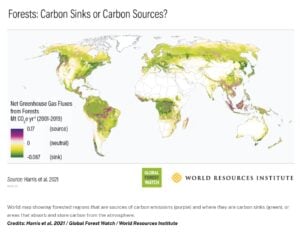
Forests absorb carbon dioxide through photosynthesis and store carbon in trees, vegetation, roots, and soils. The World Resources Institute estimates that forests remove around 16 billion tonnes of CO₂ from the atmosphere each year. This highlights their importance as a natural carbon sink.
The global forest carbon sink is enormous, but it is not guaranteed to remain that way.
Deforestation, degradation, fires, and climate-related stresses can reduce the ability of forests to absorb carbon. In some cases, damaged forests can shift from being carbon sinks to becoming sources of emissions.
This is why protecting existing tropical forests can be an important part of climate strategy.
The distinction between carbon removal and avoided emissions is also important.
When a forest continues growing and absorbs additional CO₂ from the atmosphere, that represents carbon removal. When an existing forest is protected from being cleared, the primary climate benefit is the avoidance of emissions that would have occurred if stored carbon had been released.
Both outcomes are valuable, but they should not be treated as identical forms of carbon removal.
Why Protecting Existing Forests Matters
Tropical forests play a particularly important role in the global carbon cycle.
They store enormous amounts of carbon while supporting biodiversity, regulating rainfall and providing livelihoods for millions of people. They currently hold 861 gigatonnes of carbon in their branches, leaves, roots, and soils. However, measuring forest carbon is becoming more complicated as climate change alters forest ecosystems.
Recent research suggests some tropical forest regions have experienced shifts in their carbon-storage capacity, reinforcing the importance of protecting forests while they remain functioning carbon sinks.
For carbon markets, this creates both an opportunity and a challenge.
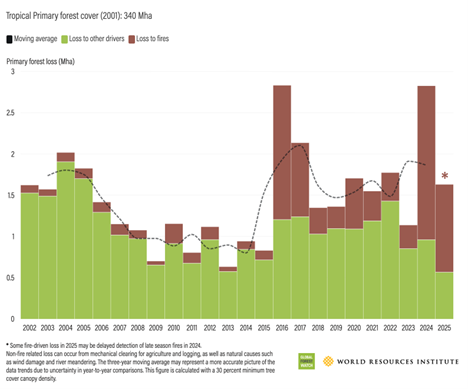
Forest conservation can deliver significant climate benefits, but accurately measuring additional carbon storage, preventing leakage and ensuring permanence remain critical to maintaining the credibility of forest-based climate finance.
TFFF Could Strengthen Forest Climate Finance
The TFFF is attempting to address part of this financing gap by treating forests as a long-term economic asset.
Its proposed structure combines public and private capital. The broader initiative aims to mobilize $125 billion, with roughly $25 billion expected from governments and public institutions and the remainder from private sources. World Resources Institute: TFFF financing model
The capital would generate investment returns that can help fund payments to tropical forest countries.
That structure is important because forest conservation requires funding year after year.
Deforestation pressures do not disappear after a single grant cycle. Farmers, communities, governments and forest managers need sustained economic incentives to keep forests standing.
The TFFF therefore seeks to create a more predictable source of finance while shifting the economic value of forests toward conservation.
The Next Test Is Mobilizing More Capital
The UK commitment is significant, but it is only one part of the larger financing challenge.
The TFFF still needs to build the capital base required to reach its ultimate $125 billion target. Reaching the initial $10 billion public-finance goal could be an important signal to other governments and institutional investors.
Reuters reported that reaching that first target could also help unlock additional funding, including potential support from the United States.
The facility’s success could influence future approaches to nature and carbon finance. If countries can demonstrate that long-term investment returns can support predictable payments for maintaining forests, similar models could emerge for other ecosystems.
The UK’s investment remains subject to final due diligence, including reviews of the facility’s final size, governance, structure and loan terms.
For tropical forests, however, the underlying message is already clear: protecting carbon-rich ecosystems increasingly needs to be treated not just as an environmental responsibility, but as a long-term financial investment.